CNC Machining problems often start with the wrong cutting tool geometry. Many shops face high heat, fast tool wear, and, as a result, poor quality surface finish. Chips can fail to break correctly if tooling is improper, cutting parameters are misaligned, or the material’s natural ductility resists separation.
One key factor behind these issues is the rake angle. This angle sits between the tool’s cutting edge and the work surface. It controls chip flow, cutting force, and material removal. Even a small change can affect the whole machining process.
Choosing the correct rake angle improves cutting stability and efficiency. Positive rake tools produce thin, curled chips for easy cutting, while negative rake tools create thick, segmented chips for tougher materials. It also reduces cutting resistance and heat. As a result, tools last longer, and parts maintain better surface quality.
We help you select the right tool geometry for each material. Our machining team focuses on stable cutting, longer tool life, and consistent quality. This guide explains rake angle, its types, and its impact on machining performance. It also covers the key factors that influence tool geometry and cutting results.
What Is the Rake Angle In Machining?
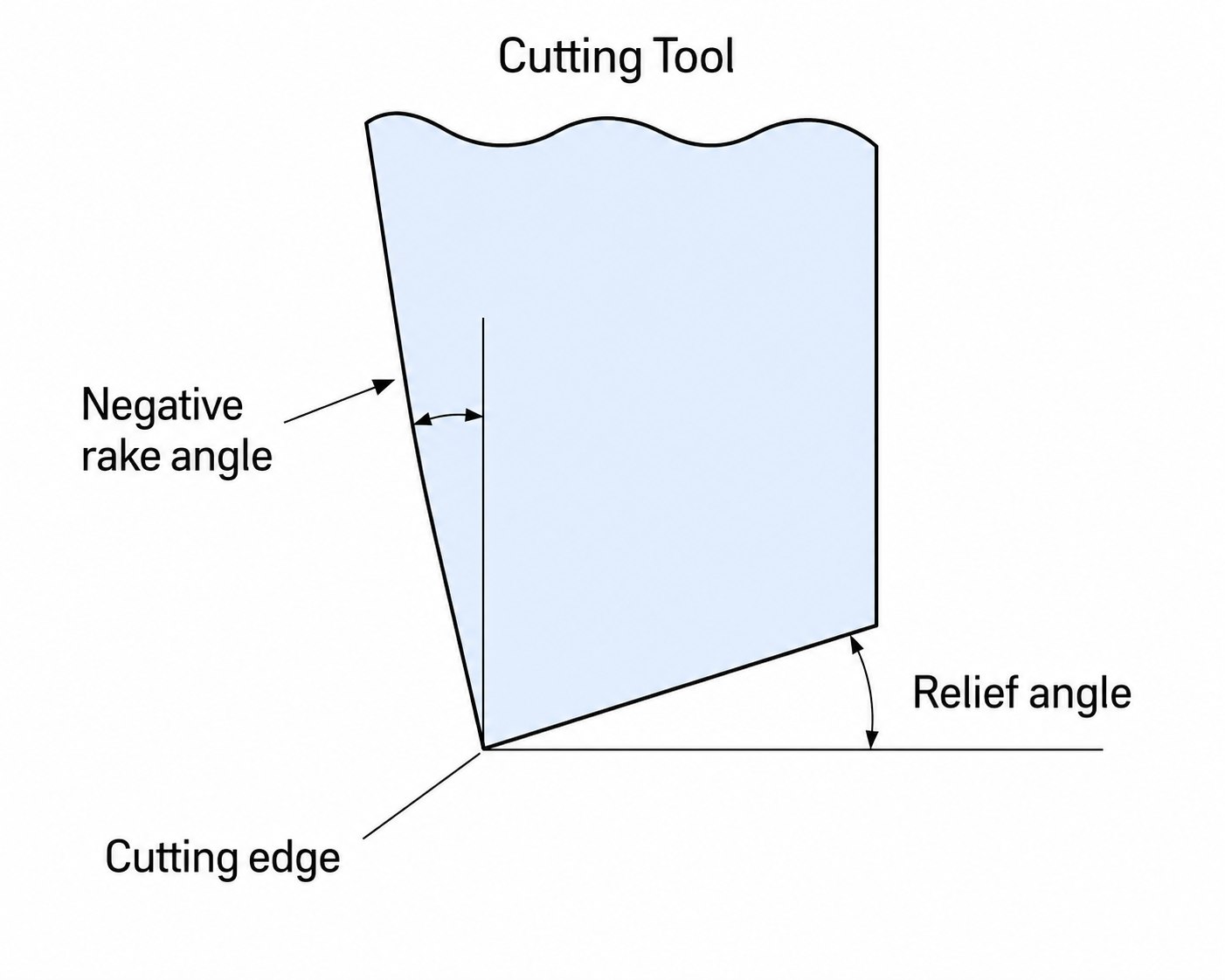 Rake angle in Machining
A major cutting tool geometry factor is the rake angle. It is defined as the angle that exists between the cutting face and a reference line of the tool. This reference line is usually perpendicular to the workpiece surface or feed direction. The angle dictates the contact of the cutting edge with the material in machining.
The rake angle has a direct influence on chip formation, cutting forces, and finish. It also determines the ease of material removal using the tool, as well as the chips’ flow out of the cutting area. An appropriately selected rake angle is better to enhance cutting stability, and it also minimizes machining resistance. The rake angle is usually fixed, chosen based on the tool design, insert geometry, and setup, rather than adjusted during cutting.
Rake Angle References – Material-Based
The following table indicates the common rake angles employed in machining common materials. These values are a set of general guidelines and can change with tooling and machining conditions.
| Workpiece Material | Recommended Rake Angle Range | Machining Insight |
| Aluminum | +15° to +20° | Promotes smooth chip flow and reduces cutting resistance |
| Brass | +10° to +15° | Supports stable cutting with moderate chip control |
| Plastics | +10° to +20° | Prevents material dragging and improves surface quality |
| Mild / Low-Carbon Steel | +5° to +10° | Balances cutting efficiency with tool strength |
| Stainless Steel | 0° to +5° | Controls heat generation and protects the cutting edge |
| Titanium | +8° to +12° | Helps manage high cutting forces and material toughness |
| Inconel / Nickel Alloys | +8° to +10° | Improves chip evacuation in high-temperature alloys |
| High-Carbon Steel | −5° to 0° | Provides a stronger cutting edge for harder materials |
| Cast Iron | −5° to 0° | Handles brittle material and abrasive particles effectively |
Optimizing the rake angle of each material helps to bring about stability in machining and longevity of the tools. It also aids in keeping a steady surface quality and effective removability of materials.
Why is Rake Angle Critical in Machining?
Even minor adjustments to the rake angle can greatly influence cutting forces, surface finish, and tool longevity. It can augment or diminish cutting forces. It also affects the surface finish, tool life, and chip control. The amount of heat produced during cutting may also vary.
An appropriate rake angle will enable the tool to slice material without difficulty. When the tool is given an incorrect angle, it pushes through the material. This may result in chatter, high heat, and accelerated tool wear. The rake angle that is chosen properly allows achieving a cleaner and more consistent surface finish.
Types of Rake Angles in Machining
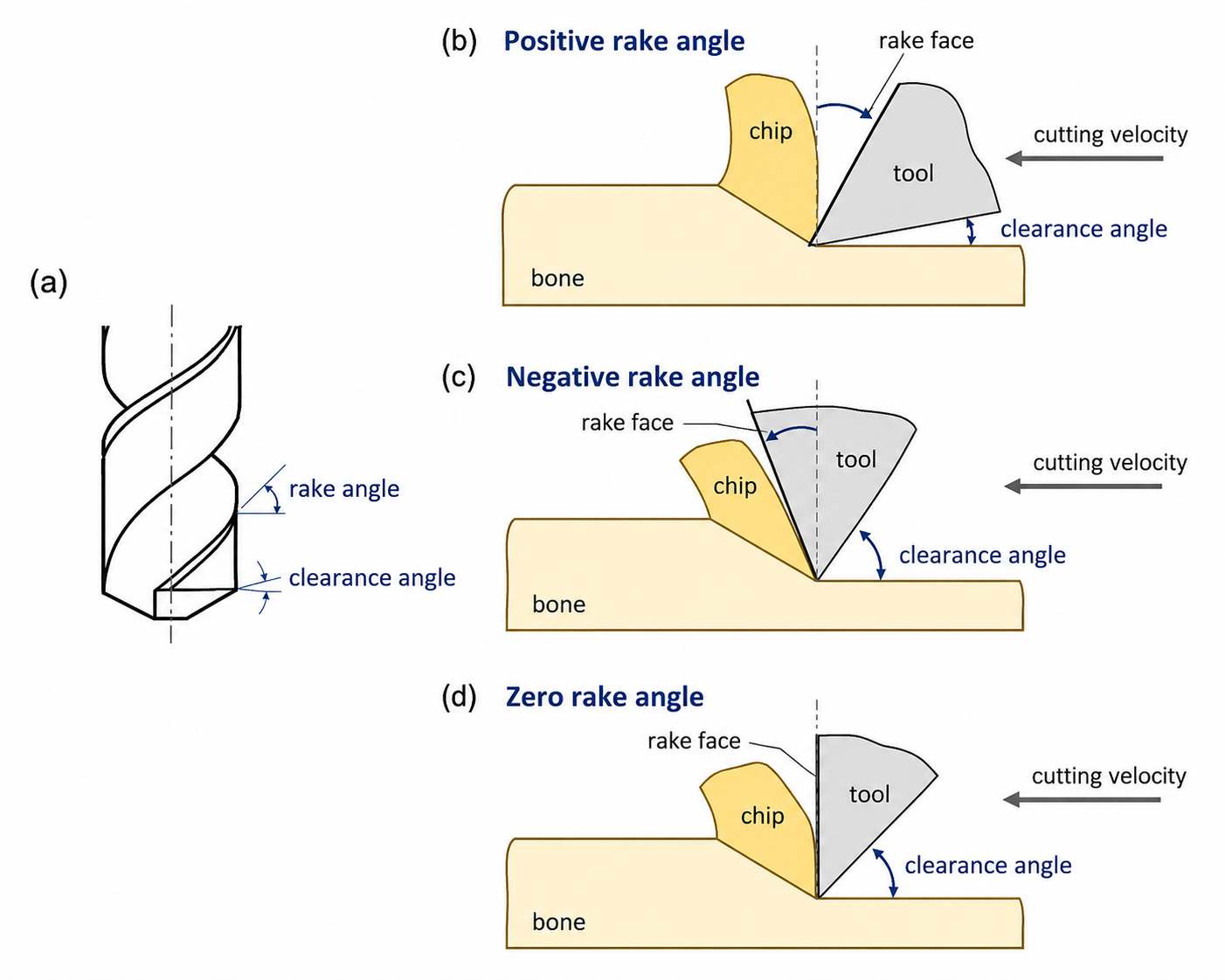 Types of rake angles
Different materials and machining circumstances necessitate varying rake angles. No single choice can be used across all operations. Three primary angles, which are employed in machining, are:
Positive Rake Angle
A positive rake angle slopes away from the cutting edge. The design provides a cutting effect and enables the tool to cut the material easily. The chips slide along the tool face, and this aspect minimizes resistance when cutting.
Key characteristics:
The bead is pointed, and the current of the chips is smooth. Action cutting is light and more stable.
Advantages:
- Lower cutting forces
- Reduced friction and heat
- Better surface finish
- Lower power consumption
Limitations:
- Weaker cutting edge
- Quickly wears or chips hard materials.
- Inapplicable to heavy cutting loads.
This rake angle is effective in aluminum, plastics, brass, and mild steel, where a smooth flow of chips is required.
Zero Rake Angle
A zero rake angle has a flat tool face, with no slope forward or backward. This neutral geometry offers a compromise of sharpness and strength.
Key characteristics:
The tool is inherently stable and durable. The movement of chips and forces of cutting remain moderate.
Advantages
- Smooth performance in cutting.
- Stability and high tool strength.
- General-purpose machining is suitable.
- Prolonged tool life as compared to positive rake in most instances.
Limitations
- Increased cutting force in comparison with positive rake tools.
- Surface finish does not have to be so polished.
Zero rake angles are usually applied in general turning and normal machining processes where there is a concern of reliability.
Negative Rake Angle
An anti-clockwise rake is directed at the cutting edge. The design makes the cutting-edge thicker and stronger. This geometry is concerned with durability and strength.
Key characteristics
The cutting edge is sharp and hard. The chips are likely to splinter when cutting, and more force is needed.
Advantages
- Very strong cutting edge
- Applicable to hard materials and rough cuts.
- Works in harsh machining.
- Has a high level of accuracy at high speeds and temperatures.
Limitations
- Higher cutting forces
- Increased friction and heat
- Rougher surface finish
Negative rake angles are widely employed during the machining of titanium, hardened steel, and nickel alloys, where the most important consideration is the tool strength.
Quick Comparison
Each rake angle is used for a different purpose. Positive rake angles lessen cutting effort and enhance finish. Zero rake angles provide balanced and reliable machining. Negative rake angles provide optimum edge strength for hard materials and challenging cutting conditions. Choosing the right rake angle enhances tool longevity, ensures stable cutting, and delivers superior part quality.
How Does Rake Angle Vary in Different Machining Operations?
The rake angle is not always certain. It varies depending on the machining and the tool design. The rake angles are applied differently in each process as the cutting tool interacts with the workpiece in a different manner.
Turning Operations
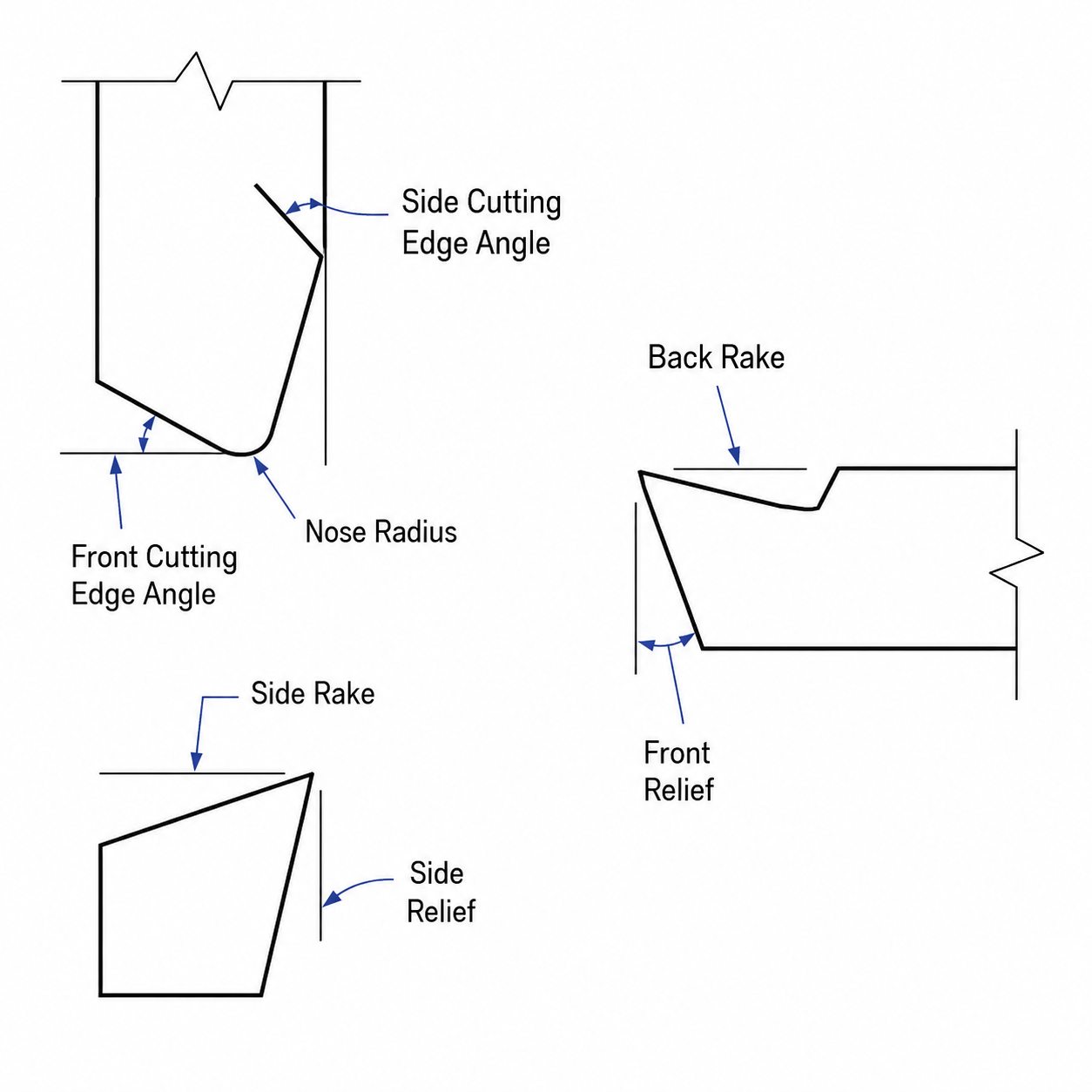
Rake angle is commonly subdivided into side rake and back rake in turning. The angles regulate the flow direction of the chips and the deformation of the materials being cut. Proper rake selection aids in the retention of smooth chip removal and a consistent cutting environment.
Milling Operations
The axial and radial rake are both significant in milling. Such angles affect cutting forces and edge strength. A great deal of end milling is done with a positive radial and positive axial rake. This mixture aids in balancing forces during cutting and in enhancing the surface finish.
Drilling Operations
The rake angle in drilling regulates cutting forces and promotes smooth chip evacuation through the flutes. The right rake angle enables the chips to escape the hole in an optimum way. This assists in lowering the heat and avoiding damage to the tool during deeper drilling operations.
Broaching Operations
In broaching, the tool’s teeth feature a constant or custom positive rake (hook) angle, usually between 5° and 20°, tailored to the material being cut. A small quantity of material is removed by every tooth. This progressive build-up is used to regulate cutting force and chip thickness during broaching.
Sawing Operations
Rake angles in sawing are set to cut continuously. Saw blades that are designed to cut aluminum usually have a positive rake of between +12° and +25°. Hard materials perform best with a strong tool tip, typically featuring a rake angle between 5° and +10°, adjusted for the material and tool type. The geometry enhances the process of breaking chips and minimizes tool wear when cutting in long cuts.
Recommended Rake Angles for Different Materials
All materials respond differently when machining. Material properties vary in terms of heat generation, chip flow, and cutting forces. The rake angle should be the same as the material being cut in consequence. The appropriate angle enhances better chip removal, minimizes tool wear, and maintains the cutting process.
Aluminum and Soft Non-Ferrous Metals
Other soft non-ferrous metals, such as aluminum, are likely to be adhesive to the cutting tool. A steep rake angle assists the tool in cutting through the material without any difficulty. It enables the chips to slide off, and it minimizes friction during cutting. Reduced friction also implies reduced heat and machining.
Recommended rake angle: +10° to +20°
Mild Steel and Carbon Steel
Low-carbon steel and mild steel demand a moderate cutting style. These are materials tougher than aluminum, which can be machined. A medium positive rake angle gives good cutting control as well as retention of tool strength.
Recommended rake angle: +5° to +15°
Stainless Steel
Stainless steel is hard and produces a lot of heat during machining. Typically, the cutting force needed to extrude material in tools is elevated. The rake angle is small, positive, or neutral to control the heat and stop chipping of the edges.
Recommended rake angle: +5° to +10°
Cast Iron
Cast iron is brittle and produces short, fragmented chips, requiring no exceptionally sharp cutting edge for effective machining. This reason makes it unnecessary to have a sharp cutting edge. A rather negative rake angle enhances the tool strength and deals with abrasive particles that are not well handled.
Recommended rake angle: −5° to 0°
Factors Affecting Rake Angle Selection
One of the important choices in machining is the right rake angle selection. The incorrect angle may result in excessive cutting forces, quick tool wear, and low surface finish. The proper rake angle ensures smooth, efficient, and consistent cutting. Before making the decision, there are several factors to be taken into consideration.
Workpiece Material
It mainly depends on the kind of material. A positive rake angle is useful in soft, ductile materials such as aluminum, copper, or plastics. It minimizes cutting forces, enhances chip flow, and reduces heat generation. Hard and brittle materials like steel or cast iron have to be cut at zero or negative rake angle in order to reinforce the cutting edge, or chipping will take place.
Machining Strategy
Rake choice is also dependent on the machining strategy. A negative rake angle gives additional tool strength and life when roughing cuts are done, and excessive material is removed. A positive rake angle is ideal in finishing cuts where precision and smoothness on the surface are important to minimize friction and get a better surface finish.
Cutting Speed and Feed Rate
A positive rake reduces cutting forces at higher speeds, helping to minimize heat buildup. Lower speeds or heavy cuts may require stronger angles, like zero or negative rake, to handle the increased load efficiently.
Tool Material and Strength
Strong yet brittle carbide or ceramic tools are best used at negative rake angles as they have thicker and stronger edges. Positive rake angles can effectively be applied in tougher steel tools.
Finish Requirements on the Surface
The right rake angle is necessary in case part quality is critical. Negative rake angles may produce rough marks and might need further finishing. The positive rake allows smoother surfaces to be attained and decreases rework.
Machine Rigidity and Capabilities
Rake angle is also influenced by machine setup. Loose machinery or smaller systems work well with the positive rake angles to minimize the cutting forces, which will result in reduced vibration and stress. Negative rake tools can be supported by stronger machines, which provide heavier cuts and more difficult operations.
These aspects- material, machining strategy, cutting parameters, type of tool, surface finish requirements, and machine capability- determine the best rake angle to use to achieve efficient, precise, and long-life machining.
What is the Relationship Between Relief Angles, Rake, and Tool Angle?
 Rake and Relief angle
How the chips go off the workpiece is controlled by the rake angle. Positive rake decreases the cutting forces and heat, and enhances surface finish. A negative rake enhances edge strength but demands more power and may result in a greater cutting force.
Relief angle refers to the gap between the tool flank and the finished surface. Inadequate clearance leads to rubbing, higher temperature, and dilution of the cutting edge. Excessive relief causes diminished support of the tool tip; therefore, weakening it.
The included tool angle must harmonize rake and relief angles to maximize cutting efficiency and maintain edge strength.
Conclusion
The correct choice of the rake angle is critical to effective and accurate machining. It affects the flow of the chips, forcing power, surface quality, and tool life. The selection of the appropriate angle is based on material, type of machining, the strength of the tool used, and machine capability. Balancing of the rake, relief, and included tool angle guarantees easy cutting, less wear, and improved tool life. Under the right configuration, you have consistent, good-quality output and maximized productivity.
Premium Parts helps you choose the optimal setup for your material and machining conditions. Our team focuses on smoother cutting, controlled chip flow, longer tool life, and consistent surface quality.
Work with us to turn precise machining strategies into reliable production results.
FAQs
What Is a Nominal Rake Angle?
It typically ranges from – 5° to +20°. Hard materials are best employed in negative angles, whereas soft materials are best employed in positive angles.
What are the most common errors in Choosing Rake Angels?
Several common mistakes can affect rake angle performance. Using a generic cutter can cause tool breakage and a poor finish. High positive rake on hard materials may chip the edge. Negative rake on low-power machines can overload the spindle. Ignoring chip breakers creates long chips, while poor clearance causes heat and tool wear.
How Rake Angle Influences Chip Formation in Machining?
When the rake angle is positive, the chips will be thin and curled, whereas when the rake angle is negative, the chips will be thicker and segmented. Correct rake adjustment can assist in regulating the flow of chips, minimizing jamming, and achieving safer machining.