Working as a CNC machinist or CNC machine operator is a technically demanding job that offers a variety of career paths. CNC machinists can explore roles in programming, product design, quality assurance, and production planning.
This career is ideal for individuals with strong attention to detail, a strong problem-solving ability, and the ability to meet tight deadlines. Many CNC machinists use this role as a stepping stone into engineering and product development. In fact, if you look at the resumes of successful engineers, you might be surprised at how many began their careers as CNC machinists.
A CNC machinist, also called a CNC operator, is a skilled worker. He uses computer software to control machines like drills, lathes, and presses. They ensure parts are manufactured with high precision and accuracy. CNC machinists not only operate the machines but also program them to perform complex tasks. Their work is essential in producing quality parts efficiently and reliably.
This article explains the role of CNC machinists and how they program and operate computer-controlled machines for precise manufacturing.
What is a CNC Machinist?
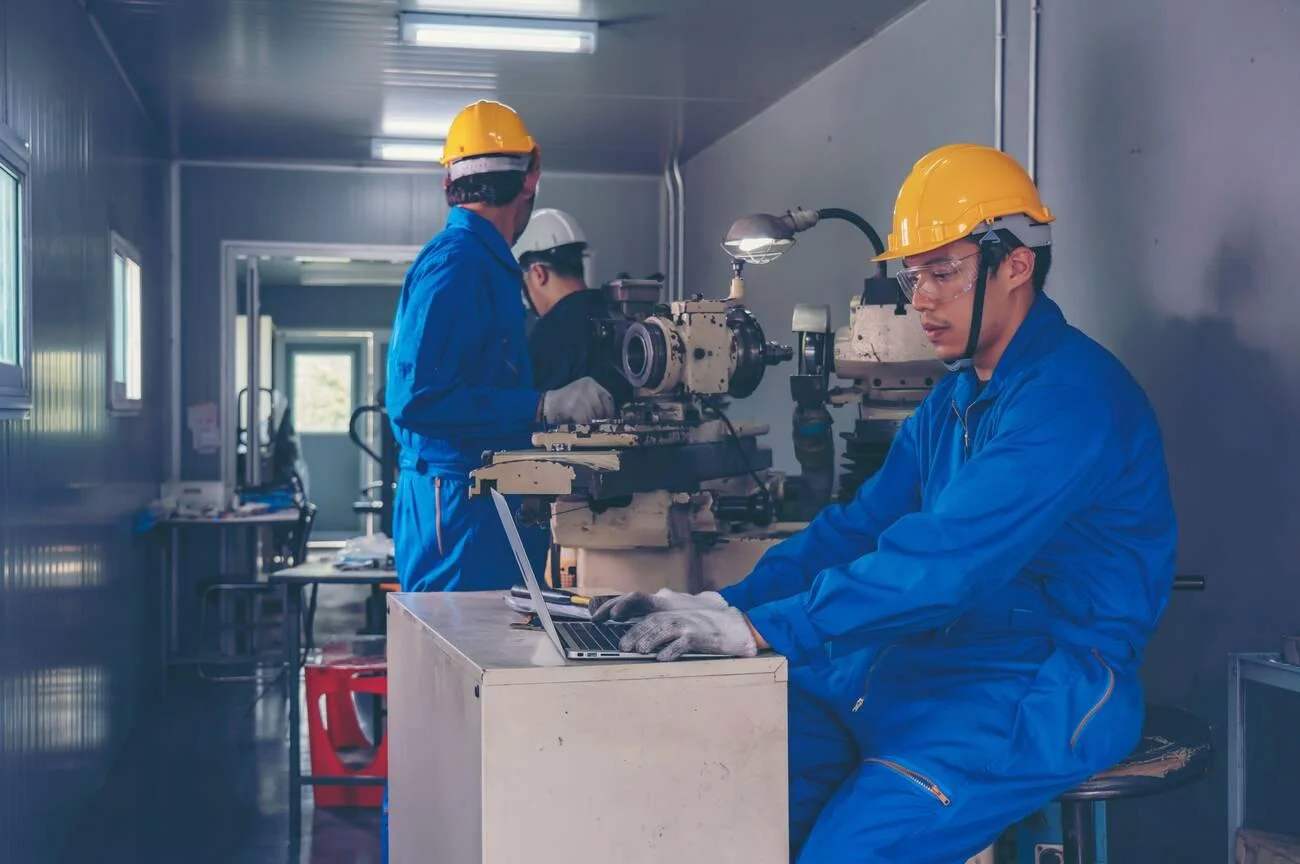 Machinist wearing a safety glove eyes protection while using a table grinding wheel machine for metal finishing
A CNC machinist uses designs, blueprints, or digital data to create parts accurately. The creation of product design using CAD (computer-aided design) also comes under their responsibilities. They will unwittingly set up and run the CNC machines, making sure each part is made correctly and efficiently.
Everything they do revolves around taking ideas and creating something real and valuable through the use of technology. The exact job duties can vary widely across industries, but normally involve a mix of machine setup, operation, and quality control.
In addition, CNC machinists are skilled in the operation and maintenance of CNC (Computer Numerical Control) machinery, as they convert raw materials into parts and components that are precise and have applications in a wide range of industries. Their role plays an important part in the manufacturing industry, from the setup of CNC machines to troubleshooting and operating them.
CNC machinists utilize blueprints and technical drawings to interpret designs daily. They will program the CNC machine with CAM (Computer-Aided Manufacturing) software and complete quality control to confirm that the parts meet the exact specifications.
Additionally, CNC machinists have a combination of expertise in machine tools and cutting tools and knowledge of materials so that they can shape metal and other materials into specified products.
What Role Does a CNC Machinist Play?
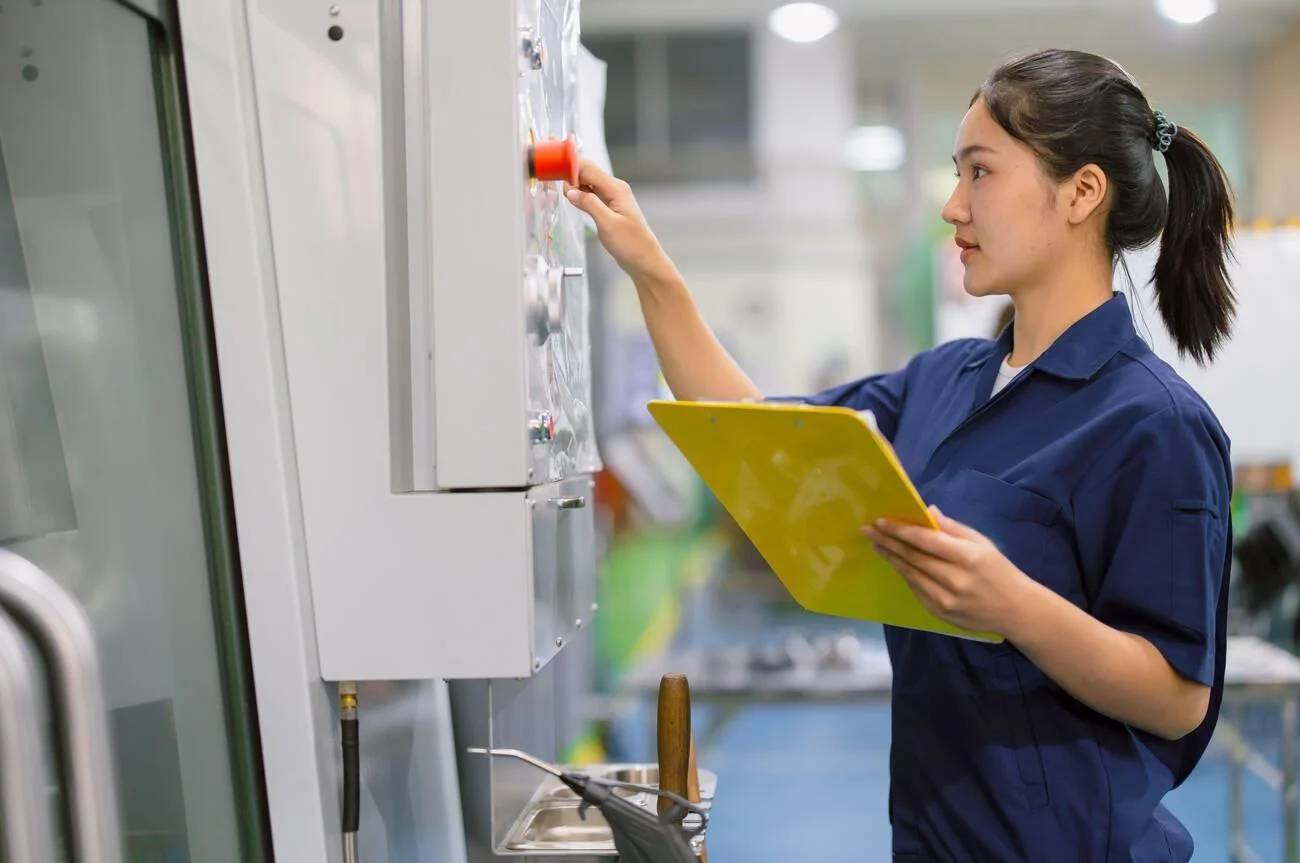 Engineer women control and operate CNC industrial machines in the metal production workshop
CNC Machinist Responsibilities:
CNC machinists operate and maintain computer numerically controlled machines. Their main duties include:
- Reviewing parts for dimensional accuracy using drawings and CAD models as visual references.
- Adjusting machine tool settings, including tool characteristics, speed, and position, to ensure high-quality production.
- Examining samples, drawings, or instructions to understand the specifications for the job.
- Measuring and marking materials for cutting or shaping based on the specifications.
- Planning the sequence of operations needed to complete each job.
- Selecting the appropriate machine and positioning it correctly for the task.
- Loading materials and setting batch sizes according to production requirements.
- Programming machine speed and feed rates for efficient operation.
- Monitoring machine performance during operation, including adjusting feed rates, controlling temperature, and troubleshooting issues.
- Inspecting finished parts to verify they meet specifications.
- Removing defective components to maintain quality standards.
- Maintaining production logs and paperwork accurately.
- Performing routine maintenance on machines to ensure smooth operation.
- Ensuring production stays on schedule and operates efficiently.
What Skills Do CNC Machinists Require?
A CNC machinist must have a thorough understanding of all facets of CNC machining, which would include milling, turning, and close-tolerance manufacturing skill sets.
The CNC machinist is also highly encouraged to be familiar with using CAD/CAM software, like a CNC programmer. Most CNC machinists can perform quality control and metrology inspections using precision equipment, such as calipers, but they should also be able to take measurements.
Moreover, CNC machinists should have an in-depth knowledge of the properties of materials for machining. They should also be able to understand the schematics and manuals to do their duties perfectly.
In addition, strong math skills are important for deciphering blueprints and accurately measuring. CNC machinists also need the physical endurance to handle raw materials and tooling daily.
Important Qualities of a CNC Machinist
A skilled CNC machinist needs more than technical knowledge. Key qualities include:
- Computer proficiency: Comfortable using software to program and operate CNC machines.
- Troubleshooting skills: Able to identify and fix problems that may arise during production.
- Attention to detail: Works with parts made to very tight tolerances where small deviations matter.
- Time management: Can organize tasks efficiently to meet production schedules.
- Problem-solving and adaptability: Can respond quickly to unexpected issues and make adjustments.
- Teamwork: Collaborates effectively with design engineers, supervisors, and quality control teams.
- Passion and dedication: Takes pride in producing precise, high-quality components consistently.
How to Become a CNC Machinist?
The requirements to be employed as a CNC machinist may vary from one employer to another. Generally, to get a job in the CNC machining sector, they need a GED (General Educational Development) or a high school diploma. Machinists will also likely have to complete a formal training program. The training for CNC machining is given on the job or usually through a trade school program.
CNC operator jobs are usually the initial step into the workforce for an employer’s CNC operation. The amount of time before a candidate is operating depends on the employer and their required experience. Some are completing on-the-job CNC education after high school, while others come from a CNC training program as operators.
Where Can a CNC Machinist Work?
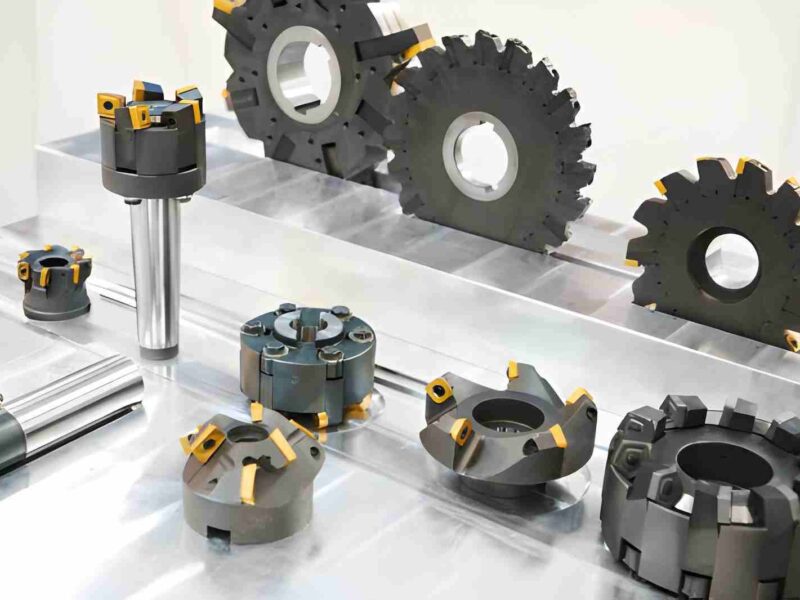
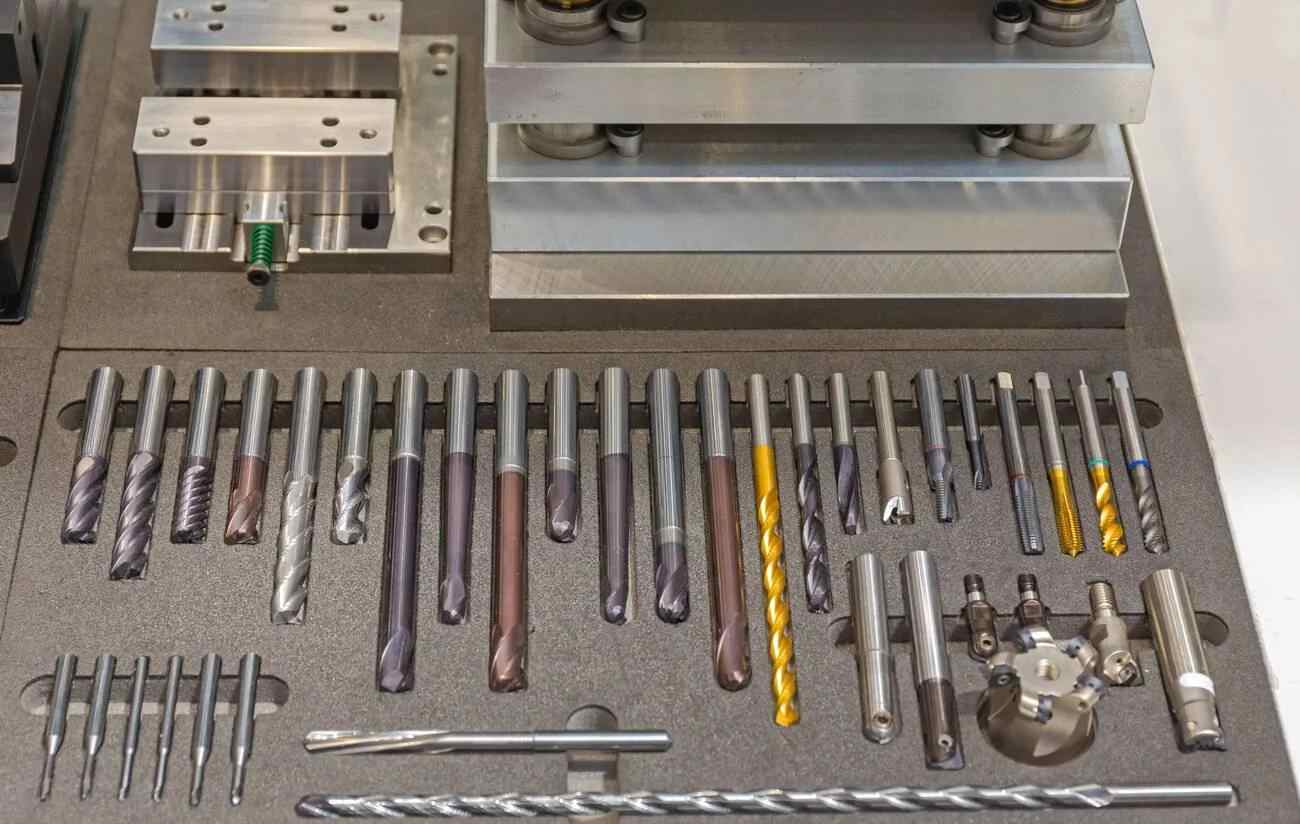 High-Quality Machinist Drill Bit Set, Heavy-Duty CNC Collection
CNC machining shops and manufacturing industries readily accept talented CNC machinists. They can also find work in fields including aerospace, automotive, medical device manufacturing, and electronics.
Some businesses manufacture custom parts or products that rely on CNC machinists. Businesses that produce custom parts or products generally have production runs that often change to satisfy the requests of different customers.
Should We Have Good Match Skills to Become a CNC Machinist?
Absolutely! CNC Machinists must be proficient in math skills. They must interpret blueprints, calculate dimensions/tolerances, and program CNC machines. All require basic arithmetic, algebra, geometry, and trigonometry skills. Further, utilizing measurement and metrology tools also requires math skills to confirm that machined parts are accurate in the drawing or CAD model design.
How Long Does it Take to Become a CNC Machinist?
Becoming a CNC machining specialist can take as little as a few months to a year to accomplish, based on your learning of the basics to advanced-level skills. Initially, you will need to learn the basics, including:
- CNC operations
- Basic operations of the machine tool
- Rudimentary programming skills
Full competence as a CNC machinist, including the capability to program and set up complex parts or jobs, typically requires more training and experience. A machinist could eventually reach this level of competence in two to five years, particularly if they are completing a formal education and certification, while gaining practical experience as they learn. This amount of time is important so that machinists can gain the technical and problem-solving skills necessary for advanced manufacturing jobs.
What Makes a CNC Machinist Different from a CNC Operator?
Some organizations interchange the terms CNC machinist and CNC operator, where the CNC operator has all the aspects of a CNC machinist built into their duties. In many organizations, the CNC operator position is generally considered entry-level in virtually all manufacturing. The operator stocks materials and runs parts, and follows instructions to ensure the final product meets the specifications. The operator sets up and operates CNC machines, unloads raw materials, performs preparatory work to prepare the machine for further testing, and inspects and measures final products. Ultimately, operators do the prep and post-work, while machinists do the actual machining.
A machinist has a slightly higher-level role. Machinists will use various machines and methods to measure and machine parts to blueprints accurately. They gain expertise and enhance CNC machining skills through trade school programs or hands-on experience in the field. As a result, they can machine some complex parts and perform several machining processes.
It is common for machinists to begin as operators and transition to the position of machinist. The CNC industry is very complicated, so machinists often learn the basics of operating a machine before being ready to engage in technical duties.
Where Can CNC Machinists Find Employment?
When we talk about CNC machining, it is a precise form of machining where the tools are driven by input/output controls, which are mostly numerical. The skills of a CNC machinist are easily transferable to other environments. We see CNC machinists in small shops and large industrial plants.
Employment Opportunities for CNC Machinists:
- Machining Shops: Businesses that provide one-off or batch production machining services.
- Manufacturers: Factories that produce parts for end users, primarily in industries like automotive or aerospace.
- Aerospace Companies: Companies that manufacture parts for aircraft and spacecraft.
- Automotive: Manufacturing precision components for vehicles.
- Medical Device Manufacturers: Producing precision instruments and implants.
- Defense Contractors: Supplying machined components for military equipment or vehicles.
- Electronic Manufacturers: Components supplied for consumer electronics or manufactured equipment.
Premium Parts is a certified manufacturer that provides CNC machining services at a pleasant, efficient, and affordable price within your range. If you want to work as a CNC machinist with continual improvement and challenges to resolve, please get in touch with us.
New Sectors for CNC Machinists
CNC machinists are encountering expanding opportunities in new industries with a high degree of precision and advanced material processing capabilities:
- Such industries include renewable energy, which now needs machinists to produce materials for blade assemblies for wind turbines and silicon wafers for solar panels.
- The biotechnology industry uses advanced machining for developing specialized laboratory equipment.
- Organizations working on additive manufacturing require CNC machinists to finish prototypes and make highly accurate fixtures for 3D printing.
- The ongoing growth of the robotics sector requires CNC-machined parts with precise specifications.
- Custom fabrication service opportunities are expanding in the creative industries of film, television, and art installations, necessitating the demand for skilled CNC machinists to create unique, custom materials.
What are the Challenges of Being a CNC Machinist?
CNC machinists encounter several challenges in the precision manufacturing industry:
- First, the high demand for precision means machinists often work with tolerances as tight as ±0.001 inches, which requires intense focus and concentration.
- Second, the technical nature of the work calls for a strong understanding of complex machinery and CNC technologies, which are constantly evolving and require ongoing learning.
- Third, the job can be physically and mentally demanding. Machinists frequently stand for long periods, handle heavy materials, perform repetitive tasks, and rely on specialized skills that become second nature over time.
- Finally, safety is always a top priority. Operating heavy machinery carries inherent risks, so machinists must strictly follow safety procedures and company guidelines at all times.
Conclusion
This article outlines the job of a CNC Machinist by identifying the experience, skills, and characteristics required for success in the position.
Premium Parts is a leading provider for all your manufacturing needs. We offer CNC Machining and other value-added services for your prototypes, production, and everything in between. Check out our website or request a free, no-obligation quote.
FAQs
How Much Can a CNC Machinist Earn?
As of 2025, a CNC machinist can earn up to $50,600 annually. However, the freshers can expect starting salaries of about $42,900. Besides, the senior professionals can earn as much as $63,000.
What Factors Influence a CNC Machinist’s Salary?
A CNC machinist’s salary can be affected by multiple factors, including experience, location, education, company size, market demand, and industry.
Which Country Offers the Highest Pay for CNC Operators?
In 2025, CNC machinists in Hawaii will earn the highest average salary of $68,250. Delaware and Maryland are not far behind, with average salaries of approximately $58,500. In China, it’s also above $50,000.