In machining, understanding the difference between precision and accuracy is essential for producing high-quality parts. These terms are often used interchangeably, but they represent two distinct concepts that directly affect part performance and fit.
Precision in machining refers to repeatability. It measures how consistently a machine can produce the same result across multiple parts. Accuracy, on the other hand, defines how close a machined part is to its intended design dimensions. A process can be precise without being accurate, and accurate without being precise.
Without a clear understanding of both, manufacturers risk producing parts that fail to assemble, perform poorly, or require costly rework. This leads to wasted time, higher production costs, and avoidable delays. The good news is that with the right process control and measurement practices, both precision and accuracy can be effectively achieved in machining.
Furthermore, understanding the difference between these two factors will help you avoid costly mistakes. This is attainable in terms of tight tolerance machining or even zero tolerance machining.
In this article, we will discuss what you need to know about precision vs. accuracy in machining. We will explain the differences, show you how each of them impacts your parts, and tell you what to do to improve both. We’ll also showcase how our services at Premium Parts can help you achieve consistent, high-quality results.
What is Precision in Machining?
Precision is defined by how often the same result can be obtained from machine to machine. In the context of machining, it indicates that your parts will come out the same each time. It’s all about repeatability.
For example, if you are making a large number of components, precision implies that every single part output looks and behaves the same way as the next. This can even ruin the design and produce defects with the smallest of changes.
Why Precision Matters in Machining
Using CNC machining services is meant to be consistent, where all parts have to meet the requirements. Precision CNC milling machines are designed to produce similar results over and over. It is necessary to guarantee that each element is exactly qualified, regardless of the size of the production in progress.
Precision is what industries depend on, where you need parts to work perfectly in one movement.
If executed correctly, precision CNC machining has almost no margin of error. And the result is a perfect set of parts that come together flawlessly every time.
| Precision Factor | Impact on Part Quality |
| Machine Setup | Ensures repeatability |
| Tooling Quality | Reducing inconsistencies |
| Calibration Accuracy | Maintains Consistency |
What is Accuracy in Machining?
While precision means reproducing the same result consistently, on the other hand, accuracy means finishing a part true to its intended design. Accuracy also means meeting the intended measurements.
In other words, accuracy measures how well your machine creates parts. The parts must strictly adhere to the required specifications. CNC close-tolerance machining is a prime example. It requires the part to stay very close to the target tolerance. If it doesn’t, the part becomes unusable.
Why Accuracy Matters in Machining
Accuracy is the assurance that your part is the right size and shape as per your design. The bottom line is that your parts will fit together.
This applies whether you are manufacturing a single prototype or a full product line. Accuracy ensures that the parts fit as intended. With proper accuracy, everything works correctly and functions as expected.
In industries such as aerospace or medical devices, the difference between success and failure typically depends on accuracy.
| Accuracy Factor | Impact on Part Functionality |
| Calibration Techniques | Improves dimensional correctness |
| Machine Settings | Ensures conformity to design |
| Tool Wear Management | Ensures that we do not deviate from our targets |
Process for Measuring and Inspecting the Precision and Accuracy of Machined Parts
In precision vs. accuracy, two necessary steps in the machining process must be measured and inspected. You need accurate measurement tools and procedures to guarantee your parts meet the required standards.
If you don’t have them, you will run into issues.
-
Tools and Techniques for Precision
Several tools are necessary to measure precision.
- CNC coordinate measuring machines (CMM)
- Laser scanning devices
- Micrometers
These tools guarantee that the produced parts do not differ from part to part over time and remain well within the allowable variance.
-
Tools and Techniques for Accuracy
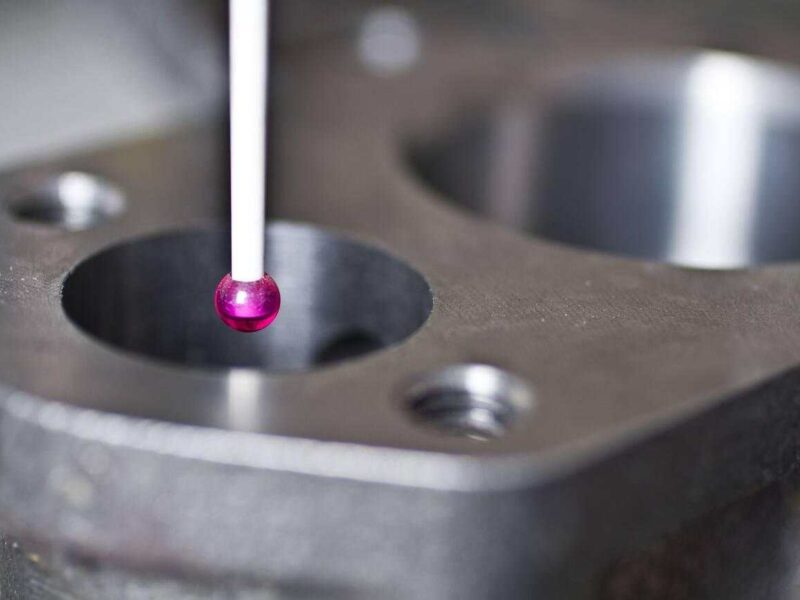
CMMS, dial indicators, and precision gauges are used for measurement in terms of accuracy. These tools check the dimensions of the part. They compare the part’s dimensions to those of the design.
Additionally, they ensure the part matches the specifications set by the engineer or designer for its finished dimensions.
-
Why Do Inspections Matter?
Precision and accuracy inspections are used to detect errors before parts are sent to clients. Additionally, these inspections help minimize costly delays. Parts are machined routinely to meet very tight tolerance machining requirements. The tougher your quality control is, the lower your chance of suffering from delays in production.
Precision vs. Accuracy in Machining: Key Differences
At first glance, precision and accuracy seem to be the same. But they quantify aspects of the machining process that in the past have been of vague or indistinct meaning.
- Precision: The degree of precision is the repeatability of the results of the process.
- Accuracy: Accuracy measures how close a part is to the intended dimensions or target specifications. You can also define the requirement in terms of the degree of conformance to its tolerances.
The interesting part is that a machine can create the same part every time with high precision, yet still produce inaccurate parts if it’s off by a couple of millimeters.
However, a machine can create parts that are precise on average. But they’re not accurate because the parts’ size and shape vary from part to part. Engineers frequently debate precision vs. accuracy when machining so that each part fulfills an exact design specification.
A Quick Example:
Machine A produces parts that never stray more than 0.1mm from one another, but the parts are always 0.5mm too big. It is a precise machine but not an accurate one.
Although Machine B makes parts all over the place in terms of sizing, the parts are generally the correct average size. Although this machine is accurate, it is not precise.
In their perfect form, both precision and accuracy are what you ideally want your machine to be. Enter CNC precision machining, which is where this process leaves off.
How to Improve the Precision and Accuracy of Your Machining Process?
A combination of the right equipment, techniques, and expertise must be achieved for both precision and accuracy. Enhance both with these:
Use Advanced CNC Machines
Precision CNC milling machines are machines that provide excellent precision and accuracy. These machines can make fine adjustments. They ensure the parts are both consistent and correct. Also, they maintain tight tolerances and stay within the actual tolerances.
Regular Calibration and Maintenance
Calibrate and check your equipment on a regular basis. Calibration helps reduce the risk of errors caused by machine drift and ensures you can calculate with consistent precision and achieve accuracy requirements.
Skilled Operators and Engineers
The best machines can only function if they’re managed well. An experienced operator will be able to tune the settings as well as modify the toolpaths. Therefore, both accuracy and precision are maintained throughout the process.
Select the Precision Parts and Tools
Both precision and accuracy rely on the tools and materials that you use in your machining process. High-quality parts and tools will last longer and wear less. This results in superior durability and, consequently, higher precision and accuracy.
Fabricating Precise and Accurate Parts in Different Industries
The industry dictates the level of precision and accuracy that is needed. Let’s go through how these ideas are applied in some of the most important industrial sectors.
Aerospace Industry
A defect as small as possible will have catastrophic consequences in aerospace. In fact, precision and accuracy are not preferred but required. Because of this, manufacturers must make parts with high precision to ensure the assembly functions properly and remains safe.
Automotive Industry
The automotive industry uses precision and accuracy to create parts that fit one into the other perfectly. Parts must be manufactured to perform at an appropriate level of accuracy.
Medical Industry
Medical devices require extreme accuracy. Finished product manufacturing safety and reliability now require much tighter tolerances of parts. Due to the stringent requirements of healthcare applications, these parts are CNC-precision-machined to the appropriate tolerance.
How to Achieve Both Precision and Accuracy In The Same Project
The following elements are essential in making a machining operation both precise and accurate, namely:
Tight Tolerance Machining
Tight tolerance machining is important to make all parts alike and accurate. Machines work within the smallest margins of error. They make parts that meet the highest standards of quality. Engineers design these machines for zero-tolerance machining.
Advanced CNC Machines
Advanced machines, such as precision CNC milling and CNC precision machines, are powered by the latest technology to provide high accuracy and great precision. Skilled professionals perform complex cuts and shaping with remarkable consistency and exceptional accuracy.
Regular Calibration and Maintenance
You should regularly calibrate and maintain your equipment. It allows the machines to run in an optimum condition, which ensures that they are both precise and accurate.
Do You Need High-Precision and Accurate Machined Parts?
At Premium Parts, we ensure precision and accuracy in the work you undertake. These two qualities are not optional; they are critical in the world of machining, which is why we know them. We use the latest CNC precision machining services and equipment. We deliver parts that meet the most stringent standards.
Our Approach:
- Expert Engineering: We collaborate with the clients and ensure that the designs are optimized in terms of precision and accuracy.
- Advanced Equipment: We have precise CNC milling machines for your parts to meet tight tolerance machined parts without compromise.
- Rigorous Quality Control: We strictly inspect every part to ensure it is accurate and precise to your specifications.
Summary
Ultimately, precision vs. accuracy in machining are the two sides of one coin. Knowing the difference will help you optimize your production processes. It will also ensure the parts you make are of the highest quality.
We aim for perfection at Premium Parts, as we provide CNC precision machining services with both precision and accuracy. We have the skills to deliver tight-tolerance machining or advanced CNC precision machines.
Lastly, if you want to know how we can assist you, give us a call today. We will help you develop the right parts for your next project. We’ll also deliver them in a timely manner and at the right price.
FAQs
Is it possible to have a machining process that is precise but not accurate?
Yes, if the parts are the wrong size, the process is not accurate. The machining process can repeat the same result relentlessly. It can rule out any accidents, but the parts are still wrong.
Why do machining tolerances matter?
Tolerances in machining are defined as how much you allow to deviate. For example, in aerospace and medical, even very minor deviations become a critical issue. Hence, part functionality requires tight tolerances.
What would help when trying to improve accuracy while machining?
It means to improve accuracy by employing high-quality tools, regular calibration, and suitable setup and maintenance of machines. And a great way of ensuring this is through CNC precision machining services.
Which industry requires high precision and accuracy in machining?
Such precise and accurate parts are essential in various other industries. To name a few, aerospace, medical devices, automotive, and electronics.
What is the difference between CNC precision machining and regular CNC machining?
Regular CNC machining may not need such high tolerance and precision as compared to CNC precision machining. This is more about tight tolerance and high-accuracy machining.