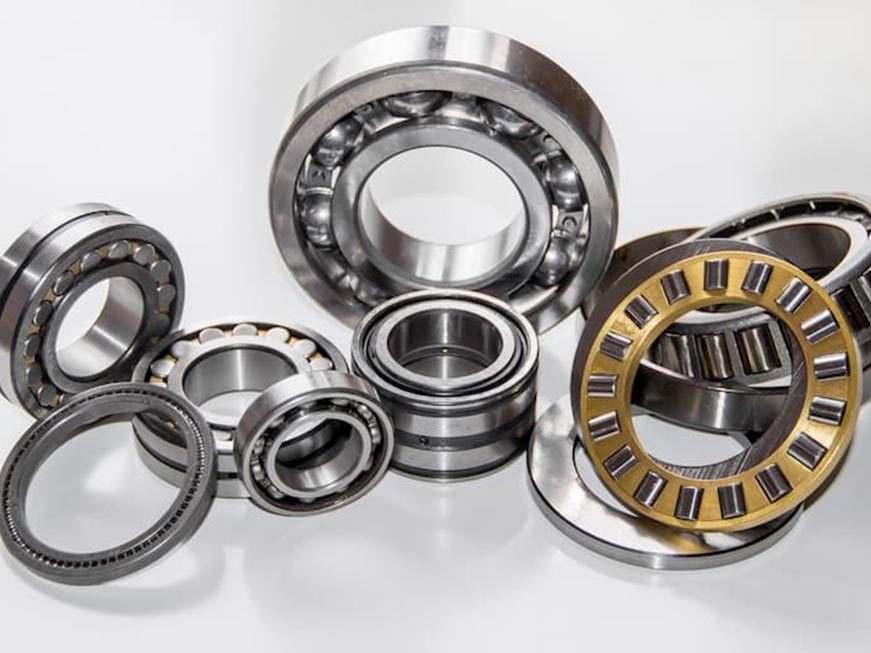
Metallization is a surface finishing process where a thin layer of metal is applied to materials such as plastic, glass, ceramics, or other metals. It is used to improve both the look and performance of a part. After metallization, components gain properties like better corrosion resistance, improved durability, electrical conductivity, and a smooth metallic finish that looks and feels more premium.
In manufacturing, this process is widely used when a solid metal part is not necessary, but a metal-like strength or appearance is still required. It helps reduce weight, control costs, and improve the functional value of products used in industries like automotive, aerospace, electronics, and general engineering.
This article breaks down metallization, covering how the process works, the main techniques used in industry, key advantages, limitations, suitable materials, and its applications.
What is Metallization?
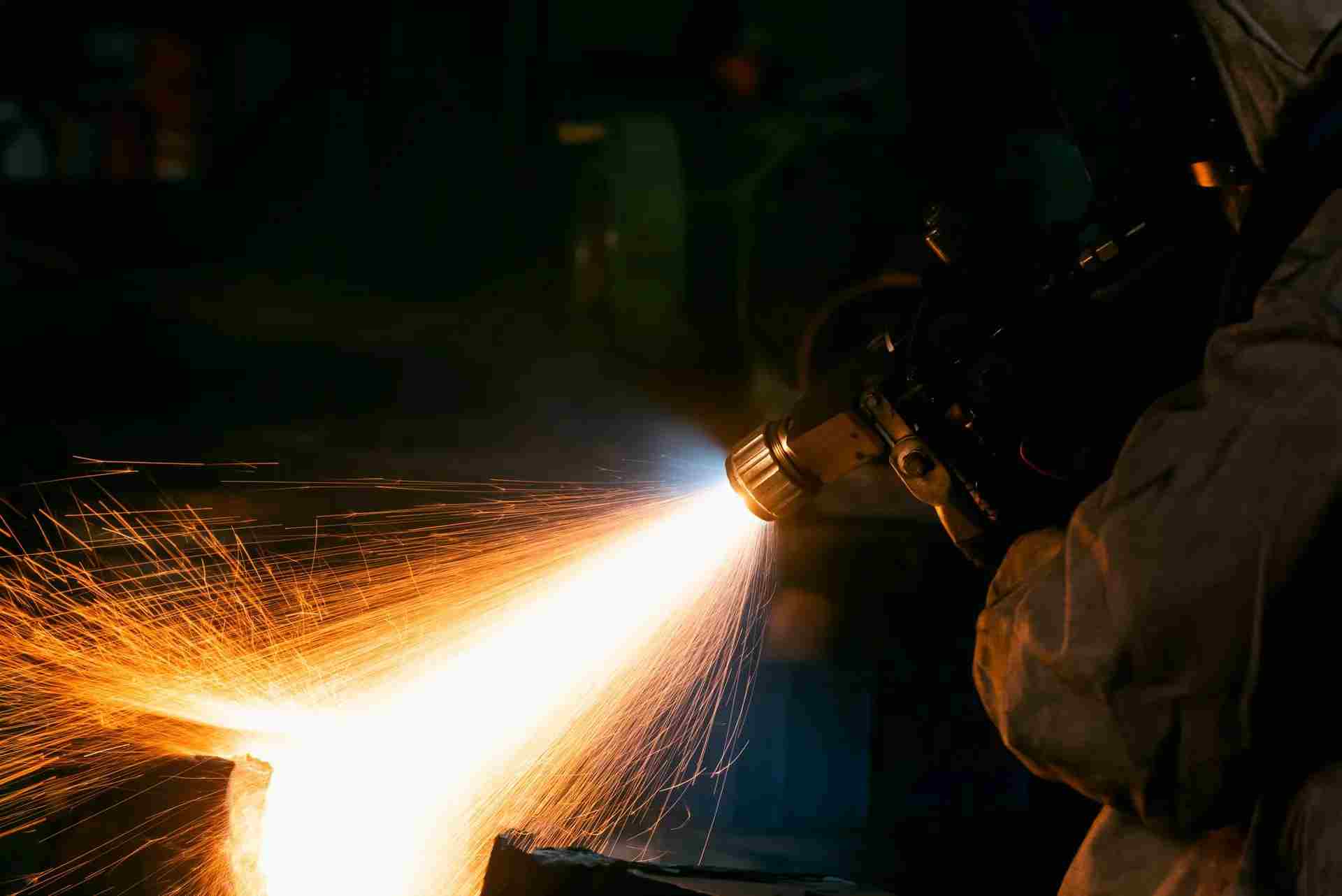 Thermal metallization spray
Metallization is the process of applying a thin layer of metal precisely onto the surface of another material. The other material, called the substrate, can be both metallic and non-metallic.
Commonly, metals like copper, aluminium, zinc, and silver are used. Nickel, chromium, and gold are often also employed. For example, gold is preferred in high-end electronics and aerospace due to its high conductivity and high resistance to corrosion.
During metallization, the metal layer is sprayed onto the substrate. This imbues it with all the metallic properties of metal. This includes, but is not limited to, electrical conductivity, thermal resistance, and a shiny and sleek appearance.
Methodology: How Metallization Works
Metallization process
Step 1: Prepare the surface
Carefully clean the surface of the substrate. You should get rid of any dirt, debris, or rust embedded on it. Employing methods like degreasing, chemical etching, and abrasive blasting ensures that the metal layer adheres appropriately.
Step 2: Activate
Catalysts are used to activate the surface of the substrate chemically. Typically, palladium-based catalysts are employed, and this step is particularly essential for non-metallic materials.
Step 3: Deposit the Metal
This is the main event of metallization. The metal layer can be deposited onto the substrate by any of the following methods:
- Vacuum Metallization: Vaporised metal is spread onto the substrate placed in a vacuum
- Electroplating: An electric current is employed to deposit metal ions
- Thermal Spray: Melted metal is sprayed onto the surface
Step 4: Post-process Care
Seal the metal coating by curing, polishing, or applying a sealant topcoat. This enhances the physical appearance of the substrate. Additionally, it also ensures durability and resistance to corrosion in the long run.
Benefits and Limitations of Metallization
Benefits of Metallization
- Increased Durability: Metal coatings are generally less likely to peel, blister, or flake when they are properly applied. This helps maintain a stable surface finish over time and improves the overall durability of the part. As a result, the component performs better in long-term use and requires less frequent maintenance compared to conventional surface finishes.
- Electrical Conductivity: Metallization of a substrate allows it to conduct an electric current. This application comes in very handy for the use of the said component in electronics, as it makes non-conductive materials conductive.
- Endurance to Harsh Weather: The metal coating after metallization separates the core structure of an object from the outer world. Thus, protecting it from alternating weather conditions like rain, sun, or snow.
- Lower Maintenance Costs: Metallic coatings are made to last and don’t easily peel or come off when applied properly. Because of their strong bond with the surface, they usually don’t need to be applied again. This makes them more durable compared to paint, which often needs to be redone over time as it can fade, scratch, or peel with use.
- Improved Resistance to Corrosion: Rust and corrosion are common issues for metal parts, especially when they are exposed to moisture, air, or tough working conditions. A metallic coating helps by forming a protective layer on the surface of the material. This layer stops water and air from reaching the base material, which slows down rust formation. As a result, the part stays in good condition for a longer time and needs less maintenance.
- Minimal Surface Distortion: Metallization is typically carried out at low thermal load, which reduces the risk of dimensional change in the substrate. Because the process does not involve high temperatures, it is suitable for heat-sensitive materials that may otherwise warp, shrink, or lose structural accuracy under conventional coating methods. This allows the component to retain its original geometry while still receiving a uniform metallic layer.
Limits of Metallization:
- Hard to Achieve an Even Coating Thickness: Generally, a very thin metal layer is applied. For objects with smaller cavities and intricate designs, it becomes hard to maintain an even thickness and reach into the smaller crevices. This can severely affect the object’s resistance to corrosion and longevity in the long run.
- Requires Extensive Surface Preparation: The substrate needs to be thoroughly cleaned, degreased, or even chemically etched to make sure the metal coating sticks well to its surface. Otherwise, it can result in poor bond formation, damaging the metal-like qualities the object was supposed to inherit.
- Environmental Sensitivity: During metallization, environmental conditions like temperature, humidity, air pollution, etc., can severely impact how strongly the bond forms between the surface of the substrate and the metal coating.
Common Metallization Techniques
Thermal Spray Metallization
Thermal spray metallization is a technique that evenly sprays a layer of metal onto the surface of the substrate. First, a metal, in powder or wire form, is added to a thermal spray gun. Then, it is heated until it converts to a molten state using a high-temperature flame or electric arc. Compressed gas or air is then employed to push the tiny metal particles onto the substrate. When they hit the surface at high speed, the droplets cool down rapidly.
The metal solidifies and forms a protective layer. This technique is widely used in industries like oil and gas, aerospace, automotive, and when building industrial machinery.
Vacuum Metallization
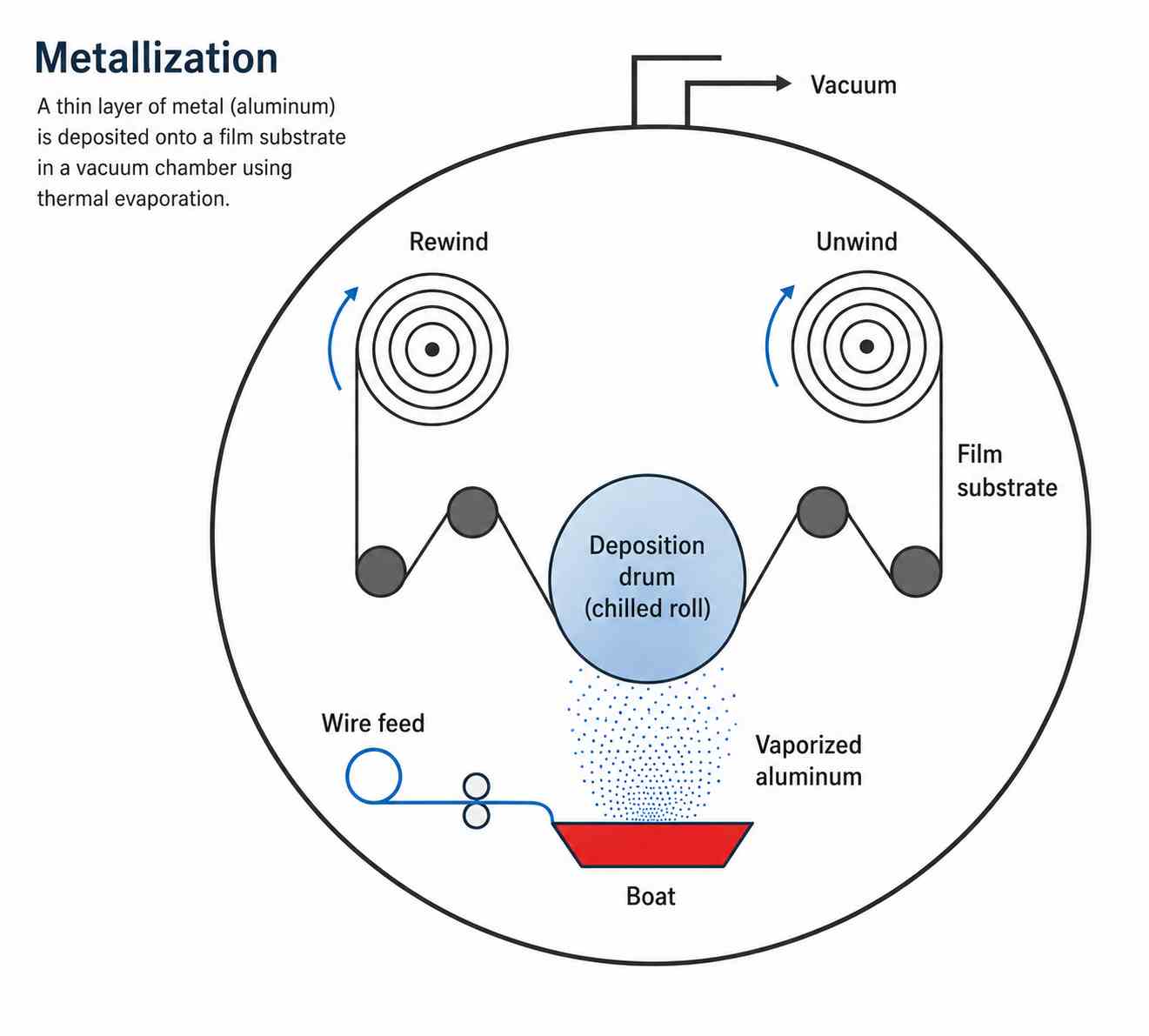
Vacuum metalization is a technique in which vaporized metal is spread onto a substrate inside a vacuum chamber. The substrate can be metallic or non-metallic.
Firstly, the vacuum chamber is evacuated of any air or gases to create an environment with low pressure. Then, the metal coating is heated until it evaporates and vaporizes inside the chamber. The vapours then spread throughout the space, and upon coming in contact with the surface of the substrate, they condense.
The evacuation of the vacuum before the coating ensures no contamination and the formation of a stronger bond between the metal and substrate. This is widely used for decorative purposes and specifically, electromagnetic interference (EMI) or radio frequency interference (RFI) shielding.
Electroplating
Electroplating is used to embed a thin layer of metal onto another metal or conductive plastic. In either situation, it is required for the substrate to conduct electrical current.
It is then placed into an electrolyte, which is a solution containing metal ions. Then, on the positively charged anode, a metal bar of the same metal ions is connected. On the negatively charged cathode, the object in question is placed. An electric current is then run through the circuit. The ions in the electrolyte get deposited onto the object at the cathode. This is called reduction. On the anode, ions leave the metal bar and enter the electrolyte. This is called oxidation.
Electroplating results in an even and uniform coat of metal deposited onto the substrate. It has many industrial and commercial applications: increasing the aesthetic appeal of an object, preventing corrosion, reducing friction, and designing jewellery and integrated circuits.
Chemical Vapor Deposition (CVD)
CVD is a vapor-based technique like PVD. However, it makes use of chemical reactions in a vacuum. The main component is a reactor chamber, inside which the substrate is placed and heated.
Then, reactive gases are sent into the chamber, and upon contact with the surface of the substrate, a chemical reaction occurs between them. As a result, a solid metal coat is deposited onto the substrate, and other by-products leave in the form of gases. CVD coatings are ideal for objects with small crevices and intricate designs.
Materials Used in Metallization
Metallization works with many different base materials, which makes it useful across various industries. Here are the common examples:
- Metals: steel, aluminum, brass, copper, zinc, nickel.
- Ceramics
- Glass
- Plastics: nylon, PET, PVC, polycarbonate, polypropylene, polyethylene.
- Eco-friendly Materials: foams, rubbers, elastomers, polymer composites, biodegradable plastics.
Applications of Metallization
Aerospace
Metallization is used to enhance the durability, strength, and resistance of various aircraft components. This helps increase the lifespan of parts regardless of the frequency of usage.
Automotive
Several automotive parts are metallized for two primary reasons: increasing their visual and aesthetic appeal, and making them more resistant to corrosion.
Electronics
Metallization is used to enhance the electrical conductivity of various electrical components, making them suitable and durable for use in appliances.
Construction
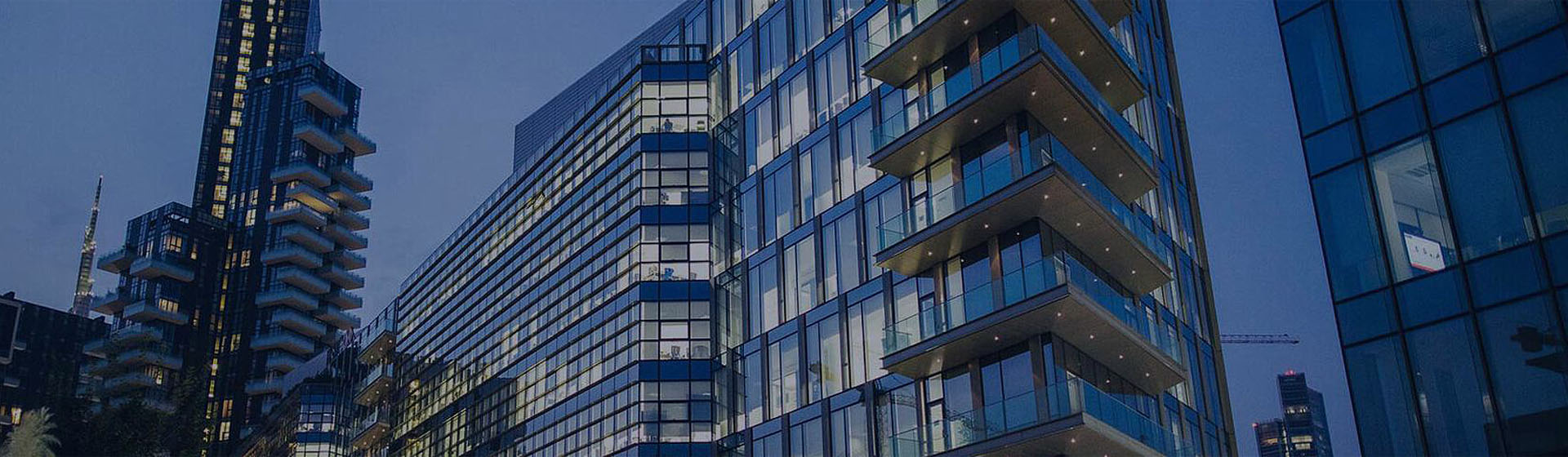
Different steel structures and other building materials are given a metallic coating to protect them against corrosion and environmental factors like temperature, humidity, and air pollution. This helps stabilize the structural integrity of infrastructure.
Common Metallization Challenges – How to Avoid Them?
Burnt or Discolored Spots
The problem depends on where the spots are seen. If it is a front-end burn, it may signal a vacuum leak. In the case of a rear-end burn, there may be a clogged valve or oil backstreaming. However, if the burning is widespread, it might be moisture, low-quality aluminium, or uneven heating.
Appearance of Colored Rings
If pink or green rings appear on the surface, it usually means the coating is too thin or there is not enough metal deposited, especially in aluminium-based coatings. This results in an uneven finish.
Dull or Uncoated Areas
Some parts may look dull or remain uncoated if they are not properly exposed during the process. Adjusting the rotation or positioning of the object helps achieve a more even coating across all areas.
Incorrect Method Selection
Every substrate does not work with every metallization technique. For example, thermal spray metallization can damage or deform heat-sensitive materials, leading to poor results.
Poor Surface Preparation and Environment
If the surface is not properly cleaned or etched, the coating will not stick well. At the same time, factors like moisture, humidity, and temperature also affect how well the coating forms and performs.
FAQs
Can we use any Metallization technique for Non-metals as well?
Metallization can be employed for both metals and non-metals. However, certain techniques would suit certain materials better.
Which Metallization method should I use?
Each technique serves a distinct purpose. It solely depends on what you are trying to achieve to decide which process is best suited for you.
Can You Paint on a Metallized Coating?
Yes, a metallized surface can be painted if required for decorative or functional purposes. In most cases, it accepts additional coating layers as long as the surface is properly prepared for adhesion.
How Long is a Metal Coat Likely to Last?
Different coatings can last anywhere between 5 and 40 years. Many factors can influence this: environmental conditions, thickness, quality of material used, and frequency of maintenance.