Injection molding is a mid to high-volume manufacturing process used to produce plastic parts with consistent shape, tight tolerances, and repeatable quality. It is widely used in industries where accuracy, material stability, and production efficiency are important.
The process is used to make parts like housings, brackets, connectors, enclosures, caps, and structural components. These parts often include ribs, bosses, thin walls, and snap-fit features. Molten plastic is injected into a mold cavity under controlled pressure and temperature to form complex shapes.
Industries such as automotive, medical, electronics, aerospace, and industrial equipment use injection molding because it offers good dimensional control, high repeatability in multi-cavity production, and compatibility with engineering plastics like ABS, PC, nylon, and PEEK. Typical tolerances can range from ±0.05 to ±0.2 mm depending on part design and tooling.
This article explains the industries that use injection molding and how it is used in real production. It also covers key engineering factors like shrinkage, gate design, cooling control, and post-molding operations that affect part quality and consistency.
Why Injection Molding Is Widely Used Across Industries & Its Limitations
Injection molding is widely used in high and mid-volume production because it delivers consistent parts with strong repeatability. The real value is not just fast cycle times, but how reliably it can reproduce complex geometries over long production runs.
In practice, though, the process is sensitive. Small changes in temperature, pressure, or cooling can directly reflect in part quality. That’s why injection molding is rarely treated as a standalone solution. It is usually supported by inspection, finishing, or machining to make sure the final parts meet functional requirements.
High Repeatability in Mass Production
- Parts can be reproduced with consistent geometry across thousands of cycles.
- Dimensional stability depends on controlled pressure and melt conditions.
- Mold design includes shrinkage compensation to maintain accuracy after cooling.
- Multi-cavity tools rely on balanced flow to avoid part variation.
- Typical tolerance capability can reach around ±0.05 to 0.1 mm, depending on design and material.
How Melt Flow Shapes Part Quality
- Molten plastic flow is strongly influenced by temperature and viscosity changes.
- Thin sections need a higher injection pressure to fill the cavity.
- Gate position plays a key role in controlling flow direction and packing behavior.
- Weld lines can form where flow fronts meet, which may slightly reduce strength.
- Poor venting can trap air and cause short shots or burn marks.
Where Defects Usually Come From
- Sink marks often appear in thicker areas where cooling is uneven.
- Warpage is linked to uneven shrinkage and internal stress buildup.
- Residual stress develops when the part cools under constraint inside the mold.
- Gate marks are typically the result of freezing and trimming limitations.
- Dimensional variation can come from unstable mold temperature or cooling imbalance.
Cooling Control and Its Real Impact
- Cooling usually takes the longest part of the cycle, often more than half.
- Uneven cooling can distort geometry even if the mold design is correct.
- Mold temperature stability directly affects shrinkage behavior.
- Poor cooling layout leads to internal stress differences across the part.
- Advanced cooling channel design helps improve consistency in complex parts.
Why Post-Processing Is Often Needed
- Some parts require CNC machining for tight tolerance features.
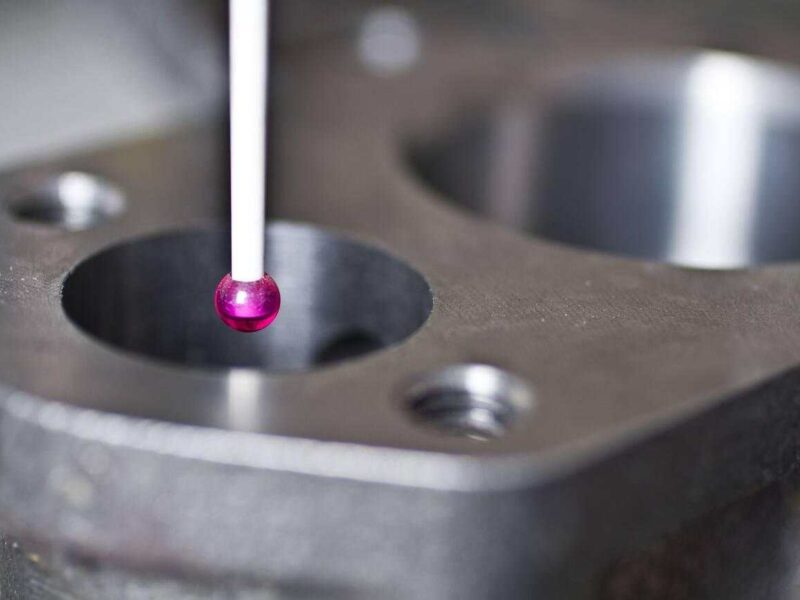
- Inspection using CMM ensures dimensional compliance before assembly.
- Gate trimming and flash removal are common finishing steps.
- Surface finishing improves both fit and appearance.
- Secondary operations help correct small deviations from molding limits.
Thinking Beyond the Mold Itself
- Injection molding works best when part design, tooling, and post-processing are aligned.
- Mold design includes compensation for shrinkage and material behavior.
- Process monitoring helps maintain stability across long production runs.
- Final part quality depends on the full manufacturing chain, not just molding.
- Integration with machining improves reliability for functional components.
Industries That Use Injection Molding & Typical Parts Made
Below are the main industries and the kinds of parts typically produced.
Automotive and Transportation
The automotive industry is one of the first and greatest adopters of injection molding. It is widely used in structural, enclosure, aesthetic trim, sensor housings, and under-hood elements in the industry.
The cars produced nowadays have thousands of injection-molded components. Each serves a unique functional purpose and has varied exposures to the environment. These parts have to be stable on thermal cycles, not affected by chemicals or UV light, and should withstand vibration, mechanical stress, etc.
These restrictions become issues of uneven contraction, developing holes in thicker components, and the drift of dimensions when filled into the mold.
Typical Parts Made:
- Interior panels and dashboard components.
- Air vents and ducting parts.
- Sensor housings and brackets.
- Fluid reservoirs and caps.
- Electrical connector housings.
Assembling parts with overmolding (like adding metal or elastomer inserts into molded plastics) is becoming more common and larger in scale.
These parts need careful coordination between the mold design and later assembly steps. In many cases, simulation is used to predict how the material flows, including where gates will form and where weld lines may appear.
Medical and Pharmaceutical
In medical and pharmaceutical manufacturing, injection molding is used where precision, hygiene, and strict regulatory control are essential. Parts such as inhalers, test cartridges, syringe housings, and catheter connectors must be produced with very tight dimensional accuracy and under clean production conditions. These components are usually made in high volumes, and each batch must be fully traceable to meet safety and compliance standards.
- High precision and strict regulatory control
- Clean production conditions
- High-volume manufacturing with full traceability
Another important technical issue is the trade-off between the speed of the cycles and feature fidelity. Thin-walled parts may deform if cooled unevenly. In areas that need fluid sealing or optical capabilities, features are to be stress-free and free of contamination. In the case of Class II and III medical equipment, slight differences in flash or draft may jeopardize sterility or operator safety.
- Trade-off between cycle speed and feature fidelity
- Risk of deformation in thin-walled parts
- Sensitivity to flash and draft in critical devices
Another critical area is biocompatibility. The engineers in this field may need to use special types of resins or materials, such as medical-grade polycarbonate, POM, or TPU, which add complexity to handling and shrinkage issues. These parts are usually inspected to ISO 13485 specifications and deburred; they may undergo ultrasonic welding and/or bonding to other parts post-molding.
- Biocompatibility requirements
- Use of medical-grade materials (Polycarbonate, POM, TPU)
- Inspection and post-processing requirements
The medical industry pursues repeatability, traceability, and long-term part stability, but not necessarily at optimal cost or throughput. This can be a considerable step beyond just creating a controlled environment and ensuring good coordination between primary processes and any secondary processes that might be involved.
- Focus on repeatability and traceability
- Emphasis on long-term stability over cost
Consumer Electronics and Telecommunications
The injection molding process is used extensively in consumer electronics, in housings, buttons, connectors, lens holders, and internal mounting structures. Such components need to meet aesthetic, functional, and production requirements in compact form factors, with stringent material and surface finish as well as tolerance requirements.
- Housings, buttons, connectors, and internal structures
- Compact form factors with tight tolerances
- High aesthetic and surface finish requirements
Common applications of electronics housings usually involve engineering plastics such as PC/ABS, filled nylons, or even flame-retardant resins, which are notoriously difficult to mold in terms of flow characteristics and shrinkage characteristics. Issues of warpage around screw bosses, flow lines on cosmetic surfaces, and tolerance stack-ups around ports or button interfaces persist.
- Use of PC/ABS, filled nylons, and flame-retardant resins
- Challenges in flow and shrinkage behavior
- Warpage, flow lines, and tolerance stack-ups
To counter these problems, many OEMs are using multi-cavity tools and high-precision inserts on dimension-sensitive areas. These OEMs may outsource post-mold quality activities such as burr removal or insert assembly. Color matching, surface texturing, and dimensional accuracy also count at the product validation stage, particularly when the products must undergo a tight-fit assembly or fall test.
- Multi-cavity tools and precision inserts
- Post-mold operations like burr removal and assembly
- Importance of color, texture, and dimensional accuracy
This sector shows that injection molding can support fast design changes and product updates. But it only works well when mold design matches how the material actually behaves during molding, and when inspection rules are clearly defined to keep part quality consistent.
- Supports fast design changes and updates
- Requires accurate mold design and inspection control
Packaging, Food, and Beverage
Volume and speed are the priorities of the packaging industry. Bottle caps, food containers, dispensers, safety seals, and closures are produced using injection molding. Molds can last hundreds of millions of cycles per year, and tool integrity, including ejection design and cooling system, can be as critical to part quality as the geometry itself.
- High-volume and high-speed production
- Bottle caps, containers, seals, and closures
- Tool design and cooling strongly impact quality
Lightweighting introduces both mechanical and thermal complexity. Parts often include sections thinner than 0.5 mm. These parts contain ribs and undercuts that must be filled and cooled as quickly as possible. Shrinkage variations may occur when cycle time consistency is not controlled, affecting lid fit and sealing performance.
- Thin sections below 0.5 mm
- Fast filling and cooling requirements
- Shrinkage variation affects sealing and fit
Material selection must balance stiffness and clarity (e.g., PET or polypropylene) with chemical resistance to substances such as alkalis, acids, and alcohols, especially for products exposed to oils or liquid formulations. At the same time, food-contact applications must follow regulatory requirements that ensure full material traceability and proper documentation.
- Balance of stiffness and clarity (PET, polypropylene)
- Resistance to acids, alkalis, and alcohols
- Regulatory compliance and traceability
In fast-moving consumer goods, visual and dimensional inspection is commonly performed using inline inspection systems. Clean sealing surfaces are ensured through post-mold trimming or mechanical deflashing. Packaging engineers understand that performance depends not only on the molded part but also on how it is processed, stacked, and transported along the production line.
- Inline visual and dimensional inspection
- Post-mold trimming and deflashing
- Handling, stacking, and transport affect performance
Aerospace and Defense
Molded parts for aerospace and defense have requirements that go beyond geometry. These industries require heat resistance and a predictable structure in addition to strict adherence to well-regimented documentation.
- Heat resistance requirements
- Predictable structure performance
- Strict documentation compliance
Examples of injection-molded parts include cable routing brackets, ventilation ducts, EMI shielding components, and access covers. These parts are often used in demanding environments where both mechanical strength and stability are important.
- Cable routing brackets and ventilation ducts
- EMI shielding components
- Access covers
- High mechanical strength and stability are needed
Materials like Ultem, PPS, and glass-filled polymers are chosen because they offer high flame resistance and maintain performance under long-term exposure to vibration, pressure, and moisture. Engineers typically use these advanced materials when standard plastics are not sufficient for the operating conditions.
- High flame resistance materials (Ultem, PPS, glass-filled polymers)
- Resistance to vibration, pressure, and moisture
- Used when standard plastics are not sufficient
However, these materials are not easy to process. High viscosity, shrink rates, and stress behavior complicate mold fill and mold cooling. This is regularly achieved by using simulation software and DOE (Design of Experiments) during the development phase to achieve consistent results.
- High viscosity and shrinkage challenges
- Mold filling and cooling complexity
- Use of simulation and DOE for process control
Moreover, molded components in these industries are likely to be dimensionally verified by CT scanning or CMM assessment to attain traceability and structural integrity. For higher-end defense programs, engineers may specify part serialization and compliance with AS9100 standards for part quality and process control.
- CT scanning and CMM inspection
- Dimensional verification and traceability
- Part serialization in defense programs
- AS9100 compliance for quality and process control
Industrial Equipment and Construction
Molded plastics in construction tools, HVAC equipment, and the heavy equipment industry replace metal components in non-structural areas to reduce cost and corrosion. Injection molding applications in this sector often support high-mix production and include housings, knobs, gears, cable guides, valve bodies, and connectors.
- Replacement of metal in non-structural areas
- Cost reduction and corrosion resistance
- High-mix production capability
- Housings, knobs, gears, cable guides, valve bodies, and connectors
These components are usually exposed to mechanical stress, shock, or cyclic temperature changes. As a result, materials such as reinforced nylon, glass-filled polypropylene, or thermoplastic elastomers are commonly used. However, thick sections in long-life components can lead to non-uniform cooling, which may cause sink marks or internal stress concentrations.
- Exposure to stress, shock, and temperature cycling
- Use of reinforced nylon, glass-filled PP, and TPEs
- Risk of sink marks and internal stress in thick sections
Design engineers often incorporate ribs, bosses, and undercuts to improve strength. However, the design must still support proper flow during molding. Post-machining is often required to improve sealing surfaces or create precision bores for press-fit components.
- Use of ribs, bosses, and undercuts for strength
- Need for good material flow during molding
- Post-machining for sealing and precision fits
Tool design plays a critical role in cycle efficiency, part life, and mold durability. High filler content and abrasive fibers can increase mold wear, which must be considered when defining part tolerances and process windows.
- Tool design impacts cycle efficiency and mold life
- High filler and fibers increase wear
- Careful definition of tolerances and process windows
Agriculture and Outdoor Equipment
Agriculture uses injection molding for tractor components, irrigation systems, drones, planting equipment, and chemical sprayers. These parts must resist UV exposure, water, abrasion, and harsh chemicals such as fertilizers and herbicides.
- Tractor, irrigation, drones, and sprayers
- Resistance to UV, water, and chemicals
Key components such as hose fittings, enclosure panels, sensor housings, and fasteners must perform reliably in outdoor environments. They face wide temperature changes, shock loads, and continuous weather exposure.
Fiber-reinforced resins are commonly used to provide strength and weather resistance. However, they can still face issues like warpage from uneven cooling and dimensional instability during long-term outdoor use.
Engineers address these challenges by selecting UV-stabilized materials such as nylon, polyolefins, or acetal blends. Post-processing is often used to improve threads, sealing surfaces, and alignment features for better field performance.
- UV-stabilized materials (nylon, polyolefins, acetal)
- Post-processing for sealing and threads
Standardized tolerances and repeatable tooling help ensure easier maintenance and repair in the field, especially in remote farming areas. This improves serviceability and reduces downtime.
Robotics and Automation
Injection molding plays a crucial role in the robotics industry. High-performance polymers are used for housings, gear covers, cable guides, and sensor mounts. These parts help achieve both structural integrity and weight reduction. Many applications also require electrical shielding or must operate in areas where friction is unavoidable.
- High-performance polymer housings and covers
- Weight reduction with structural strength
- Electrical shielding and friction resistance needs
The main challenge for engineers is precision and dimensional repeatability. Even small variations can affect motion accuracy, alignment, and wear life in robotic arms or autonomous systems. Issues like warpage, gate blush, or flashing at mating surfaces can also reduce enclosure sealing quality in compact assemblies.
Where high precision is required, secondary machining or insert molding is often used to achieve tighter tolerances. In some cases, designs are simplified outside the mold to reduce complexity, especially for low-volume production or rapid prototyping.
As robotics moves toward large-scale production, the balance between part precision, weight, and production cost becomes a key design factor. Hybrid molding techniques combined with digital validation are increasingly important for consistent performance and scalability.
Sporting Goods and Wearables
Injection-molded components bring ergonomic shape, toughness, and flexibility into sports wearables and equipment. Applications include protective clothing, inner hard shells of helmets, cleat parts, fitness tracker housings, and water-resistant interfaces for smart wearables. These products must be mechanically strong, comfortable, and visually presentable.
- Ergonomic shape and user comfort
- High toughness and flexibility
- Protective gear and wearable housings
- Strong and visually presentable design
Elastomers and dual-shot injection molding are commonly used in this area to overmold grip sections or create flexible sealing surfaces. Thermoplastic polyurethane (TPU), thermoplastic elastomer (TPE), and rubber-like resins are widely used, but they also introduce challenges in mold filling, flash control, and bonding consistency.
- Use of elastomers and dual-shot molding
- Overmolding for grip and sealing areas
- TPU, TPE, and rubber-like materials
- Challenges in fill, flash, and bonding consistency
Surface finishing is important when products are in direct contact with the skin. Processes such as texturing, gloss control, and uniform coloration require tight control of molds and cycle times. Wearables may also include optical windows, charging ports, or internal sensors, which increase molding complexity.
- Skin-contact surface finishing requirements
- Texture, gloss, and color control
- Optical windows and charging port integration
- Added complexity from embedded sensors
The engineering challenges in sports and fitness markets require strong integration of form and function in design. In many cases, close collaboration between mold designers and product developers is necessary to ensure manufacturability at scale.
- Integration of form and function
- Collaboration between design and tooling teams
- Scalable manufacturability focus
Renewable Energy and Environmental Systems
The renewable energy industry increasingly uses injection molding for components in wind energy systems, solar photovoltaic installations, EV charging stations, and environmental monitoring devices. These applications often demand similar performance levels to industrial and aerospace sectors, especially in mechanical strength, environmental resistance, and dimensional stability.
- Wind, solar, EV charging, and monitoring systems
- High mechanical and environmental performance needs
- Strong dimensional stability requirements
Typical molded parts include junction boxes, panel clips, sensor housings, cable strain relief components, and internal brackets. These parts are exposed to UV radiation, ozone, salt spray, and long-term thermal cycling throughout their service life. As a result, engineers commonly use high-performance thermoplastics such as polycarbonate, PPS, and UV-stabilized polyamide blends.
- Junction boxes and sensor housings
- Cable strain relief and brackets
- Exposure to UV, ozone, and salt spray
- Use of PC, PPS, and UV-stabilized nylon blends
Long product lifetimes also introduce additional challenges, including mold wear over multi-year production cycles, batch-to-batch consistency, and evolving regulations related to recyclability and RoHS/REACH compliance.
Injection Molding Standards Overview
| Standard | Applies To | Purpose / What It Ensures |
|---|---|---|
| ISO 9001 | All industries | Quality management and process consistency |
| ISO 13485 | Medical devices | Medical-grade quality and traceability |
| ISO 14644 | Cleanroom production | Controlled environment for low contamination |
| FDA 21 CFR 177 | Food contact products | Safe plastic materials for food use |
| RoHS | Electronics | Restriction of hazardous substances |
| REACH | EU consumer products | Chemical safety and material compliance |
| UL 94 | Electrical parts | Plastic flammability rating and fire safety |
| ASTM standards | Material testing | Mechanical and thermal property validation |
| ISO 2768 | General manufacturing | Standard dimensional tolerances |
| IATF 16949 / PPAP | Automotive | Production quality and defect prevention |
Injection Molding Services from Premium Parts
If you are working on high-precision plastic components, production-grade prototypes, or scaled manufacturing projects, Premium Parts Injection Molding Services can support your needs from concept to production.
With engineering evaluation, material selection support, and fast tooling options, they help convert designs into functional parts with controlled quality and repeatability. From low-volume prototypes to mass production, the process is optimized for speed, accuracy, and cost efficiency.
Request a free Quote from Premium Parts today and turn your design into production-ready molded components with professional engineering support.