Machinability defines how a material responds to machining operations such as turning, milling, drilling, or cutting with standard tools. It encompasses factors like cutting speed, surface finish, chip formation, and tool wear.
Materials with high machinability produce smooth surfaces, consistent cuts, and minimal tool stress, while harder materials can cause rapid tool wear, excessive heat, or irregular chip formation. Evaluating machinability helps engineers and machinists select the right tooling, speeds, and feeds for efficient, precise machining in real-world applications.
What Is Machineability?
Machinability encompasses many dimensions of performance, including the types of chips produced (long and stringy vs. short and controllable), the extent of wear on cutting tools, and, of course, the quality of the final product. It also increases power consumption, as stronger materials require more power to cut.
Not all materials are machinable. As an illustration, free-machining brass is characterized by high machinability because it forms small and breakable chips. Moreover, it consumes less cutting force. Alternatively, titanium alloys, despite their low density and high strength, are notorious for their machinability issues related to overheating and rapid tool wear tendencies.
In the end, machinability is not solely a material function; it is a trade-off involving the material, the tools, the cutting parameters, and the machine. There are numerous benefits that the realization of that balance can bring to manufacturing performance.
Effect of Machinability on Manufacturing Outcomes
The ease of cutting or shaping material is known as machinability. It plays a significant role, yet is often overlooked in manufacturing.
Lower costs
When a material is difficult to machine, it causes rapid tool wear. This translates to additional tool changeover, stand time, and more costs. Materials that are easy to machine help save money and keep the process running uniformly.
Increases Quality
Harsh materials can create jagged exteriors. This would lead to additional work, such as polishing or grinding. Good machinability provides you with clean finishes immediately, fewer corrections, and more accomplishments.
Conserving Energy
Machines take more energy when the materials are harder. These come from additional electricity, heat, and equipment wear and tear. Simpler operations and less stress on your machines are the results of easier machining.
Increases Output
In domains like the automotive industry or aerospace, time is money. Good machinability maintains a high rate of production with minimal downtime.
Procures Sustainability
- Fewer tools, lower powers, and minimal scraps benefit the environment and your budget.
- Briefly, the use of machinable materials is more economical, efficient, cleaner, and takes a
- shorter time to manufacture. It’s a small thing that counts a lot.
Essential Factors Determining Machinability
Chip Forming & Surface Finishing
Good materials make short, curly chips that cleanly fall off. Rigid materials give long, stringy chips that clog tools and ruin surfaces. Clean chips result in smooth surfaces, better parts, and more workplace safety.
Chip Forming & Surface Finishing
Good materials make short, curly chips that cleanly fall off. Poor materials produce long, stringy chips that clog tools and damage surfaces. Clean chips result in smooth surfaces, better parts, and more workplace safety.
Tool Life And Wear
Materials that are easy to machine lead to longer tool life, less downtime, fewer tool changes, and lower costs. Hard materials cause delays and higher expenses by damaging tools more quickly. Even with coatings, poor materials will ultimately cause tools to wear out more quickly.
Energy Consumption & Energy Accumulation
Cutting hard-to-machine materials requires more power and generates more heat. Tools wear as well as parts distort through the heat. Easy-to-use materials are easier to cut cleanly. They remain cooler and help machines operate more effectively, conserving both energy and money.
The Power of Materials to Transform
Steel and other ferrous and non-ferrous metals can be challenging to machine, depending on the type. Although not always, non-ferrous metals like brass and aluminum are usually easy (titanium is hard despite being non-ferrous).
Giving The Alloying Role
Lead and sulfur are examples of additives that can be used to make the materials easier to cut. Others, like chromium and nickel, make them harder to process.
Examples from the Real World:
- Free-machining steel (12L14): It cuts quickly and easily, making it ideal for challenging work.
- 304 stainless steel: It is a common and challenging material to work with. It requires extra care and a sharp instrument.
- 7075 Aluminum: It is an excellent material for aerospace applications due to its extreme robustness and machinability.
- 2024 Aluminum: Extremely durable but less corrosion-resistant and more challenging to work with.
Comparison and Measurement of Machinability
To express the degree of machinability, engineers use a numeric scale known as the Machinability Index (MI). In this index, the machinability of a given material is compared to a set of known materials whose purpose is to act as reference materials.
For example, AISI 1112 steel is a standard reference with a score of 100%. The remaining materials have a rating in terms of ease of machinability relative to this reference.
For example:
- A material with 80% machine grades is less easily graded than AISI 1112 steel.
- A material with a 140% rating is far easier to machine, providing quicker cutting speeds and an extended tool life.
Some of the critical factors considered in this index are:
- Tool life: The lifetime of a tool when cutting the material.
- Surface Finish: After machining, the component is finished with a surface finish.
- Power use: The amount of power that the machine will use.
- Chip control: The shape and demeanour of chips as they are cut.
The Machinability Index is only a guideline. However, when dealing with real-world applications, it should be kept in mind that machinability depends on machining conditions, i.e., the types of tooling used, the machine stability, and the skillfulness of the machinist. To this end, the ratings of machinability should not be applied with any degree of accuracy except in conjunction with sensory testing and experience.
Machine type is another factor to be considered. The same material, which works well in a CNC lathe, might behave differently on a simple milling machine. Even the type of cutting fluid applied can affect machinability, and it is advisable to test the material under actual production conditions.
The Machinability Index allows manufacturers to utilize data to make informed decisions when selecting materials and optimizing processes on the shop floor.
Machinability Standard Testing Methods
Tool Life Testing
The test determines the number of parts that can be produced with the cutting tool before wear or breakage occurs. It assists in assessing the effect of the material on the tool, as well as the tool’s strength.
Measurement of Cutting Force
There are sensors to monitor the force required to cut into a material. When lower cutting forces are recorded, that means that the material is less difficult to machine.
Surface Roughness Testing
In this technique, the smoothness of the part’s surface is checked after machining. Better machinability is often associated with a smooth finish.
Chip Morphology Analysis
Engineers analyze the chips generated during the cutting. Chips cut short and kinky are good indicators of good machining, whereas chips that are long and in a tangled state are an indication of a problem.
Thermal Imaging
The test is used to determine the heat produced in machining. It helps determine whether the heat is well controlled (via the chips) or whether it is damaging the tool or the workpiece.
Machinability Strategies: Heat Treatment & Pre-Treatment
Improving a material’s machinability often starts with the right pre-treatment or heat treatment. Some common approaches include:
Annealing
Heat the material and let it cool slowly. This softens the metal, makes it more ductile, and reduces cutting resistance, so machining becomes smoother and less stressful on tools.
Normalizing
Mostly used for carbon steels, normalizing produces a uniform grain structure. The result is consistent chip formation, fewer surprises on the tool, and more predictable cutting performance.
Stress Relieving
Materials that have been cold-worked or welded can carry internal stresses, which may cause warping or distortion during machining. Stress-relieving relaxes these stresses, helping parts hold their shape while being cut.
Some materials, such as free-machining steels or brass, may contain added supplements like sulfur or selenium. These can be incorporated into the material to modify the chips formed and also reduce tool wear during the machining process.
Note: When picking a heat treatment, think about what it will do to the metal in real use. Some treatments can make the metal harder but also more brittle, or cause it to lose corrosion resistance. Others can slightly change the size or shape of a part. You have to weigh these effects so the part still fits, functions, and lasts in its final application.
Selection of the Best Coolants & Lubricants
Machining requires coolants and lubricants to regulate heat, eliminate friction, and enhance surface finish. The selection of coolant significantly influences machinability: Water-soluble coolants:
These tend to be found in high-speed machining procedures, where they can effectively remove heat.
Straight oils
These hold excellent lubricity and can be used in slower cutting activities or threading. Because these produce a smoother cutting atmosphere.
Synthetic and semi-synthetic fluids
These alternatives are more environmentally friendly and have the benefit of being more universal, delivering a compromise between cooling and lubrication in various machining conditions.
In addition to providing cooling, coolants help remove chips, which improves dimensional accuracy and prolongs the life of the cutting tool. It is crucial to ensure that the coolant selection is suitable for the material, as a poor choice can cause chemical reactions or discolor other materials, such as aluminium.
Coolant application has been altered due to new technologies, such as Minimum Quantity Lubrication (MQL). By spraying a tiny, precisely calibrated amount of coolant mist at the tool-chip contact, MQL reduces coolant usage and eliminates excess coolant.
Choosing and Using Cutting Tools for Tough Materials
When you’re machining harder metals, the right tool and setup make all the difference. Here’s what we actually use on the shop floor:
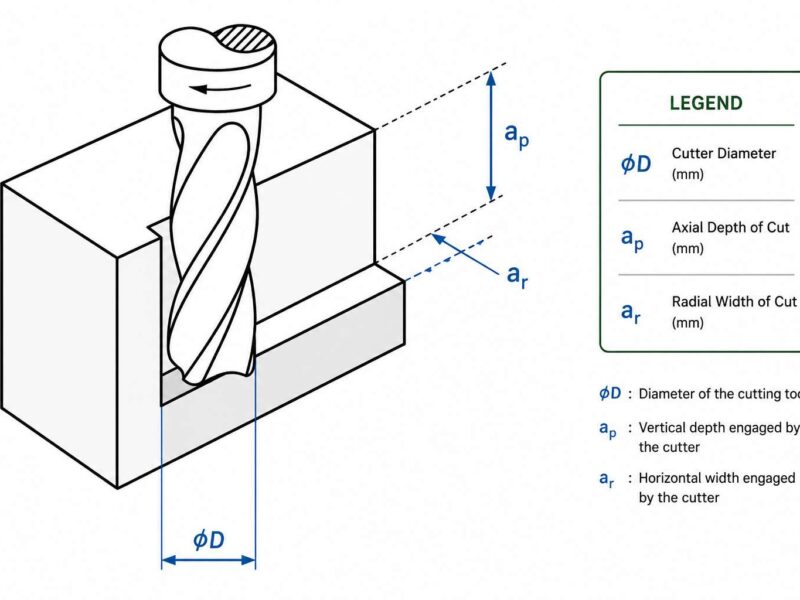
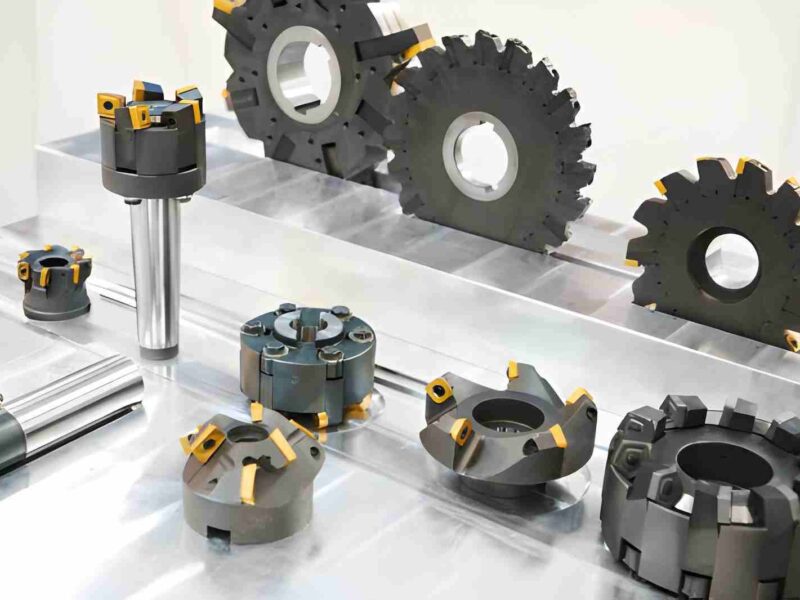
Variable-Helix End Mills
These end mills have uneven helix angles along the flute. That spreads cutting forces over time, reducing chatter and vibration. In practice, that means cleaner edges on stainless steel or titanium, and fewer rejects from poor surface finish.
Indexable Inserts
Instead of swapping out an entire tool, we just rotate or replace the insert when it dulls. This is common for turning operations on steels or cast iron. It’s faster, cheaper, and keeps production running. We usually choose inserts rated for the material hardness—coated carbide inserts for stainless steel, uncoated for aluminum.
HSS vs Carbide Tools
HSS still works well for aluminum, brass, and other soft metals because it’s forgiving and easier to sharpen. Carbide is non-negotiable for tough metals like stainless steel, Inconel, or hardened alloys, it stays sharp at high temperatures and tolerates higher feed rates. On the shop floor, you can push carbide harder, but you need to watch feed and speed carefully to avoid chipping.
Coatings: PVD and CVD
We use PVD or CVD coatings to improve wear resistance, especially for high-speed operations. PVD works well for general milling, while CVD is better for heavy roughing of hard steels. Coated tools stay sharper longer and reduce the chance of built-up edge.
Machine Setup and Maintenance
Even the best tool fails on a misaligned machine. Check spindle runout, tool holders, and fixture alignment before a job. We usually check alignment weekly or before critical runs. Poor calibration will ruin finishes and accelerate tool wear.
Conclusion
To achieve effective, high-quality, and economical manufacturing, machinability is crucial. The right pre-treatments, coolants, tools, and machine settings must be used in addition to the appropriate material selection. By optimization of these variables, producers can lower expenses, increase tool longevity, and increase part quality. Learning to be machineable gives you a competitive edge in fields like general engineering, automotive, and aerospace.
FAQs
Q1: What influences machinability?
Machinability determines the material hardness, cutting speed, tool materials, methods of cooling or lubrication, and workpiece geometry. These factors influence the efficiency of the machining process and the quality of a final product.
Q2: What role do lubrication and cooling play in machinability?
During machining, lubrication and cooling play an essential role in reducing the friction, handling the heat, and preventing tool damage. Adequate cooling increases tool life, helps achieve better surface finish quality, and prevents overheating. Because, if overlooked, these issues may cause material processing defects.
Q3: What is the role of advanced technology in enhancing machinability?
New technologies, including CNC machines, robots, and smart manufacturing systems, have increased precision, automation, and monitoring of machining processes. More machinable materials and tool coatings can also be created as a result of advancements in materials science, creating better and wear-resistant coatings on tools.
Q4: How does machinability affect the cost of manufacturing?
Less machinable materials tend to be more expensive to work with since more time, energy, and wear-resistant machining equipment are needed to complete the work. Conversely, the costs of production can also be lowered by using materials that can be easily machined with quicker production rates and cheaper tooling costs.