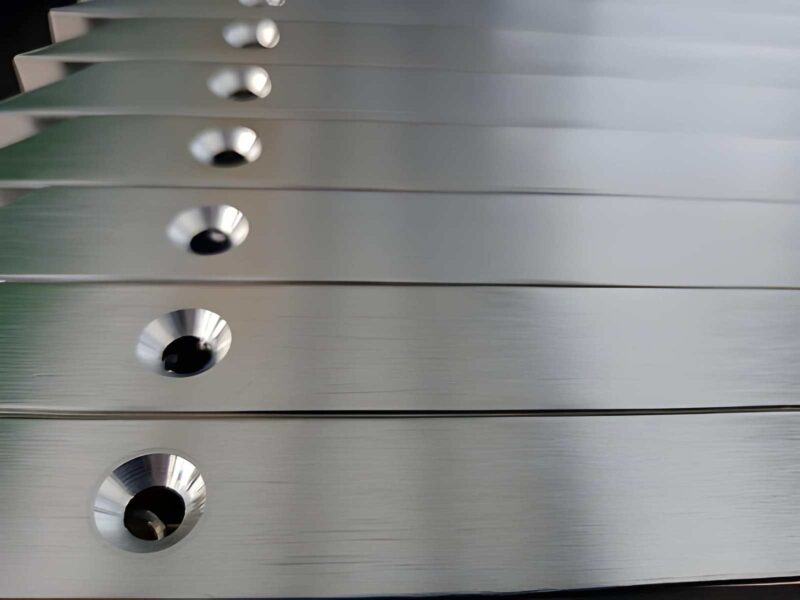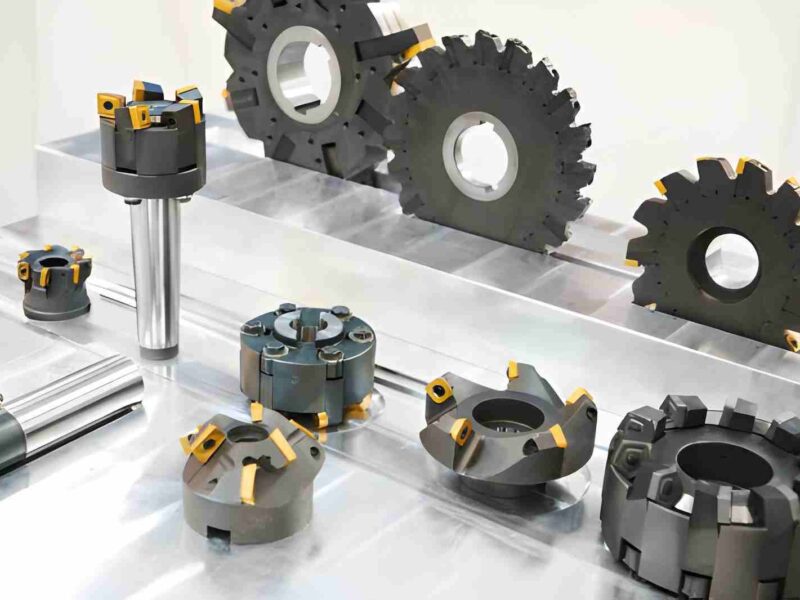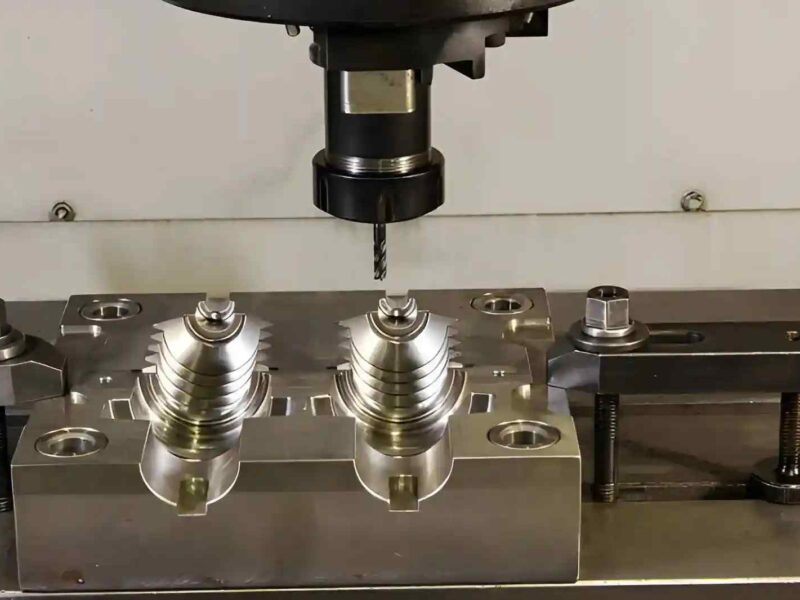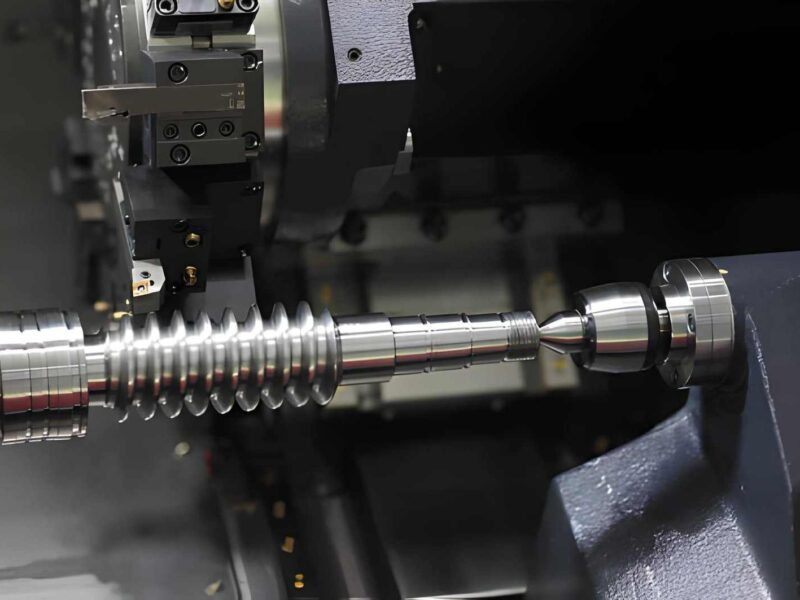
CNC machining requires accuracy beyond the cutting process. Surface finish of the parts is equally important as the part’s dimensions, tolerances, or geometry. It decides the physical appearance of the part, how it performs under pressure, and its resistance to corrosion, friction, and wear.
In aerospace, medical, and automotive industries, surface finish is key to good product results and its usefulness over time. If you want to increase how long your parts last, make them look appealing, or follow strict industry guidelines, using the right finish for your surfaces is significant.
Premium Parts sees surface finishing as a critical part of your CNC project, instead of the result. We help you design your parts to ensure they are attractive and functional, and they achieve the goals you are after.
Understanding CNC Surface Finishes: The Basics
Surface finishing is defined as the outside look, feel, and quality of the part after machining. It’s often measured in terms of surface roughness (Ra), which indicates the average deviation from a perfectly smooth surface.
However, perfection is not the only factor; the real goal is to improve function. It shows how a part links to its surroundings and other components present.
- Too rough? It can bring roughness, spoil your paint job, or hold dirt onto it.
- Too smooth? The surface may not be sticky enough for coatings or other bonding products to work well.
After the CNC machine stops, post-processing methods take care of fine-tuning model surfaces to make them more attractive, smoother for operation, and resistant to corrosion.
Every piece needs a specific type of treatment. Each material behaves differently, and every job requires a different surface finish. Thus, it is necessary to know all the options and their effects on your part, even in the earliest project stages.
Most Frequently Used Types of CNC Surface Finishes
Different coatings have their special uses. Some make the product look better. Others add features for more security. Some work for both objectives.
The following are the key CNC surface finishes, each one has advantages depending on your needs:
As-Machined (Raw Finish)
As machined is a regular finish, you get it with a CNC machine. It works, costs less, and is perfect for inside parts or quick models where looks don’t matter that much. You can notice tool marks, although the tolerances are tight.
Good for: Functional prototypes, internal assemblies, and quick-turn parts.
Mechanical Finishes
Polishing
Using abrasives in polishing forms a smooth and shiny surface. It makes it very pretty, though it will round off some of the finer pointy details. Offered in many grades that are measured by gloss and reflectivity.
Bead Blasting
Fine glass beads are forced with pressure in a stream that smoothes the surface and makes it matte. Most of the time, manufacturers choose bead blasting to achieve a modern, clean finish on aluminum and stainless steel parts.
Grinding
Precision grinding gives a smooth finish and tight tolerance. It’s important when parts need to be flat and meet exact specifications. It is suitable for both mating and sealing components.
Chemical Finishes
Anodizing (Type I, II, III)
Anodizing mainly helps aluminum by making it more resistant to corrosion and wear by adding a protective oxide layer. You can find Type II in a variety of colors for decorative purposes, and Type III (hardcoat) is suitable for tougher usage.
Electroplating
It sprays a thin metal layer (like nickel or chrome) onto the part, making it more resistant to rust and giving it a shiny or dull finish.
Passivation
Passivation typically applies to stainless steel, eliminating surface dirt. It improves the part’s resistance to corrosion. At the same time, it keeps the part looking unchanged.
Coating Finishes
Powder Coating
More often, dry powder sticks to the part. Here, thanks to the electrostatic finishing technique. It creates a protective coating that is even, tough, looks great, and lasts against chemicals.
Painting
Painting and powder coating are much alike, but powder coating uses paint applied in liquid form. It can be used to change color more easily and applied in layers for certain shapes or results.
PTFE (Teflon) Coating
PTFE provides a non-sticky and low-friction surface. It helps parts glide smoothly and easily. This is especially useful in high heat or chemical-heavy environments.
Quick Comparison Table
| Finish Type | Surface Texture | Protection | Common Materials | Typical Use | Finish Type | Finish Type |
| As-Machined | Visible tool marks | Minimal | All metals & plastics | Prototypes, internal parts | As-Machined | As-Machined |
| Bead Blasting | Matte, uniform | Moderate | Aluminum, Steel | Aesthetic parts | Bead Blasting | Bead Blasting |
| Anodizing Type II | Matte/Colorful | Good | Aluminum | Consumer products | Anodizing Type II | Anodizing Type II |
| Anodizing Type III | Hard, dense coating | Excellent | Aluminum | Aerospace, Defense | Anodizing Type III | Anodizing Type III |
| Powder Coating | Glossy or matte | High | All metals | Exterior parts | Powder Coating | Powder Coating |
| Polishing | Mirror-like | Low | Stainless, Aluminum | Decorative parts | Polishing | Polishing |
| PTFE Coating | Slick, dark finish | Chemical-resist | Steel, Aluminum | Sliding parts | PTFE Coating | PTFE Coating |
Surface Finish vs. Material: What You Need to Know
Each material reacts differently with different surface finishes. What looks great as a paint finish on aluminum could act in a different way on steel or plastic. Choosing the best surface finish means looking at the properties of the material and how it will be used.
Aluminum
- Works well with: Anodizing, polishing, bead blasting
- Why: Aluminum has a natural oxide layer, it is anodizable, and lightweight. It makes it perfect for making nice-looking components.
Stainless Steel
- Works well with: Passivation, polishing, and bead blasting are compatible alternatives for it.
- Why: It resists corrosion, although passivation improves its ability to resist rust. Polishing makes it look high-quality and elegant.
Mild Steel
- Works well with: Can be applied along with powder coating, painting, and electroplating.
- Why: It tends to rust. The surface finish should be prioritized based on protection against rusting.
Brass and Copper
- Works well with: Electroplating, polishing
- Why: This metal is naturally good-looking, but protective plating helps it from tarnishing.
Plastics (Nylon, ABS, POM)
- Works well with: Painting, light polishing, and vapor smoothing (for glass).
- Why: Direct anodizing or electroplating is not possible; usually, surface finishing targets appearance or practical coatings.
Choosing the Right Surface Finish: Performance vs. Cost
Choosing the right surface is not about choosing what looks best or is most costly, it means picking the finish that matches what your product does, where it’s placed, what it’s made from, and your cost limits.
Function Comes First
You should start with: What is expected of this part?
- Is the style mainly about looking attractive? After that, anodizing, polishing, or painting could be good choices.
- Will there be resistance to the motion, or will it flow smoothly? We can coat or polish PTFE to lower its rate of wear.
- Does it have to work in environments containing corrosive agents? If you care about protection that lasts over time, pick anodizing (Type III) or powder coating.
- Are close fits essential for the product? Prefer to use as-machined or precision-ground surfaces, rather than thicker coatings that might affect tolerances.
Application Examples
| Application | Recommended Finish | Why |
| Medical implants | Passivation or Type III Anodizing | Bio-compatible, corrosion-resistant |
| Consumer products | Bead blasting + Anodizing | Sleek, uniform appearance |
| Outdoor tools | Powder coating | High impact and weather resistance |
| Sliding components | PTFE coating or Polishing | Low friction, smooth contact |
Balancing with Cost
These more effective coatings, such as hard anodizing and PTFE, are more expensive. If you choose a finish that doesn’t add value to your application, you end up wasting your budget.
Choosing bead-blasted or as-machined finishes saves money when looks or standard usage are the main concern. The formula for adding value largely comes down to the balance of cost and functionality.
Need clarity on performance vs. budget trade-offs? Our team at Premium Parts is always ready to offer tailored insights based on your part’s real-world use, not just specs on paper.
Common CNC Surface Finish Challenges and How to Solve Them
Even with good planning, surface finishing can be difficult if done improperly. Once you know the most typical challenges, you can prevent rework, avoid delays, and avoid surprises.
Challenge #1: Uneven Finish or Inconsistent Texture
- Cause: Performing the pre-treatment incorrectly, or not always blasting or polishing with the same method.
- Solution: Subject all parts to the same pre-finish cleaning and media control.
Challenge #2: Coating Peels or Cracks
- Cause: The paint does not stick because there is contamination or there is a mismatch between the paint and the surface.
- Solution: The solution is to pay special attention to surface preparation. For strong adhesion, the surface is degreased, thoroughly cleaned, and often a primer layer is used as well.
Challenge #3: Finish Affects Critical Dimensions
- Cause: Some methods (e.g., powder coating, electroplating) increase the thickness of the part.
- Solution: The Thickness of the finish should also be considered during the design or machining stage. Adjustments to the tolerances might be necessary for parts after finishing.
Challenge #4: Corrosion Despite Finishing
- Cause: Using a finish or type of coating that is not right for the conditions the product will face.
- Solution: Evaluate the environment the part will work in and choose a finish that matches, such as hard anodizing for marine areas.
Best Practices for Surface Finish Selection in CNC Projects
To be successful from making a prototype to mass production, use these best practices for your CNC surface finish:
- Start with the End Use in Mind
Trim a texture so that it suits your plan for the wood. Is looking good the aim? Is it possible that the part will endure mechanical pressure, high temperatures, or chemical contact?
- Consider tolerances at the Beginning
The way a part is finished may affect its size. Anticipate tight tolerances during finishing and design, and machine the part to fit these requirements.
- Consider Production Volume
Some finishes last longer than others. Automatic bead blasting and powder coating become cost-effective for big production runs. Polishing or anodizing is often done instead of plating for minor quantities.
- Match Material and Finish Wisely
Don’t use processes that don’t match the material, for example, anodizing steel or powder coating certain plastics. Different finishes suit different materials.
- Test with Prototypes
Check the appearance of finishes on prototypes before starting high-volume production. Evaluate the use in real-world conditions to confirm your choice.
Summary
Surface Finishing is crucial in CNC machining, as the look of the final product can decide if it succeeds or fails in the real world. More than making a piece attractive, the right finish also protects, fits well, and works efficiently.
Because there are so many types, the main thing to know is how finish, material, price, and application work together. People should focus on choosing well, starting early, and working with experts.
At Premium Parts, we cover every step, including CNC machining as well as precise and purposeful surface finishing. If you need a prototype for testing or to make it for mass production, we make sure your parts meet the standards of fully finished, high-quality components.
Our Approach:
- Material-Specific Expertise: We guide you in choosing the right finishes depending on what material you are working with.
- Consistent Standards: For each batch of bead blasting, anodizing, or coating, we keep the standards the same.
- Tight Integration with Machining: Our finishing team collaborates directly with CNC machining and design teams to make sure every part’s surface finish meets the quality standards.
- Custom Solutions: We can achieve a mirror shine or create a hard coating to ensure your product fulfills your needs.
FAQ’s
Q1. How should I decide which surface finish is appropriate for my part?
Begin by figuring out what the part does, the environment it is in, and what it should look like. Following this, reach out to your CNC team (Premium Parts) to find the right type of surface finish for your material and tool.
Q2. Can finishing make my measured tolerance differ from the original design?
Many finishes make the part a little thicker. Explain what the required tolerances are for critical dimensions before finishing to give your team time to adjust.
Q3. Is it possible to use multiple types of finishes on a single part?
Yes, there are times when this happens. Sometimes, parts are textured by bead blasting, and then anodizing is used to protect them. The finishing process is devised depending on how the part is designed and what material it is.
Q4. Is there a difference between Type II and Type III anodizing?
People mainly use Type II for aesthetics and to keep the steel from corroding, which is available in several colors. A Type III (hard anodized) layer is much thicker and better suited for situations that cause lots of wear from the outdoors.
Q5. Does surface finishing affect how much time is spent producing the parts?
It varies with the type of finish chosen. There are quick methods for surface finishes, for example, bead blasting and as-machined. There are other processes, including anodizing or powder coating, which take extra work in preparation, curing, or follow additional steps.