In metal parts machining, a slight error leads to costly rework and delays. Manufacturers often need to manage multiple tasks at once while meeting short timelines. Delays and waste of resources usually result from outdated machines and inefficient processes.
Although choosing the right CNC machine can be challenging. It is particularly when your product design needs multiple angles and cuts. One convenient way to get better results is by understanding CNC machine axes. When you choose the right axis setup, like 3-axis, 4-axis, or 5-axis, it becomes simple to machine complex parts. Moreover, it improves accuracy, reduces mistakes, and speeds up the whole process. Moreover, you won’t need to keep resetting the part for each cut. Eventually, it saves your time and effort.
In this guide, we will explain the different CNC machine axes, how they work, and their significance. From 3-axis to advanced 5-axis systems, you’ll learn the pros, cons, and best uses for each type.
What Are The Axes Of A CNC Machine?
CNC machine axes determine the paths along which movement occurs during machining. These paths guide the CNC controller-operated tool or workpiece throughout the operation. Each axis is defined by a single degree of movement. This may either be linear or rotary. The more machine axes means more flexibility, the ability to handle complicated shapes with minimal turnaround. It can perform 3D machining operations with the capacity to change the tool orientation.
Types of Motion
CNC machines typically perform under two motion types;
- Linear Axes (X, Y, Z): It involves moving parts/tools either vertically or horizontally in a straight line.
- Rotational Axes: (A, B, C): Refers to the part rotation or tool around the X, Y, Z axes.
When deriving motion strategies for a precision machining task, it is crucial to accurately compute the movement of each axis. The following is a summary of the basic movements:
| Axis | Type | Direction of Movement |
| X | Linear | left/right |
| Y | Linear | front/back |
| Z | Linear | up/down |
| A | Rotational | Around X-axis |
| B | Rotational | Around Y-axis |
| C | Rotational | Around Z-axis |
Why CNC Machine Axes are Important?
The number and type of axes a machine has decide how it moves and what type of parts it can make.
- Complexity of parts geometries
- Set up and operational efficiency
- Precision and consistency
- Engineered and actual toolpaths
Having more axes translates into design freedom, higher accuracy in part production, and lower error rates. Therefore, it emphasises the importance of decisions around part design and machine selection.
Types of CNC Machines Based on Axes
Let us examine the different types of CNC machines classified by their axes and usage.
3-Axis CNC Machines
3-Axis machining is a traditional technique, even though the setup is still the most widely used in the industry.
How It Works
Moves along 3 axes:
- Sideways movement – X axis
- Vertical motion – Y axis
- Horizontal motion – Z axis
Applications
- Milling of flat surfaces
- Drilling
- A flat-bottomed hole made in a cylindrical material
- Contouring
Advantages
- Easy to program
- Best for uncomplicated parts
- Cost-efficiency for components produced in small volumes
Limitations
- It is challenging to machine undercuts or other complex angles
- One or more setups might be needed
At Premium Parts, we use a configuration of 3-axis CNC machines along with other tools to maximize their efficiency. This setup allows us to achieve faster machining cycles and reduce costs when producing simple yet precise components.
4-Axis CNC Machines
4-axis machine comes with an additional rotary axis (A-axis) to the standard 3-axis motion.
How It Works
- Adds rotation around the X-axis (A-axis)
- Enables the tool to work on different sides of the part
- Allows cutting along curves or circular features
- Reduces the need to manually reposition the part
Applications
- Machining cylindrical objects
- Engraving round or tubular parts
- Reducing setups for multi-sided operations
Advantages
- Greater flexibility
- Improved surface finish on curved parts
- Faster transitions between operations
Limitations
- Still restricted in producing complex 3D shapes.
Our team uses 4-axis machining when rotational symmetry and precision are critical in your project. For instance, we employ it to make shafts, nozzles, and cylindrical housings.
5-Axis CNC Machines
5-axis CNC machining is the go-to choice when it comes to making complex parts quickly and accurately.
How It Works
- Incorporates additional rotation about the Y-axis (B-axis) and/or Z-axis (C-axis)
- The tool or workpiece can tilt and rotate
Applications
- Components for Aerospace (turbine blades, engine mounts, brackets, landing gear parts, wing ribs, and fuselage frames)
- Medical Implants
- Dies and molds for precision machining
Advantages
- Multiple setups are no longer needed to refine intricate geometry.
- Minimal clamping is required, which increases accuracy.
- Turnaround is faster, which improves surface finish.
Limitations
- Increased Tooling and Machine expense
- Programming, CAD, and CAM support require skill
Premium Parts uses 5-axis CNC machining solutions, and engineers achieve purposeful speed, accuracy, and precision even on complex, tight-tolerance components. This approach also helps minimize rework and improve overall production efficiency.
How Many Axes Can a CNC Machine Have?
The number of axes can exceed 05. Some ultra-advanced machines have up to 12 axes.
| Axes | Capabilities | When to Use |
| 3 | Sequentially advanced operations with simple cuts | Flat features, holes, pockets |
| 4 | Additional rotary function for sculpting surfaces | Cylindrical parts |
| 5 | 3D fully defined contouring with multiple compound angles | Quality complex 3D surfaces or one-off jobs |
| 6-12 | Complex ultra-machinable components with multi-axis capability | Command advanced aerospace or tooling |
The optimal number of axes depends on the part geometry, material, mechanics, and the tolerances desired. Our engineers, in consultation with clients, select the appropriate method and provide comprehensive support from start to end.
CNC Machine Axes in Turning vs. Milling
It’s easier to compare CNC turning and CNC milling once you understand how the machine axes work.
CNC Milling
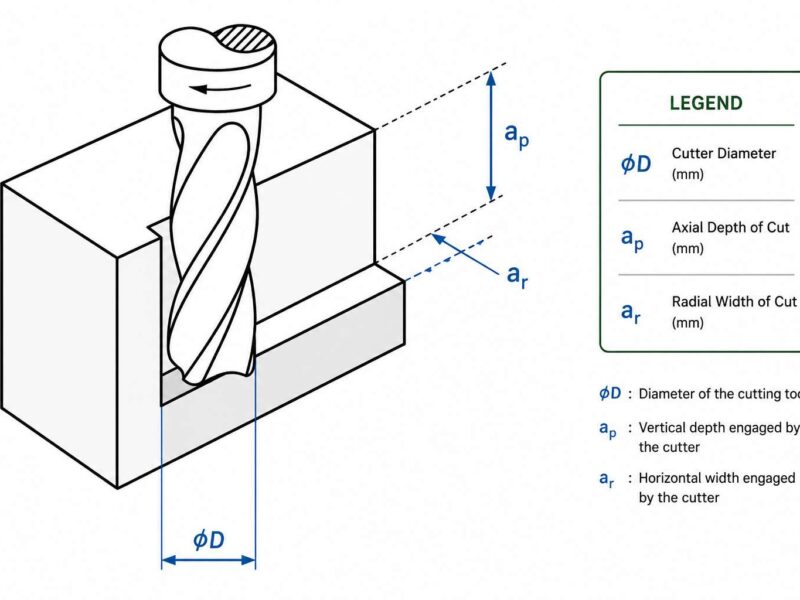
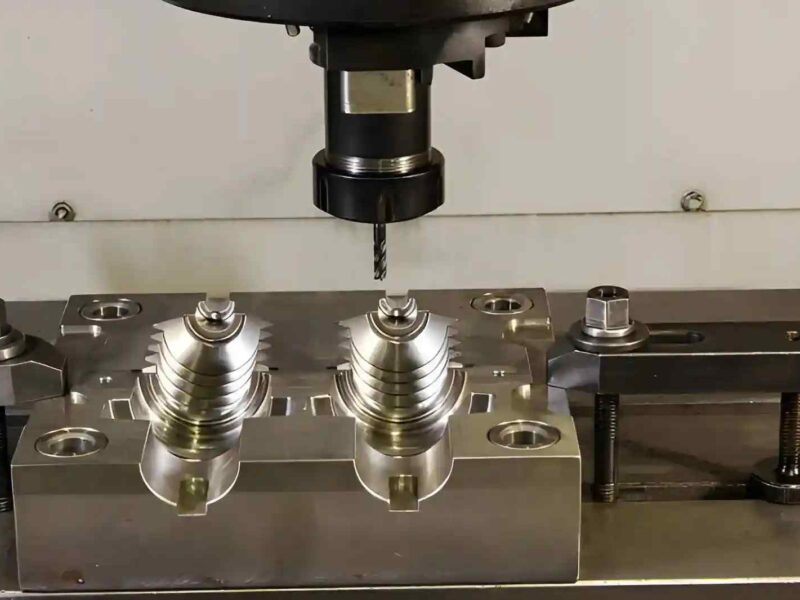
In CNC milling, the cutting tool rotates to remove material, while the workpiece stays fixed in place. Due to this setup, a workpiece can be accurately machined by removing material using different angles and paths. This can be set on the rotary cutting tool.
Mills have 3 to 5 axes of operation, and aid in producing more detailed products. Most operations can be done with the X, Y, and Z axes, or the 3 basic axes. A 4-axis or 5-axis machine will be needed if a design requires undercuts, complex angular cuts, or curves. Other rotary axes that are drillable include A, B, or C and are added alongside the rotational torque axes.
Milling machines are the right fit for complicated, multifunctional parts that require high accuracy and precision, be it in detail or contour. Example parts include molds, custom mechanical parts, detailed housings, etc.
CNC Turning
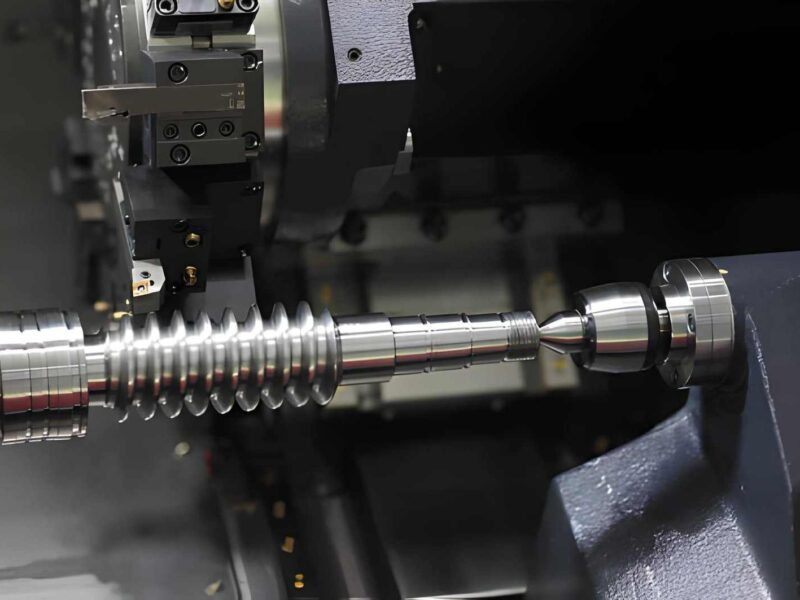
In CNC turning, it’s the workpiece that spins while the cutting tool stays still, only moving along a set path to shape the material. It is highly efficient for parts with symmetric rotational features.
Turning machining tends to use 2-4 axes, depending on the level of sophistication. The simplest arrangement consists of an X and Z axis for the length and workpiece diameter. Some advanced configurations include C-axis live tools or newly added Y-axis features. These allow the machine to perform additional operations without needing manual reorientation.
When it comes to maintaining a high speed and consistent rate, turning is optimum for cylindrical parts such as rods, pins, sleeves, and flanges.
Advantages of Multi-Axis CNC Machining
Integrating additional axes into your machine can radically alter your production line. Here’s how:
Increased Design Capabilities
Multi-axis CNC machines provide opportunities that cannot be accomplished with standard setups. The machine can easily create undercuts, deep cavities, or intricate 3D curves. This eliminates the need for additional special fixtures.
Less Work Repositioning
Due to the additional axes, multiple faces of the part can be accessed in one sitting. The reduction of repositioning helps minimize the chances of dimensional errors and fast-tracks production.
Improved Turnaround Times
With the right setup, automatic operations make it possible to produce complex parts in just a few hours. Previously, the same parts in low- to mid-volume runs took days to complete.
Better Surface Finish Quality
Better access to tools allows uniform and even transitions between part features. Furthermore, the reduction of aggressive passes due to the capability of tilting and rotating the part will result in a better surface finish straight from the machine.
Increased Part Accuracy
The machine can move in multiple directions at the same time. This helps make parts with tighter and more accurate measurements. With the reduction of errors caused by repositioning, consistent results can be ensured. It is also ideal for parts intended for aerospace, medical, or high-performance applications.
At Premium Parts, we utilize multi-axis CNC machining to fabricate intricate components with extreme precision and from various materials in a timely and dependable manner.
Selecting A CNC Machining Partner
Not all providers have the capability of delivering on their promise of precision. Here at Premium Parts, we stand out in:
- Custom Solutions for CNC Machines
- Prototyping and Full-Cycle Production
- 5-Axis CNC machining of large complicated components
- Mastery in plastics and metals
Our premium-grade equipment, paired with experienced machinists, guarantees speedy production. Our broad range of CNC machining solutions focuses on high-volume production and prototypes. It guarantees unmatched precision at competitive prices.
Use Cases of Each Axis Type
| Category | Recommended Axis | Significance |
| Aerospace | 5-axis | Precise, intricate shapes |
| Medical Devices | 5-axis | Very detailed work, biocompatible components |
| Automotive | 3-4 axis | Parts with radial symmetry, mass output |
| Tool & Die | 5-axis | Specialized tooling, complex for molds |
| Consumer Products | 3-axis | Basic forms with shorter cycle times |
Get Custom Machining Solutions From Premium Parts
Premium Parts offers complete CNC machining services. Our team incorporates 5-axis machines to produce detailed feature parts with superior accuracy and minimal time. We support our customers through;
- Design for Manufacturability (DFM) Support
- Vertical and horizontal high-speed milling and turning
- Rapid Preceding and prototyping with tight tolerances and minimal lead times
Our processes are data-driven when determining the optimal axis setup for your task. It results in enhanced quoting speeds, cost efficiency, and meeting your precise specifications.
Final Thoughts
In summary, understanding the intricacies of the CNC machine axes optimizes design, enhances the speed of manufacturing, and improves overall quality. We carefully analyze your design and understand that every part has unique needs, whether it is complex shapes, swift delivery, or remarkable accuracy. The setup of the axes is a major contributing factor.
We, at Premium Parts, implement precision engineering with sophisticated machining technology. We specialize in offering economical, time-efficient, and high-quality custom services ranging from machine CNC 3 axes to 5-axis advanced CNC machining.
Contact us today and watch your ideas come to life through our custom machining services.
FAQs
Q1. How many axes can a CNC machine have?
CNC machines possess anywhere between 3 and 9 axes. Yet, most industrial uses implement 3, 4, or 5 axes. These provide a reasonable balance between design and complexity. These also have the precision needed for part geometry and operations.
Q2. What is the difference between 3-axis and 5-axis CNC machines?
A 3-axis CNC machine operates in the X, Y, and Z coordinate planes. A 5-axis machine includes rotation around two more axes, providing a range of movement for more complex angles and more intricate part machining with reduced setups and higher accuracy.
Q3. When should I choose 5-axis CNC machining?
Use 5-axis machining when you need to machine parts involving complex shapes with undercuts or tight tolerances. It is ideal when fewer setups, greater precision, optimal surface finish, and multi-face machining in a single operation are needed.
Q4. Do more CNC axes mean higher accuracy?
Not always, but a greater number of axes decreases the need for part handling and repositioning, which increases consistency. When programmed appropriately, multi-axis CNC machines provide improved accuracy for complex geometries and tight-tolerance components.
Q5. Can Premium Parts provide custom CNC machine solutions?
Yes, Premium Parts provides custom solutions using advanced multi-axis setups and custom CNC machining. For every project, we align our machines to your part’s geometry, material, volume, and requirements to achieve optimal precision, speed, and cost efficiency.