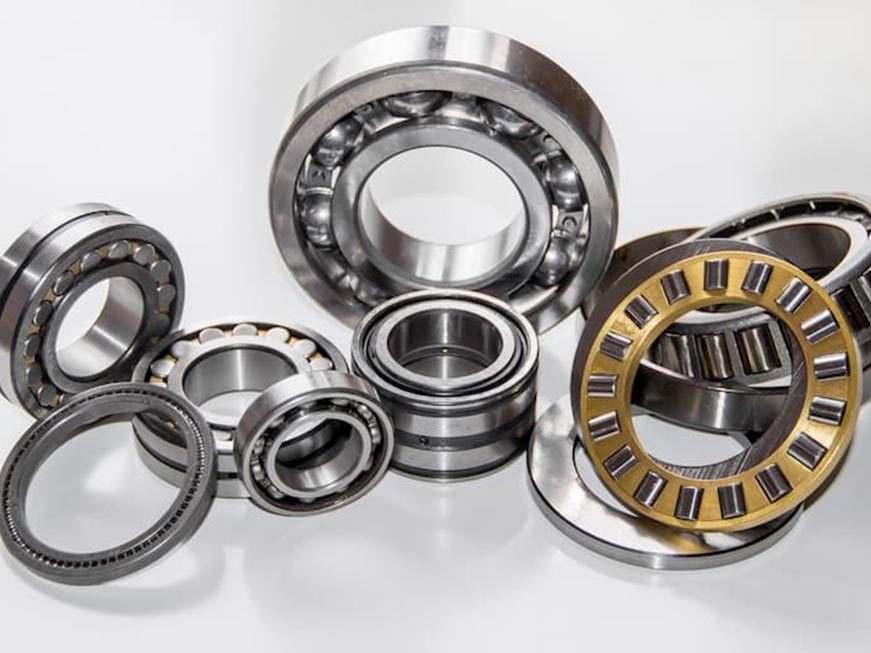
Suboptimal metal, when subjected to wear and tear, may result in early failure and corrosion. In order to achieve a combination of strength and aesthetic appeal, many industries experience a significant need for component replacement and increased costs.
Brass is a well-balanced engineering alloy that combines the properties of copper and zinc, delivering a practical mix of strength, machinability, and corrosion resistance for a wide range of applications. Different types of brass provide strength, formability, and excellent corrosion resistance in demanding environmental conditions.
Brass is available in various types that meet the needs of different applications and requirements. Certain grades of brass offer improved machinability and formability; others have enhanced corrosion resistance and surface finish, and each type is designed for a specific functional purpose.
What Is Brass?
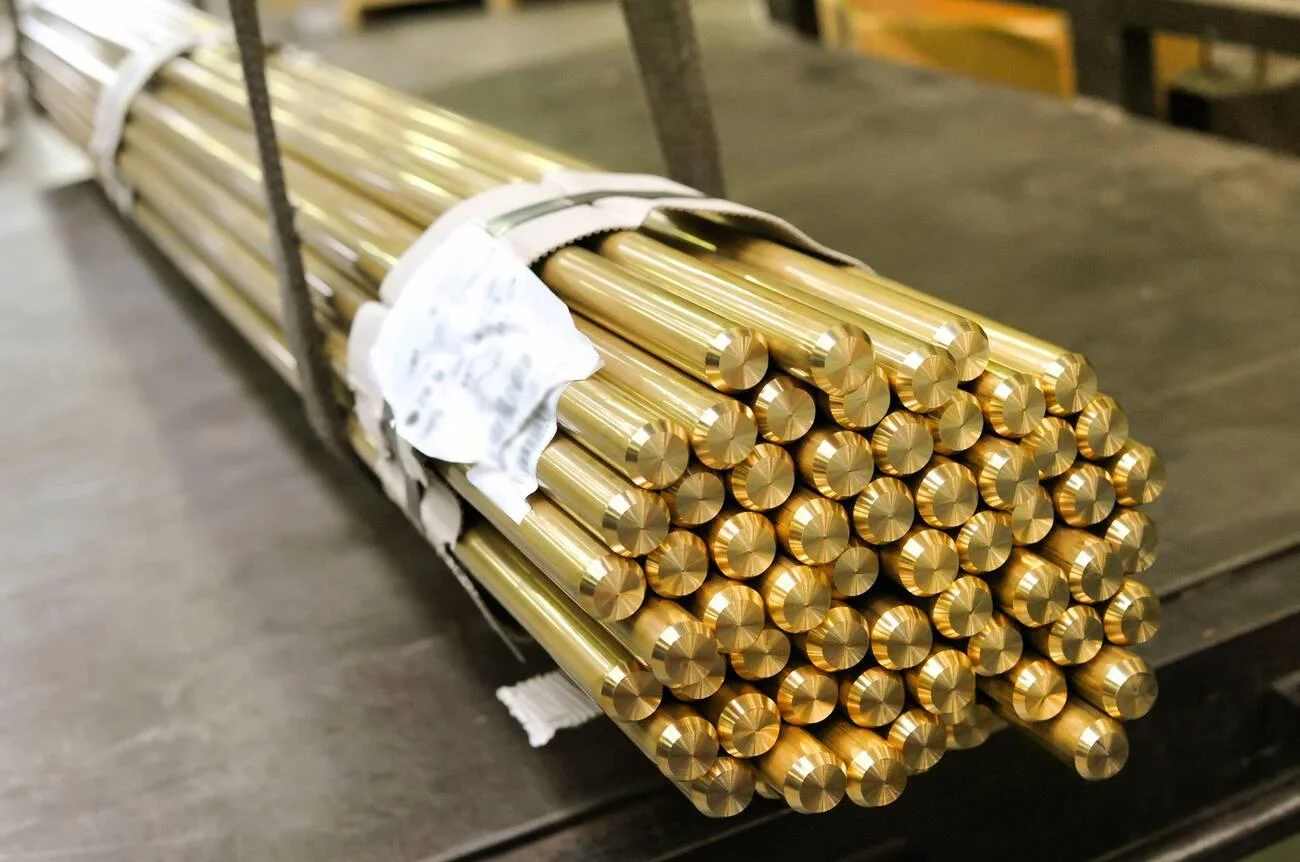 Bundle of bright shiny industrial brass rods in a market tied together
Brass is a metal alloy primarily composed of copper (Cu) and zinc (Zn). Brass generally has a bright gold-like finish and is suited to a wide range of manufacturing applications. A little fraction of other metals, such as lead (Pb), tin (Sn), or nickel (Ni) can enhance strength, machining, and corrosion resistance. Therefore, brass is suitable for both decorative and engineering applications.
Different Types of Brass
Brass is divided into three main types according to the relative proportions of copper (Cu) and zinc (Zn).
- Alpha brass: It consists of a high proportion of Cu and a low proportion of Zn. Due to its high ductility, alpha brass can be formed at room temperature and is therefore best suited for applications such as deep drawing, stamping, and decorative design. However, because it does not harden by heat treatment, it has limited utility in structural applications.
- Alpha-Beta brass: It encompasses relatively equal amounts of Cu and Zn and exhibits a mixed structure that enhances strength. Alpha-beta brass can be formed either by hot or cold working. It is one of the most versatile brass alloys and is commonly used for applications such as valves, hinges, and general hardware that require both strength and formability.
- Beta brass: It entails a higher proportion of Zn than Cu and thus exhibits greater hardness and strength than the previous two types of brass. Beta brass is best suited for applications involving hot forming and casting; however, it has poor ductility when subjected to cold forming. It should be used in applications requiring durable, die-cast components.
Common Types of Brass Used in Manufacturing
Brass is available in several grades, and each one is designed for different manufacturing and engineering needs. The amount of copper, zinc, and other alloying elements affects the material’s strength, machinability, corrosion resistance, and formability. Choosing the right brass grade helps improve part performance, production efficiency, and service life
Common Brass Grades and Their Engineering Properties
| Brass Grade | UNS / ASTM Series | Composition & Key Characteristics | Machinability / Formability | Corrosion Resistance | Typical Industrial Applications |
|---|---|---|---|---|---|
| Leaded Brass | C35300 (High-Leaded Brass Series) | Contains a small amount of lead to improve chip formation during machining. Offers good strength and dimensional stability. | Excellent machinability. Ideal for high-speed CNC turning, milling, drilling, and threading. | Good resistance in general industrial and indoor environments. | Precision-machined components, plumbing fittings, valve bodies, threaded inserts, electrical connectors, hydraulic fittings. |
| Naval Brass | C48500 (Naval Brass Series) | Copper-zinc alloy with added tin for improved strength and resistance to dezincification. | Good machinability with higher strength than standard brass grades. | Excellent, especially in seawater and marine environments. | Marine hardware, seawater valves, propeller shafts, bushings, bearings, pumps, offshore equipment. |
| Yellow Brass | C26000–C27000 (Cartridge Brass Series) | Balanced copper-zinc alloy with good ductility, attractive appearance, and easy cold working. | Excellent formability for bending, stamping, drawing, and rolling. Good machinability. | Good resistance under normal atmospheric and freshwater conditions. | Decorative hardware, plumbing fittings, electrical terminals, architectural products, musical instruments. |
| Red Brass | C23000 (Wrought) / C83600 (Cast Red Brass Series) | Higher copper content provides improved corrosion resistance, durability, and casting performance. | Good machinability and excellent castability for complex components. | Very good, particularly in potable water and plumbing systems. | Pumps, valves, pipe fittings, plumbing fixtures, water distribution components, decorative castings. |
Leaded Brass (C35300)
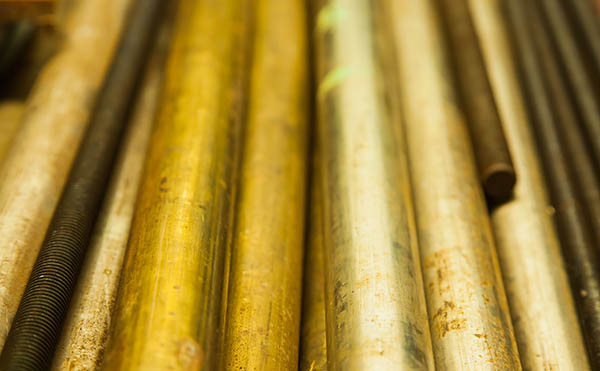
High-leaded brass
Leaded brass (C35300) belongs to the high-leaded brass series, which is developed for machining applications. It contains a small amount of lead that helps the material break into small chips during cutting. This reduces tool wear and allows faster machining speeds.
Because of its excellent machinability, C35300 is commonly used for CNC turning, milling, drilling, and threading operations. It is widely selected for precision parts such as valve bodies, plumbing fittings, hydraulic components, threaded inserts, and electrical connectors where tight tolerances are required.
Naval Brass (C48500)
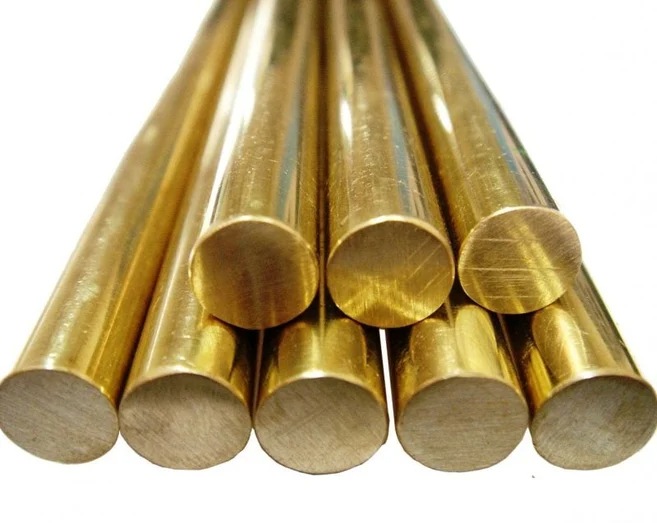
Naval brass rods
Naval brass (C48500) is part of the naval brass series, which contains a small amount of tin in addition to copper and zinc. The tin improves resistance to corrosion, especially in seawater and other harsh environments.
This alloy also offers good mechanical strength and wear resistance. It is commonly used for marine hardware, propeller shafts, bushings, bearings, pumps, seawater valves, and other components exposed to moisture or saltwater.
Yellow Brass
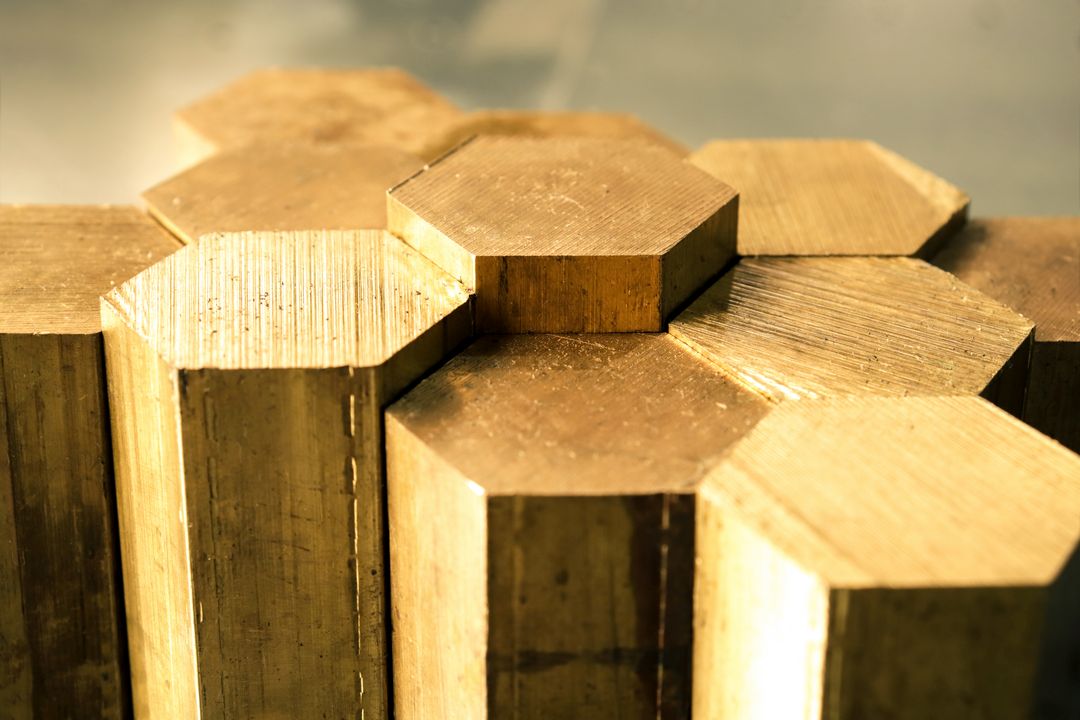 Hexagonal headed yellow brass
Yellow brass generally belongs to the cartridge brass series, with grades such as C26000 and C27000 being the most common. It contains a balanced amount of copper and zinc, giving it good strength and excellent formability.
This material is easy to bend, stamp, and deep draw without cracking. It also provides a bright, attractive finish, making it suitable for both functional and decorative products. Common applications include plumbing fittings, decorative hardware, musical instruments, electrical terminals, and architectural components.
Red Brass
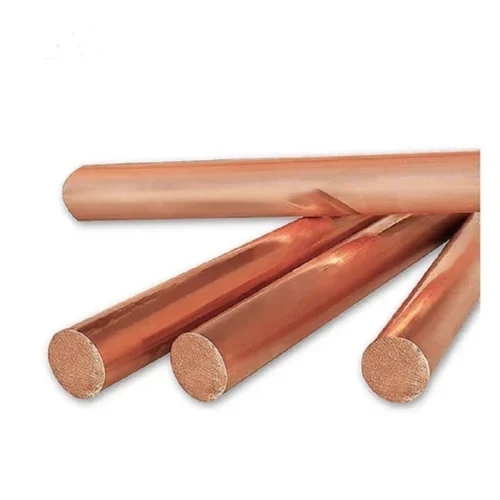 Red brass rods
Red brass is part of the high-copper brass series. Wrought grades such as C23000 and cast grades such as C83600 are widely used in industrial applications. Its higher copper content improves corrosion resistance while maintaining good strength and castability.
Red brass performs well in water distribution systems because it resists corrosion and mineral buildup. It is commonly used to manufacture pumps, valves, pipe fittings, plumbing fixtures, and decorative cast components that require a long service life.
Applications of Brass
Different types of brass are widely used in the construction and architectural fields due to their corrosion resistance and aesthetically pleasing appearance. It is commonly employed in door handles, handrails, trim pieces, and decorative elements. with long-term durability.
Aside from architecture, brass materials are also used extensively in plumbing and hydraulic systems. Brass provides reliable service in these applications by handling pressure effectively. It is commonly employed in valves, connectors, and pipe fittings to ensure the integrity of the piping system.
It is also used in electrical applications and provides good electrical conductivity and consistent connections. Therefore, it is commonly used in electrical connectors, switches, and terminals, all of which support safe and efficient energy transfer.
Finally, brass is used in a variety of mechanical and decorative products. It provides low friction coefficients, making it suitable for use in gears, tools, and moving parts. Ornamental pieces, plaques, and household items commonly use brass. Furthermore, it is critical to the manufacture of musical instruments due to its sound quality and durability.
Properties of Brass Alloys
Different types of brass alloys provide a combination of mechanical and physical properties that make them suitable for numerous industries and applications. These are capable of being molded and drawn into thin wire without cracking, allowing for intricate details and precise finishes. Brass alloys also exhibit reliable strength and flexibility, and maintains its shape even after exposure to stress and fatigue.
Brass alloys machine quickly and efficiently, reducing the time required for production and lowering production costs. Finally, it exhibits clear sound vibrations, making it ideal for musical and acoustic applications.
They are highly resistant to corrosion in wet and saline environments, which makes it suitable for plumbing and marine applications. It naturally inhibits bacterial growth, making it a safe choice for use in healthcare-related applications where users come into contact with the product.
Brass is a good conductor of electricity, making it a reliable choice for connectors and terminals.
Fringe Benefits of Brass
There are several practical advantages provided by different types of brass in manufacturing in multiple industries.
- Brass is soft and pliable, making it possible to mold and bend into complex shapes without causing damage. This allows manufacturers to create intricate and complex parts with minimal effort.
- It has a natural golden appearance, eliminating the need for additional coats or finishes, resulting in reduced production times and costs.
- Brass also consistently conducts heat and electricity, supporting electrical and thermal applications.
- It exhibits reliable strength and durability, extending the lifespan of components and reducing the need for maintenance.
- It is completely recyclable and reusable, supporting environmentally conscious manufacturing and sustainability practices.
- Additionally, brass exhibits antimicrobial properties, reducing microbial growth in food and healthcare applications.
Overall, brass offers a solid balance of performance, durability, and cost-effectiveness.
Most Effective Machining Methods for Brass
Multiple machining processes are employed for different types of brass in order to get the best results. The simple explanation of these processes is highlighted here:
Extrusion
Alpha-Beta and Beta Brasses have been successfully molded with extruded brass. During extrusion, brass is shaped using heat and pressure to form a desired shape.
Due to its ability to flow smoothly at elevated temperatures, the metal is forced through a die at high temperature and then cooled, creating a tube with no seams (seamless) for use in plumbing systems. As opposed to traditional pipe fittings (joints), this style of tubing remains strong and reliable throughout its lifetime.
CNC Machining
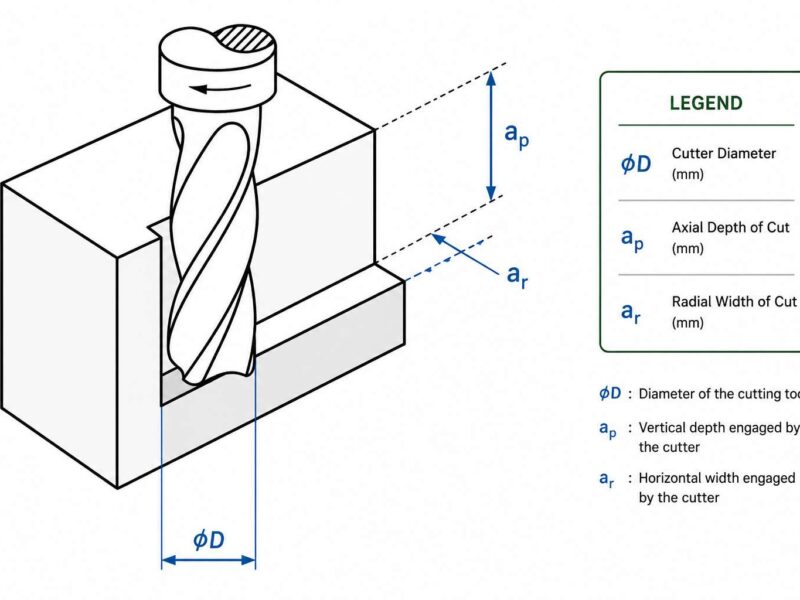
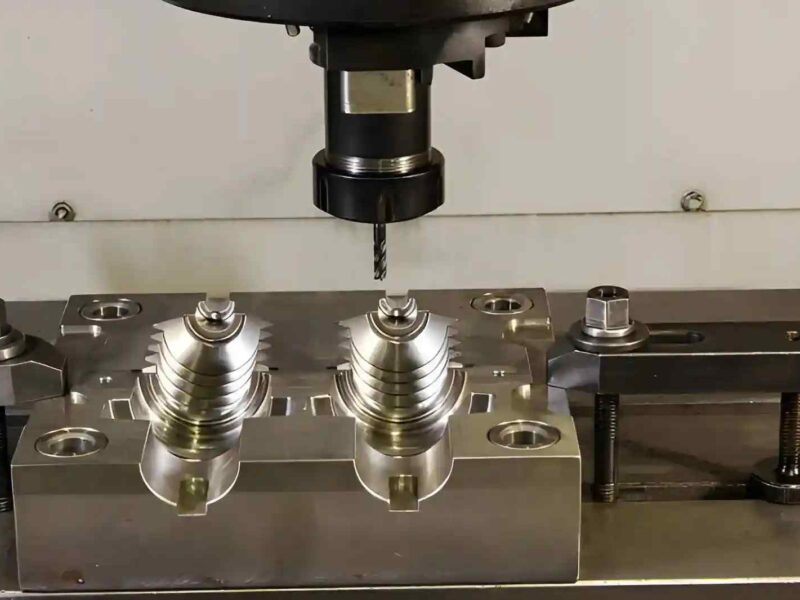
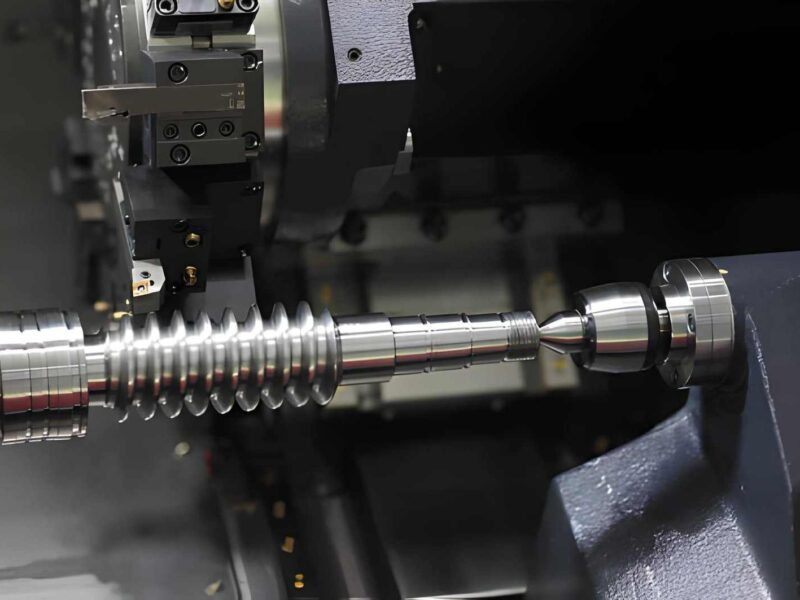
Brass is well-suited for CNC machining because it machines smoothly and holds tight tolerances. Leaded brass cuts faster than steel and produces clean, short chips, which makes the process stable. It also creates a low cutting force, so tool wear stays minimal, and tool life is longer.
Brass generates short chips during machining; these chips easily remove themselves from tools, which makes for easy cleaning and maintaining machine stability. Also, you can easily manufacture parts with complex geometries using sharp cutting tools.
Carbide and PCD cutting tools are particularly effective for finishing. Since brass only requires a low amount of cutting force, your tools will be able to endure higher cutting forces.
Sheet Metal Stamping
Large quantities of brass components are commonly produced using sheet metal stamping. Brass sheet stock is rapidly formed into desired shapes by press machines. Due to the high degree of softness of alpha brass, it deforms without cracking when subjected to the stresses placed on it during forming.
Deep drawing creates long hollow parts, and progressive dies are capable of performing multiple operations in one pass. With each stroke of the press, the metal is formed into a more complex shape. Sheet metal stamping creates consistent and rapid production.
Hot and Cold Forging
These two methods are used to improve the strength of brass through controlled deformation. Both hot and cold forging are used to alter the grain structure of the metal, thus enhancing the strength of the part.
Hot forging is better suited for alpha-Beta and Beta brasses, and it can enhance the grain structure of the brass to create stronger parts. This process is commonly used to manufacture valve bodies and other hardware.
Cold forging is better suited for alpha bronzes. It creates smaller parts at a rapid pace, and the work-hardened brass is strengthened through deformation. The choice of whether to forge hot or cold depends upon the size and complexity of the part being manufactured.
Casting
Molten brass is poured into molds to create a cast part in the casting process. This process is best suited for creating complex shapes. There are three primary ways to cast brass: sand casting, permanent mold casting, and die casting.
Due to the high amount of zinc contained within Beta brass, the brass flows smoothly at elevated temperatures. Die casting is an excellent method for producing parts with tight tolerances and smooth surface finishes at a high rate of production. Automotive parts and hardware benefit greatly from die casting.
Casting minimizes waste when compared to machining. Permanent molds and die casting are both cost-effective when compared to machining.
Brass vs Copper vs Bronze: What’s the Difference
Copper, brass, and bronze are copper-based engineering alloys, but they differ significantly in composition, phase structure, mechanical strength, and functional performance. These differences directly affect conductivity, machinability, wear behavior, and corrosion resistance in industrial applications.
Copper is a near-pure metal with minimal alloying elements, giving it high electrical and thermal conductivity due to its free electron density. Brass is a substitutional alloy of copper and zinc, where zinc modifies the crystal structure, improving strength and machinability while reducing conductivity. Bronze is primarily a copper–tin alloy, where tin increases hardness, wear resistance, and fatigue strength, especially under sliding contact conditions.
Comparison Table
| Property / Parameter | Copper (Cu) | Brass (Cu-Zn Alloy) | Bronze (Cu-Sn Alloy) |
| Composition | ≥ 99% Cu | Cu + 5 – 45% Zn (+ Pb, Al, Mn traces) | Cu + 5 – 12% Sn (up to ~20% in special grades) |
| Crystal Structure Effect | FCC (high ductility) | FCC modified by Zn (solid solution strengthening) | FCC + intermetallic phases (higher hardness) |
| Tensile Strength | ~200 to 250 MPa | ~300–600 MPa | ~350 to 800 MPa (depending on alloy) |
| Hardness (HB) | ~35 to 60 HB | ~55 to 150 HB | ~70 to 200+ HB |
| Electrical Conductivity | 90 to 100% IACS | 20 to 60% IACS | 10–35% IACS |
| Thermal Conductivity | Very high (~390 W/m·K) | Moderate (~100 – 150 W/m·K) | Moderate-low (~60 – 120 W/m·K) |
| Machinability Index | Poor (gummy cutting behavior) | Good (especially free-cutting brass) | Medium (tool wear higher than brass) |
| Wear Resistance | Low | Medium | High (excellent boundary lubrication) |
| Corrosion Resistance | Good (forms Cu₂O layer) | Good (dezincification risk in harsh media) | Very good (marine-grade alloys available) |
| Density | ~8.96 g/cm³ | ~8.4 – 8.7 g/cm³ | ~8.7 – 8.9 g/cm³ |
Conclusion
As a dependable and versatile metal across a variety of industrial sectors, brass has proven itself to be a valuable resource. It has an optimal combination of strength, corrosion resistance, and ease of fabrication. The different types of brass support a wide range of applications, including machining, forming, casting, and decorative applications.
Each brass grade and alloy satisfies specific requirements for performance and productivity. Brass is utilized in applications, including plumbing, electrical, construction, marine, and mechanical systems, and brass delivers long service life with minimal maintenance requirements. The ease of forming and the rapid machining capabilities of brass enable lower manufacturing costs. The cleanliness of the appearance of brass, along with its recyclable nature, increases the overall value.
Premium Parts has a rich legacy in the brass manufacturing world. Our advanced facilities and modern technology enable us to produce high-quality brass components customized to meet our clients’ specific requirements. Without further ado, contact us for your manufacturing needs and get an instant quote. We will guide and upstream your project to the highest quality possible.