The main cost drivers for a CNC machining project are material, part complexity and geometry, cycle time, machine type, programming, labor, quality inspection procedure, and production volume.
5-axis CNC machining costs more because it requires advanced machines, complex programming, longer setup time, and higher machining control during multi-angle cutting operations. Simply put, tight tolerances and fine surface finishes increase machining and inspection time.
Secondary operations such as anodizing, heat treatment, and polishing add to the total cost. Larger production runs reduce unit cost by spreading setup and programming expenses across more parts.
Engineers should evaluate cost during the design stage. Simplified geometry, feasible tolerances, and suitable materials reduce machining time, tool consumption, and scrap. Controlled costs reduce waste, extend tool life, and improve schedule reliability.
We optimize design, machining strategy, material selection, and quality planning to deliver cost-effective CNC-machined parts. This article outlines the main cost drivers and practical methods to lower production costs.
CNC Machining Cost Structure
Engineers should understand CNC machining cost drivers to simplify operations and eliminate unnecessary production costs.
Direct Manufacturing Cost in CNC Machining
Direct costs are the expenses directly involved in making a CNC-machined part. These costs change based on the design, material, and production volume.
They usually include:
- Raw material cost (metal or plastic used for the part)
- Machine operating time (CNC run time per part)
- Labour charges (setup, operation, and supervision)
- Tool wear and replacement (cutting tools, inserts, drills)
- Coolant and lubrication usage
- Inspection and quality checking
These costs are strongly affected by:
- Production volume (low volume = higher cost per part)
- Material type and hardness (harder materials increase machining time and tool wear)
- Part complexity (more features = longer machining time)
- Machine type (5-axis machines cost more than 3-axis)
For prototype machining, the cost per part is usually higher because setup time and programming effort are shared across only a few parts.
Indirect Manufacturing Overhead Costs
Indirect costs are not linked to a single part but are required to run the manufacturing facility. These are ongoing expenses that support overall production.
They include:
- Machine maintenance and servicing
- Factory rent and facility costs
- CAM software licensing and updates
- Power and utility usage (electricity, air systems, etc.)
- Equipment depreciation over time
- Production supervision and management
Modern CNC shops often have higher overhead due to advanced machinery, cooling systems, and controlled production environments. These costs are usually included in the machine’s hourly rate charged to customers.
CNC Machining Cost of Raw Materials:
The cost of raw material is a major cost driver in machining costs. Material hardness, machinability, and stock material dimensions directly influence machining time and tool wear.
Material Type: Cost Differences and Machinability Effects of Aluminium, Stainless Steel, and Titanium
Different materials demand different cutting parameters and tooling strategies. Aluminium machines faster and produces less tool wear than stainless steel and titanium.
| Material | Approx Material Cost ($/kg) | Machinability | Typical Cost Impact |
| Aluminum 6061 | $4 – $7 | High | Lower machining cost |
| Stainless Steel 304 | $6 – $12 | Medium | Moderate machining cost |
| Titanium Ti-6Al-4V | $30 – $60 | Low | High machining cost |
Aluminium parts reduce machining time by 30 to 50 % over stainless steel parts. Titanium projects often need coated carbide tools, lower spindle speeds, and more finishing passes.
Material Waste and Scrap Production
Rough machining of complex geometries generates high material waste. Aerospace brackets and medical components will remove 60 to 80% of the starting stock.
Excess scrap drives up material consumption, machine occupancy, and tooling expenses. The unnecessary material removal can be lowered by near-net-shape stock selection and simplified geometry selection.
CNC Machine Time & Labour Cost
Machining cost is directly influenced by machine operating time. Extended cycles lead to greater labor cost, power usage, and machine occupancy.
Machine Hourly Rate Calculation
The machine shops fix an hourly rate based on the value of the machine, cost of labour, maintenance cost, electricity usage, and overhead costs. The higher rates for advanced CNC equipment are due to the programming complexity and the maintenance needs involved.
| Machine Type | Approx Hourly Rate |
| 3-Axis CNC Mill | $40 – $90/hour |
| CNC Turning Centre | $35 – $75/hour |
| 5-Axis CNC Machine | $80 – $180/hour |
High-speed 5-axis machining centres typically require skilled operators and programmers. This increases the setup and labour costs.
Correlation of Part Geometry & Cycle Time
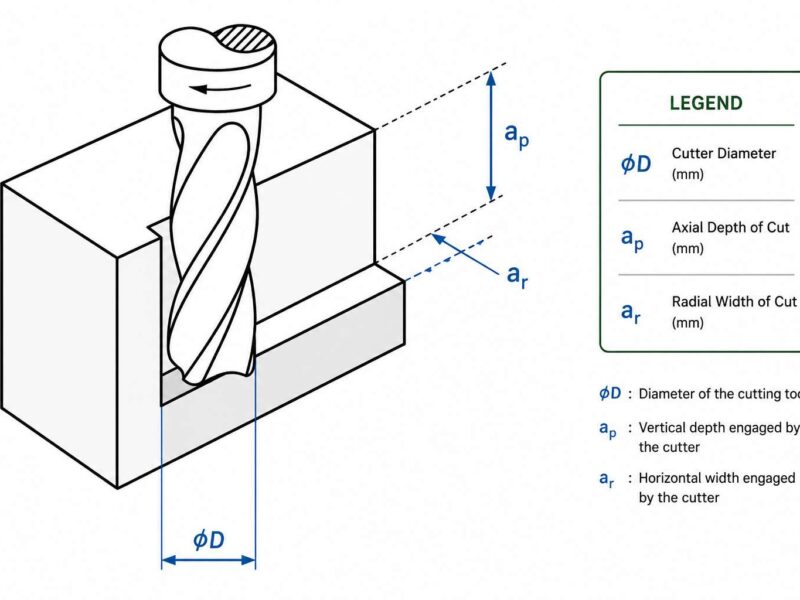
The machining duration is strongly affected by part geometry. Deep cavities, thin wall sections, and small internal corners require slower cutting parameters and additional finishing operations.
Deep cavity milling, thin-wall structures, fine surface finishing, and multiple hole patterns are becoming more common in cycle time features.
Multiple Setups and Repositioning Delays
Parts that need multiple set-ups require additional labour and machine time. At each stage of the setup, the operator has to realign and check the component.
More setups mean fixture preparation, alignment verification, inspection operations, and production delays. Multi-axis machining requires less repositioning for complex components.
Cost of Cutting Tools and Consumables
Machining hard materials and high production volumes increases tool wear, making tooling cost a key production factor. Tool wear increases the cost of machining and the machine downtime.
Tool Wear in High-Speed Machining
In high-speed machining, the cutting temperature at the tool edge increases. Stainless steel and titanium increase wear of the insert and edge chipping.
Typical cutting tool costs include carbide end mills ranging from roughly $20–$150, indexable inserts costing around $8–$30, and coated finishing tools priced between $80–$300. Frequent tool replacement affects increased production cost and machining consistency. It is common practice to reduce cutting speeds on difficult cuts to extend tool life.
Difficulties in Deep-Hole Machining Tools
You need special drills and a controlled supply of coolant to drill deep holes. Poor chip evacuation increases the risk of drill breakage and tool overheating.
Deep hole drilling uses through-coolant tools and peck cycles. It requires lower feed rates and additional inspection for accuracy. Holes deeper than 8× tool diameter often need reduced drilling speeds.
Small Diameter Cutter Replacement Frequency
Less rigidity and more concentrated cutting heat cause smaller cutters to wear out faster. The micro-tools are also prone to breakage during aggressive machining conditions.
Frequent cutter replacement, lowered feed rates, and more finishing passes all add to the cost of production.
Energy Utilisation in CNC Manufacturing
The energy cost is relevant in long production cycles and continuous machining operations. Large machining centres consume a lot of electrical power with a rotating spindle and circulating coolant.
Machine Electrical Usage During Operation
CNC machines use electricity in roughing, finishing, and in idle operation. More powerful spindle motors and faster axis acceleration increase power consumption.
| Equipment | Approx Power Consumption |
| Small CNC Mill | 5–10 kW |
| CNC Turning Centre | 6–15 kW |
| Large 5-Axis Machine | 20–40 kW |
In mass production, long machining cycles can greatly increase electricity costs.
Costs of Air Compressors and Cooling Systems
Cooling systems and compressed air units are constant during the machining operations. These support systems raise indirect operating expenses.
Common energy consumers are pumps for coolant, oil chillers, air compressors, chip conveyors, and ventilation equipment. More power will be consumed if it is poorly maintained and during air leaks.
Tips for Reducing Unnecessary Power Consumption
- Electricity expense can be reduced through preventive maintenance and efficient production planning in machine shops.
- Useful methods include reducing machine idle time, maintaining coolant systems, consolidating production batches, and switching off unused equipment.
- Modern CNC machines with standby modes also help to save unnecessary power consumption.
Inspection & Quality Control Expenses
CNC production involves inspection operations, which increase labour expense and machine occupancy. Dimensional verification is frequently required on aerospace and medical components.
Requirements for CMM Inspection Processes
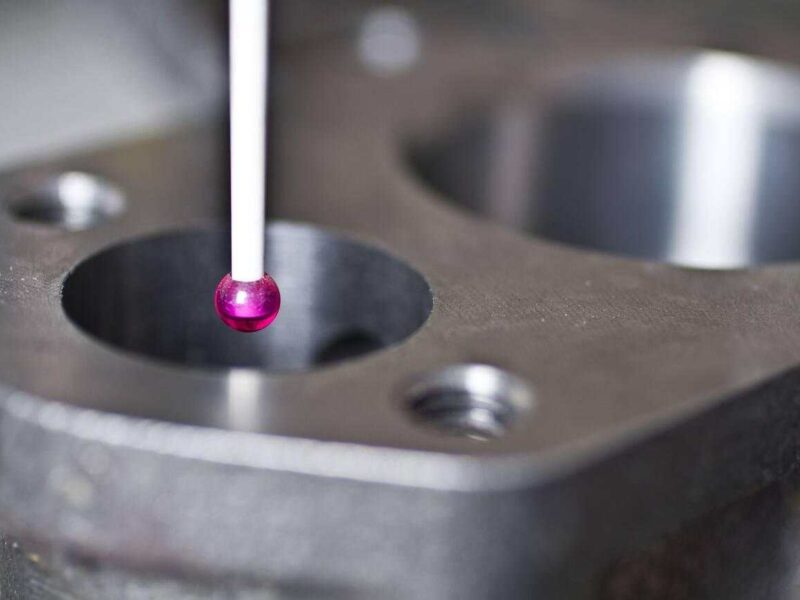
Coordinate measuring machine inspection is used to provide dimensional verification of critical machined components. The inspection time increases with the number of features and the tolerance requirements.
A typical CMM inspection is around $50 to 150 for a simple part and $200-500 for a complicated aerospace part.
Surface Roughness Measurement Procedures
Surface roughness is measured to evaluate the quality of a machined surface finish. Fine surface requirements amplify finishing passes and machining time.
| Surface Finish Requirement | Typical Ra Value |
| Standard machined surface | Ra 3.2 µm |
| Fine machining finish | Ra 1.6 µm |
| High-finish applications | Ra 0.8 µm |
Lower Ra values require smaller feed rates, fine finishing tools, and more polishing operations.
In-Process Dimensional Verification Techniques
During production, machinists perform in-process inspection to control dimensional variation and reduce scrap generation.
Common verification methods are digital callipers, bore gauges, micrometres, probe systems, go/no-go gauges.
Design Elements That Increase CNC Machining Costs
Part design greatly influences machining complexity, tooling requirements, and production efficiency.
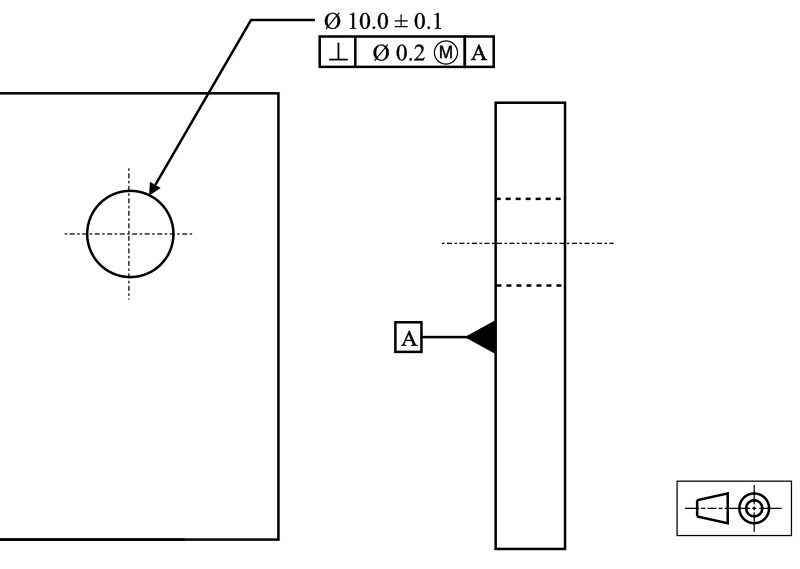
Tight Tolerance Machining Needs
Tighter tolerances mean that machining parameters must be slower and inspection operations must be increased. High-tolerance machining also requires more time to verify the setup.
| Tolerance Range | Approx Cost Impact |
| ±0.1 mm | Standard machining cost |
| ±0.02 mm | Moderate cost increase |
| ±0.005 mm | Significant cost increase |
Thin-wall and deep cavity work
Thin walls are more prone to vibration and deformation when being cut. Deep cavities reduce tool rigidity and increase chatter. These features often require slower feed rates, more finishing passes, long-reach tools, and more inspection checks. Longer cycle machining is far more expensive to manufacture.
Multi-Axis Machining Complexity
Multi-axis machining also reduces the number of setups for complex parts, but it increases programming complexity and machine rates.
Other cost factors include sophisticated CAM programming, complex fixtures, skilled operator involvement, and increased machine depreciation. The 5-axis machining is primarily used for multi-surface aerospace and medical parts.
Aerospace Aluminium Bracket Case Study
This example demonstrates the effect of geometry and tolerance requirements on machining cost in aerospace production.
Part: 7075-T6 Aerospace Bracket Requirements
Made from 7075-T6 aluminium, the component offers aerospace-type lightweight structural support. The part size was 280mm x 180mm x 65mm with deep pockets and threaded mounting holes.
Rough machining removes approximately 70 % of the starting material, and this increases cycle time and tooling consumption.
Problem: Problems in Thin-Wall and Deep-Hole Machining
The part had wall thicknesses under 2 mm and a number of deep mounting holes. The long tool extension increased the vibration during finishing.
Major problems were thin-wall vibration, difficult chip evacuation, increased tool wear, and longer finishing cycles.
Requirements: Surface Finish and Tolerance Needs
The customer required tight dimensional control and a fine surface finish to ensure compatibility for assembly.
The project specifications were surface finish Ra 1.6 µm, hole tolerance ±0.01mm, and flatness requirement of 0.03 mm. Inspection was performed using CMM measurements and surface roughness tests.
Delivery: Product Quantity & Delivery Time
The project was 120 production units for delivery in three weeks. The fixture was improved to enhance machining efficiency for subsequent production batches.
Production results included an average cycle time of 95 minutes per part, a scrap rate of less than 3%, and on-time completion of production.
Practical Tips to Reduce CNC Machining Cost
The cost reduction starts in the design stage. Engineers can improve manufacturability by designing simpler geometry, using practical tolerances, and selecting efficient materials.
Designing Parts for Easier Machinability
Simplified geometry reduces setup time, tool wear, and machining time. The improvements include increasing the internal corner radius, reducing unnecessary deep pockets, standardising hole dimensions, and minimising the number of setup directions.
Reducing Unnecessary Tolerances
Many machined parts are specified with tighter tolerances than their functional needs require. Relaxing non-critical tolerances will lower machining and inspection costs.
By reducing the number of unnecessary tolerances, we can reduce cycle time, scrap generation, inspection operations, and increase tool life.
Choosing Economical Materials for Machining
The material chosen will determine the machining speed, tool wear, and stock availability. Manufacturing cost has to be balanced with performance requirements.
Examples of good practice include the use of aluminium for lightweight structures, the use of free-machining grades of steel, the avoidance of titanium in non-critical applications, and the use of standard stock sizes.
Conclusion
The cost of CNC machining is influenced by material selection, machining time, tooling, inspection, and production volume. Tight tolerances, complex geometry, hard materials, and multiple setups add to cycle time and manufacturing expense. Engineers can reduce cost through simplified geometry, practical tolerances, optimised material selection, and efficient machining strategies that reduce tooling, scrap, and machine occupancy.
Get CNC machining services for your custom part project with Premium Parts. Simply share your CAD file, and our engineers will review your design to suggest improvements that help reduce production cost and improve manufacturability.
We use certified material suppliers and offer multiple finishing options under one roof, reducing post-processing effort and expense. Contact us for practical, engineering-led cost control for your next project.
FAQs
How does volume production reduce CNC machining costs?
Bulk ordering reduces the cost per part by spreading out fixed costs (e.g., setup and tooling) over a greater number of parts. It also helps to get better material pricing and reduces handling and shipping costs per part.
How to reduce CNC machining cost by changing the design?
Design changes reduce CNC machining cost by simplifying geometry, optimising material utilisation, and removing unnecessary features. The setting of practical tolerances and a better part layout also minimises the machining effort. Designing for existing equipment improves efficiency and reduces total manufacturing cost.
What’s the average hourly pay for a machinist?
It depends on regional wage scales and market conditions and generally ranges from $10 to well over $100 per hour.