CNC machining can produce highly accurate parts, but dimensional variation still happens during manufacturing. Tool wear, material behavior, machine condition, and inspection methods all affect the final result. Even a small dimensional change can create fit problems, increase assembly time, and lead to part rejection.
For this reason, machining tolerances must be planned before production starts. A tolerance that is too loose may cause assembly issues, while an unnecessarily tight tolerance increases machining time and cost. The goal is not to use the tightest tolerance possible. The goal is to use a tolerance that matches the part function.
This article explains common CNC machining tolerances, standard tolerance systems, factors that affect dimensional control, and practical methods used to achieve consistent results during production.
At Premium Parts, we help customers select practical tolerance requirements based on part geometry, material, and application. Our engineering team reviews every project to support consistent production, smoother assembly, and reduced rework.
What is CNC Machining Tolerance?
CNC machining tolerances determine the level of variation of a component within its target size or value. This is the variance of physical size and quantifiable characteristics. In most cases, tolerances revolve around the dimensions of parts, including length, width, or diameter. They set the acceptable range before a part is considered out of specification.
Tolerances are defined by engineers using upper and lower limits. The upper limit demonstrates the maximum positive deviation. The lower limit depicts the maximum negative deviation. This range is the acceptable level of error in production.
There is normally a “±” symbol used in machining tolerances. To illustrate, 3.000” parts having a tolerance of -0.001” should have the value of 2.999” to 3.001”. When the part is not within this range, then it fails inspection. The selection of appropriate tolerance is used to balance between performance, quality, and efficiency of production.
Types of Tolerances In CNC Machining
CNC machining operates under various types of tolerances to regulate the part accuracy. These are limit tolerances, unilateral tolerances, bilateral tolerances, and geometric dimensioning and tolerancing (GD&T). The types specify the extent to which a dimension can change in the manufacturing process.
Limit Tolerances:
It indicates a precise minimum and maximum value. Any quantification in this limit is satisfactory. Indicatively, 0.55 mm to 0.65 mm draws the boundaries well. The lower value is the minimum allowed size, and the higher value is the maximum.
Unilateral Tolerance:
In unilateral tolerance, there is variation in just one direction. The dimension may either be increasing or not. In the case of 1.5 mm +0.000/-0.005, it implies that the size can become smaller, but cannot be more than 1.5 mm. This is the type that is used to control critical joints that have limited movement.
Bilateral Tolerance:
In bilateral tolerance, there is a certain amount of tolerance towards both positive and negative directions. The deviation tends to be equal on both sides of the base dimension. The approach provides a flexible equilibrium in production.
Geometric Dimensioning and Tolerancing:
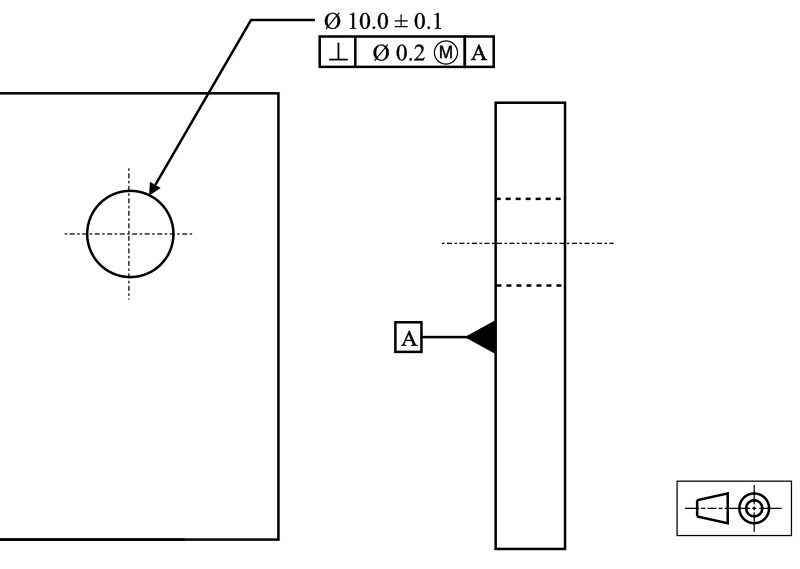
GD&T is a superior tolerance system. It characterizes size as well as geometric characteristics. It regulates flatness, position, and concentricity. This system provides accuracy in shape and position, particularly of complex components.
Why are Machining Tolerances Important?
All CNC-machined parts exhibit natural variation. These variations are regulated by tolerances. They maintain dimensions in reasonable sizes and provide stability in terms of quality and performance.
Improve fit and Function:
Unambiguous tolerances assist parts in assembling correctly. They guarantee the interaction between components. Important details should remain within specific boundaries. Any excess deviation can cause failure or rejection.
Define a Safe Margin of Error:
Every machining process has a slight variation. The acceptable working range is determined by tolerances. This minimizes the rejection and rework of parts. Early tolerance of planning helps to avoid production delays.
Control Machining Costs:
Strict tolerances raise the cost and production time. They might need grinding or superfinishing. Looser tolerances may require no more than standard machining. Determining the correct amount saved from avoidable costs.
Ensure a Clean Final Appearance:
Precision improves how parts align and sit together. Small tolerances eliminate visible gaps. This produces a clean and professional finish. Management planning will guarantee performance and aesthetics.
Calculation of CNC Machining Tolerance
Tolerance calculation starts from how the part fits in the actual assembly. The required fit decides how much size variation can be accepted. Material behavior and machining process also affect the final size, so limits must stay practical for production.
Tolerances are defined using upper and lower limits. Bilateral tolerance allows variation on both sides of the nominal size. Unilateral tolerance allows variation in one direction only, usually used when one side must stay fixed for assembly.
To calculate tolerance, subtract the lower limit from the upper limit.
Example:
A shaft is specified between 9.98 mm and 10.02 mm.
- Lower limit = 9.98 mm
- Upper limit = 10.02 mm
- Tolerance = 10.02 − 9.98 = 0.04 mm
This means the shaft is acceptable if it stays inside this range. Anything outside this range will not fit properly during assembly or will be rejected during inspection.
Standard CNC Machining Tolerances:
Normal CNC machining tolerances depend on the process and tooling. Each machining operation has typical accuracy limits. These tolerances are based on machine capability and cutting conditions. Typical standard tolerances in CNC machining are as shown below, in both inches and millimeters.
- Routers typically hold +/-0.005” (0.13 mm).
- Lathes also maintain +/-0.005” (0.13 mm).
- Router gasket cutting tools permit +/-0.030 8 (0.762 mm).
- 3-axis CNC milling provides +/-0.005” (0.13 mm).
- And 5-axis CNC milling possesses +/-0.005” (0.13 mm).
- Processing engraving is +/-0.005” (0.13 mm).
- Tolerance of rail cutting is +/-0.030 (0.762 mm).
- Screw machining holds +/-0.005” (0.13 mm).
- Steel rule die cutting is held at +/-0.015 (0.381 mm).
- Normal finish surface is 125RA.
Factors That Affect CNC Machining Tolerance Selection
Various points should be noted when choosing machining tolerances. All factors influence the cost, quality, and efficiency of production. Proper planning will prevent wastage of time and unwarranted costs.
Cost of Tight Tolerances:
Stricter tolerance demands finer machines and guided installation. They multiply the machining and inspection time. Use tight tolerances only when performance demands them.
Function and Assembly Needs:
Components utilized in assemblies can be more demanding. Poor fit or failure may be the result of loose tolerances. There can also be a need to restrict prototypes to test accurately.
Manufacturing Method:
The accuracy capabilities of every CNC action vary. Machine type directly affects achievable tolerances. Try to always match design requirements with machine performance.
Material Properties:
Dimensional stability is affected by thermal expansion and brittleness. Certain materials are more difficult to manipulate. Final tolerance results are influenced by material choice.
Surface Roughness:
Every surface has natural irregularities. Surfaces that are rough also result in tight tolerances that are difficult to obtain. The finishing can be done further to achieve greater accuracy.
Inspection Requirements:
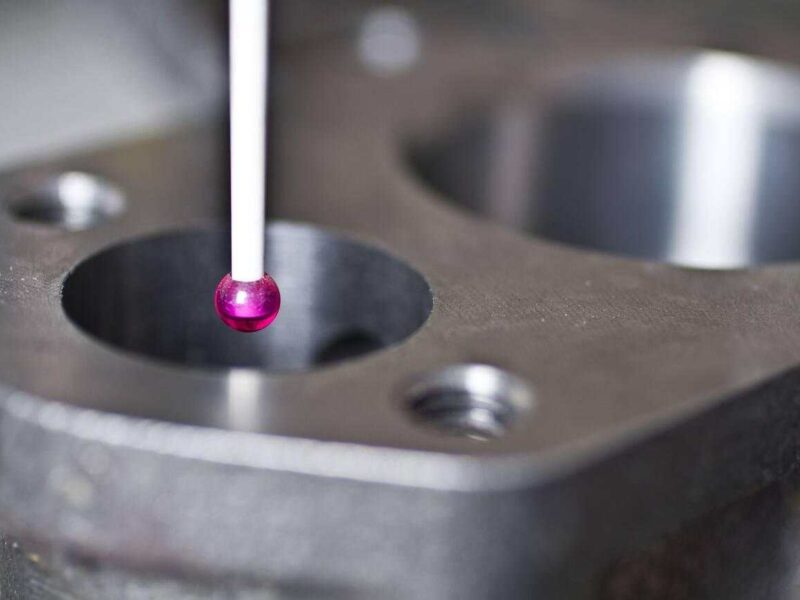
Close tolerances require sophisticated measuring equipment. Inspection time increases with stricter limits. Quality control is effective through proper planning.
Tight Tolerance and Its Need:
Tight tolerance is a small allowable difference in the size, shape, or part location. It regulates the maximum difference that a dimension can have from its given value. The narrower the range, the more precision is needed.
Where required:
Tight tolerances are required when accuracy and reliability are critical. Components that have to fit well with the rest of the components are very strict. Such industries as aerospace, medical, and automotive have tight tolerances to ensure safety, performance, and uniform quality assurance.
Where Not Needed:
Tight tolerances are not always necessary. They add expenses, inspection durations, and complexity of production. High thermal expansion materials, such as aluminum and some plastics, are more difficult to work with more precisely.
Loose tolerances are effective where a little flexibility is allowed. Assemblies that must be varied slightly, or whose features are not critical, e.g., decorative parts or consumer goods, do not necessitate strict limits. Selecting moderate tolerances is cost-effective and easy to produce and does not influence functionality.
Effective Tips for Optimizing Tolerances in CNC Machining:
Optimum tolerances in CNC machining involve having a proper plan and knowledge of important factors.
Consider the Application of Your Parts:
Pay attention to the purpose of the part and where accuracy is essential. Tight tolerances should only be used on critical features, including those that are mating or interfering with other components. Unimportant areas do not require tight control and therefore save time and are cheaper.
Avoid Unnecessarily Tight Tolerances:
Tight tolerances cause scrap, inspection time, tooling usage, and machining cycles. Tight tolerances should be applied only when fit, performance, or safety depends on them.
Choose the Right Machine:
Machine capability affects the achievable tolerances. To achieve consistent and accurate results, the CNC equipment must have sufficient precision. A collaboration with a reputable machining service will also be useful in satisfying tolerance needs.
Consider Material Properties:
Materials act differently during machining. Softer or flexible materials can be more difficult to manage, whereas harder materials can be able to retain tolerances. The knowledge of the material properties assists in establishing realistic and attainable boundaries.
These approaches ensure cost-efficiency and reliable performance in every CNC-machined part.
Conclusion:
To conclude, CNC machining tolerances play a critical role in controlling part accuracy, fit, and performance. Proper tolerance planning balances precision, cost, and material behavior, while considering machine capability, surface finish, and inspection requirements. Applying tight tolerances only where necessary ensures critical features meet design needs without adding unnecessary cost or complexity. By understanding tolerance types, measurement terms, and material characteristics, manufacturers can achieve consistent, high-quality parts that assemble correctly, function reliably, and maintain a professional finish.
At Premium Parts, CNC machining tolerances are controlled through planned machining, stable machines, and detailed inspection. From standard limits to tighter requirements, parts are produced to fit properly and work as required.
FAQs
What are common challenges to achieving tight CNC tolerances?
Tool deflection, thermal expansion, tool wear, and material variation can affect tolerances. Continuous monitoring and timely adjustments help maintain accuracy and consistent quality.
What factors help you decide the appropriate machining tolerance?
Determining machining tolerance requires reviewing the part’s function and required fit. You must also consider the manufacturing process and material properties. Tolerances can be defined using systems such as bilateral or unilateral limits, depending on design needs.
What is the limit of tolerances?
The limit of tolerances defines the maximum and minimum values a machined part can have. The actual size or feature must stay within these bounds to meet the specified requirements.