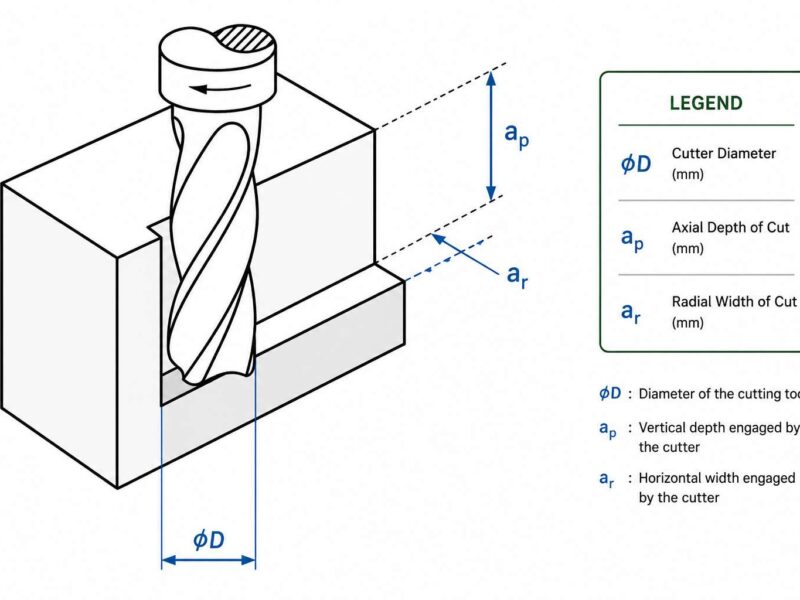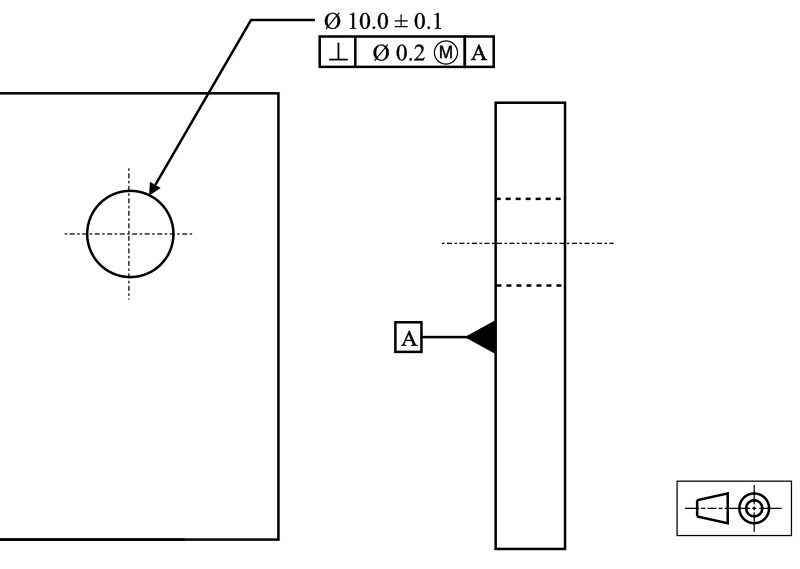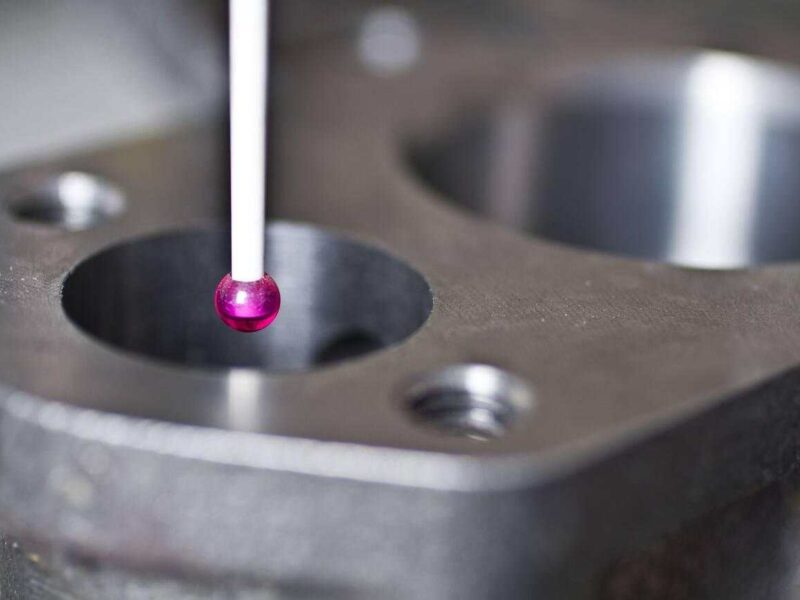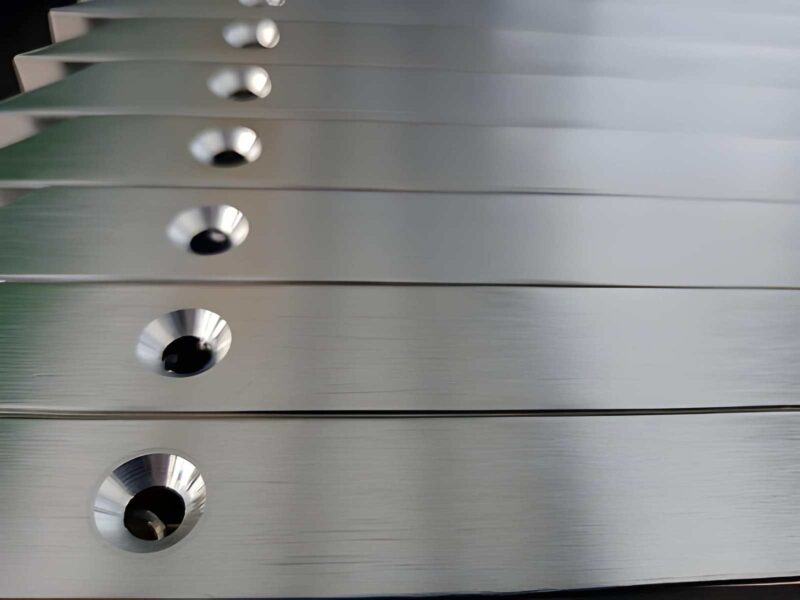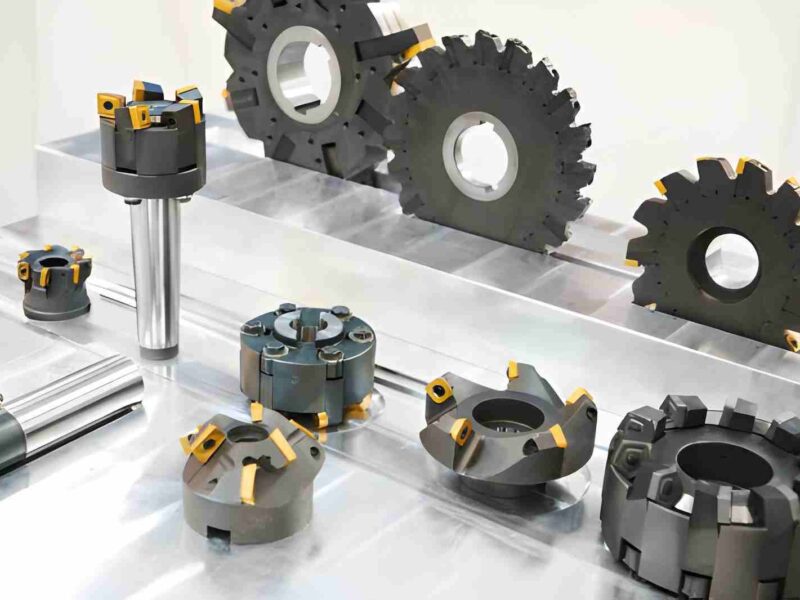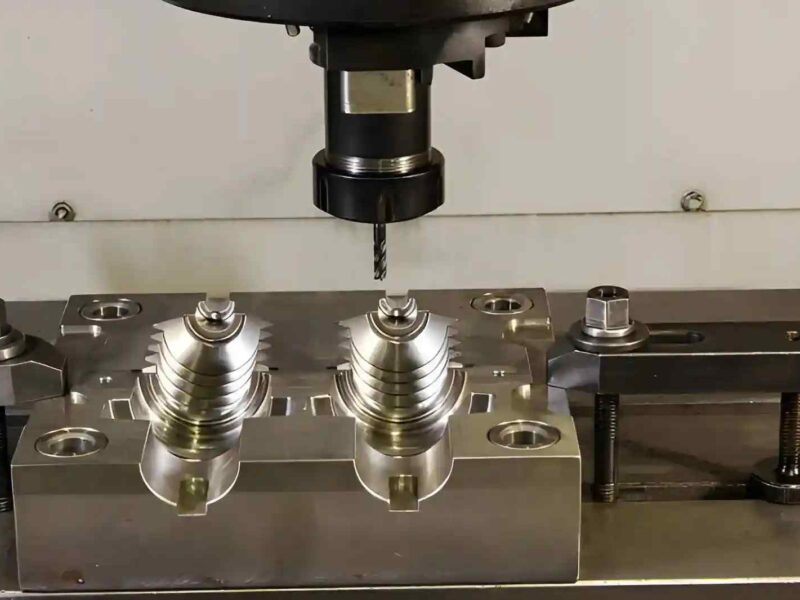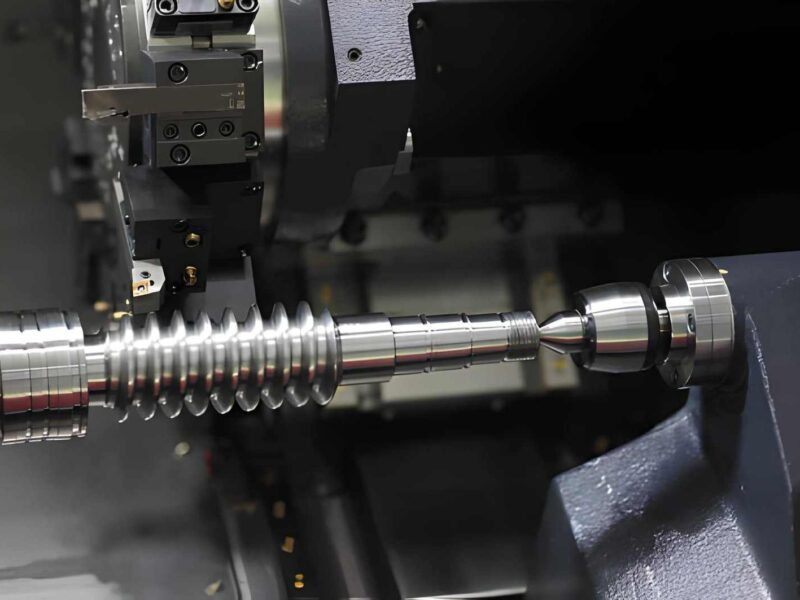
3-axis milling cuts parts using three linear movements. The X-axis moves left and right, and the Y-axis moves forward and back. The Z-axis moves up and down. This helps create flat surfaces, pockets, and holes efficiently.
Many engineering projects start with 3-axis milling. Why? Because it costs less to run. They’re relatively faster for simple geometries. Even their setup takes minutes, not hours.
At premium parts, we offer 3-axis milling with a tolerance down to 0.05mm. We machine aluminium 6061, 7075, brass, copper, ABS, and PMMA. You can simply upload your CAD file. Get an instant quote. Our team will deliver the art ship in 3 business days.
This article explains when a 3-axis works best. You’ll learn its benefits and limitations. We’ll help you identify the suitable parts for this process, allowing you to save time and money on your next order.
Why 3-Axis Milling Dominates Industry
Many machined components require 3-axis movement. The enclosure, bracket, or mounting plate typically features perpendicular faces and flat characteristics. They are produced by moving the cutting tool in X, Y, and Z coordinates to create critical geometries. Engineers define 3-axis as it corresponds to the way they design components.
Cost-Effectiveness
3 Axis milling machining is more economical than multi-axis options. Machine rates are typically £60-90 per hour, compared to £150-200 with 5-axis equipment. The programming process is now 30 minutes as opposed to 2 hours since you are dealing with simpler toolpaths. Most activities are performed using standard end mills without requiring specialised tooling. Premium Parts transfers these savings to you in the form of lower project costs.
Superior Speed for 2.5D and Prismatic Parts
Electronics casings and mounting brackets are made to fit 3-axis machining very well. These components have flat surfaces and right-angle walls that are aligned with the machine coordinate system. A typical 100x80mm aluminium enclosure takes an average of 2.5 hours. Often, you only flip the part once to get the features of the back side. PPCB standoffs, mounting holes, and ventilation slots are cut, drilled, and milled simultaneously on a 3-axis machine.
Proven Reliability and Operational Simplicity
Simplicity in the mechanics translates to uniformity of the results. Three-axis machines feature three ball screws, three servo motors, and three linear guide systems. This basic design features a more extended calibration period and requires less maintenance. When you place an order of 500 items with premium parts, the part number 1 equals the part number 500 with a tolerance of 0.05mm. Your assemblies are of the correct size, as dimensional consistency remains tight throughout the production run.
The Foundation for All CNC Programming
Everything with CNC machining begins with operations on three axes. On these machines, you first learn correct feeds and speeds, the computation of chip loads, and the strategies of toolpath, and then you learn to organise the machine successfully. CAM programs learn 2D pockets, contour milling, and drilling, and then proceed to more complex activities. Such fundamentals are applicable regardless of whether you are operating 3-axis or 5-axis equipment. The machinists at premium parts mastered skills on the 3-axis machines and then advanced to more complex working systems, ensuring consistent good outputs across all manufacturing systems.
Dominant Applications: Where 3 Axis Machining Excels
3-axis milling excels at handling specific part geometries exceptionally well. You’ll find it in workshops producing everything from functional prototypes to production tooling. Understanding where this process excels helps you select the most suitable manufacturing method for your project.
Rapid Prototyping and Product Development
In most cases, engineers need to develop prototypes quickly to validate the design. 3-axis machining allows engineers to produce aluminium or plastic models in days. You upload your CAD file, choose the material, and get testable parts. Flaws in design are revealed within a short time, not after costly tooling has been committed, including mounting brackets, interface plates, enclosures for electronic design, and prototypes without intricate setups.
Precision Parts for Aerospace and Automotive
Orthogonal geometries are standard in aerospace brackets and automotive fixtures. These industries require precise tolerances and material traceability. 3-axis machines entail planes of flatness within ±0.05 mm and drilled holes that meet the specified dimensions. Aluminium 7075 is used in high-strength applications, and brass is used in electrical applications. The procedure provides certified accuracy devoid of multi-axis cost premiums.
Production of Moulds, Jigs, and Fixtures
Manufacturing efficiency is motivated by production tooling. 3-axis milling can produce injection mould inserts, assembly jigs, and inspection fixtures made from hardened steel or aluminium. You require accurate pocket depths and correct hole positions. Quick manufacturing periods imply that you do not have to wait weeks to be tooled and then commence the runs.
Signage, Custom Components, and Artwork
3-axis machining is ideal for engraving, texturing surfaces, and ornamental work. It is possible to mill logos onto aluminium sheet, make personalised faceplates, or cut patterns onto acrylic: all machines efficiently control panels, branded enclosures, and decorative trim pieces. Z-axis depth control gives uniform engraving depth and work finishes.
XYZ milling: The Bedrock of CNC
CNC machining employs a basic language that comprises three axes of motion. All the complex movements can be traced to these simple movements. Understanding X, Y, and Z motion explains how digital designs can be converted into physical components.
The X-axis pushes the cutting tool or workpiece to the left and the right. Back and forward motion is at the Y-axis. Vertical movement is controlled by the Z-axis, which leads up and down. These three moving lines are merged to form any geometry virtually, using flat or perpendicular lines.
This is the most literal interpretation of CAD to a physical reality. Your three-dimensional model is in XYZ coordinates. The CNC machine then moves and reads these exact coordinates. The process is not interrupted by any complicated rotations and angular calculations. At the point coordinate X50, Y30, Z-10, you draw something; it is cut there.
Every CNC programmer is familiar with this coordinate system. It creates the metalanguage that is constructed by all other machining processes. Most operations are performed using standard XYZ movements, even on 5-axis machines. The rotary axes only reposition the part to allow the tool more access. The physical translation continues using three straight movements.
This ease has made 3-axis milling predictable and dependable. In your CAM software, you specify a position. The machine goes to that very point.
3-Axis vs. Multi-Axis: Making the Strategic Choice
Choosing between 3-axis and multi-axis machining has a direct influence on your project’s cost and timeline. So, it’s imperative to know the boundaries to help you specify the proper process for your part geometry.
3-axis works well when features align with perpendicular planes. On the contrary, multi-axis becomes necessary for compound angles and contours that standard tooling cannot reach. Here’s a broader view of the distinction between these techniques.
| Factors | 3-Axis | 4-Axis | 5-Axis |
| Machining cost | £50-80 per part | £120-180 per part | £200-350 per part |
| Setup complexity | Single or double-sided | Requires a rotary fixture | Complex work-holding |
| Lead time | 3-5 days | 7-10 days | 12-18 days |
| Part orientation | Requires manual flipping | Rotates automatically | Full angular access |
| Ideal geometry | Boxes, plates, brackets | Cylindrical shafts, rings | Impellers, sculptured surfaces |
| Surface finish | Excellent on flat faces | Good on curved profiles | Superior on complex curves |
| Tolerance capability | ±0.05mm on flat features | ±0.05mm with proper setup | ±0.03mm across all features |
| Tool changes | 3-8 tools are typical | 8-15 tools are typical | 15-25 tools are typical |
Most electronics enclosures, PCB mounting plates, and heat sinks are designed to suit the 3-axis perfectly. You need a 4-axis for round components, such as knobs or cylindrical housings. Choose a 5-axis option only when your design includes undercuts, deep pockets with angled walls, or organic, sculpted surfaces. Match capability to geometry, not aspirations.
FAQ
What parts can 3-axis CNC milling make?
3-axis milling is suitable for machining flat parts, boxes, brackets, and enclosures. You can drill holes, cut threads, mill pockets, and create slots. Electronics housings, mounting plates, and automotive brackets are machined well. The process struggles with compound angles or features that need tool access from multiple orientations simultaneously.
When should I use a 3-axis machine instead of a 5-axis machine?
Use 3-axis when your features align to standard planes. Parts accessible from the top and sides, with one or two flips, suit the 3-axis perfectly. It costs significantly less and runs faster. Choose 5-axis only for compound angles, deep undercuts, or continuous sculptured surfaces that standard tooling cannot reach.
Can 3-axis machines cut angles and curves?
3-axis cuts simple curves and single-plane angles easily. You cannot machine surfaces angled to multiple axes at once. A 45° angle to one axis works fine. Angles to both X and Z axes need multi-axis capability. Verify that your design truly requires compound angles before selecting more expensive processes.
Conclusion
Most engineers overthink their machining requirements. You design a housing with straight walls and flat surfaces, then wonder if you need 5-axis capability. You probably don’t.
3-axis milling handles the bulk of real-world parts. It machines quickly because setup takes only minutes, not hours. Your costs remain reasonable because you’re not paying for rotational axes that sit idle. The tolerance holds tight across production runs.
Look at your CAD model. Do those features genuinely need compound angle access? Or can you flip the part once and reach everything? Most designs work brilliantly with basic XYZ movement.
Stop second-guessing proven technology. 3-axis built the manufacturing world. It still does most of the heavy lifting today.
Ready to Machine Your Parts?
Premium Parts runs 3-axis equipment daily for engineers who need results, not complications. You send us STL or STEP files, and we provide instant quotes with no sales calls. No runaround.
We stock aluminium (6061, 7075), brass, copper, ABS, and PMMA, ensuring we source certified quality materials. Tolerances consistently reach 0.05mm because our machines are meticulously maintained and advanced.
Three-day turnaround on most orders. You’re not waiting weeks for simple parts. Upload your design to our online platform, and see the quote yourself. If the numbers work, click order. Your parts start machining.