Cutting tools commonly become abortive due to constant wear, impact, and narrow tolerances. Oblivious materials cause edge collapse, dimensional variation, and often changing of tools, which makes it expensive in terms of time and cost of production.
D2 tool steel tackles these problems with its high carbon and chromium content. This combination provides high hardness, good abrasion resistance, and consistent air hardening to such an extent that it is applicable in difficult cold-work environments.
The hard carbides produced by the steel also retain their cutting edges during extended production processes. Properly heat-treated D2 is a source of good dimensional stability and controlled distortion both in machining and service.
We offer accurate machining and measured heat treatment of the D2 tool steel components. You are provided with long-lasting tools, stability in performance, and increased service life, considering your application needs. Curious about how? Let’s see.
What is D2 Tool Steel?
D2 tool steel is an air-hardening and cold-work tool steel, which is employed in difficult tooling. It has good dimensional stability, high hardness, and wear resistance due to its high carbon and chromium content. It normally becomes 55-62 HRC after heat treatment and has moderate corrosion resistance in the hardened state. When annealed, it is machinable and allows precision shaping before hardening.
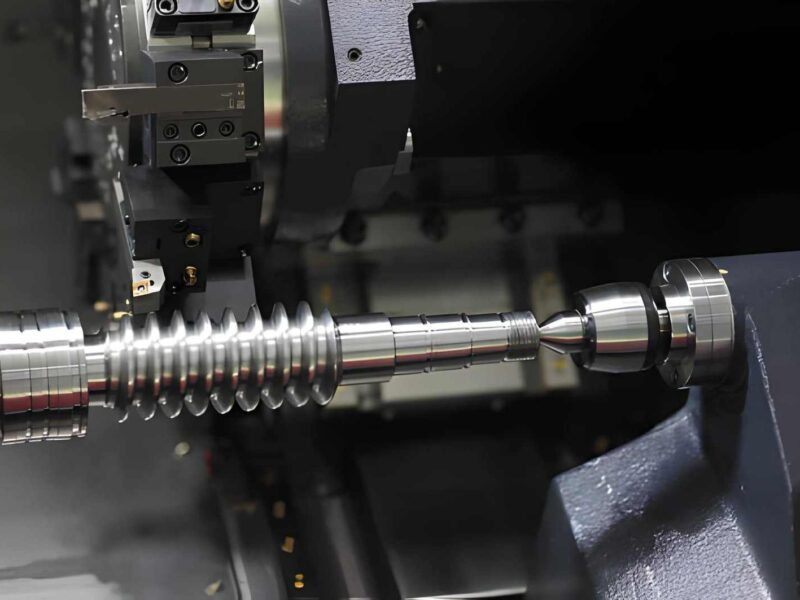
D2 is a member of the D-series of tool steels, which were created to be used in abrasion-intensive cold-work applications. In the global markets, it is known as 1.2379 and SKD11. Nevertheless, it needs to be processed, as it has low machinability, which increases during hardening, low weldability, and medium decarburization resistance.
How is D2 Tool Steel Made?
D2 tool steel is formed under managed metallurgical procedures to achieve hardness, wear resistance, and toughness. Scrap steel and alloying elements are melted in an electric arc furnace by the manufacturers. This process is cost-effective and highly accurate in terms of temperature. Additives control the level of carbon and chromium to meet D2 requirements.
The steel is melted down and either continuously cast into billets or cast into ingots. The forms can be further processed depending on the shape of the final products. The structure is refined by forging, hot rolling, and cold working, and the strength is enhanced. All the steps are dimensionally stable and materially consistent.
The process is completed by heat treatment, and performance is determined. Hardness and toughness are fabricated through the process of quenching and tempering, whereas annealing enhances machinability where needed. Tolerances and quality of surfaces are guaranteed by grinding and inspection. Quality assurance guarantees hardness, wear resistance, and industry-standard requirements.
Heat Treatment of D2 Tool Steel
D2 tool steel is an iron-based alloy with high carbon and chromium content. These elements give the steel its hardness, wear resistance, and stability.
The table below shows its typical chemical composition.
| Category | Property | Value |
|---|---|---|
| Chemical Composition | Iron (Fe) | 82.57% |
| Chromium (Cr) | 12.00% | |
| Carbon (C) | 1.55% | |
| Cobalt (Co) | 1.00% | |
| Vanadium (V) | 0.90% | |
| Molybdenum (Mo) | 0.80% | |
| Manganese (Mn) | 0.60% | |
| Nickel (Ni) | 0.30% | |
| Copper (Cu) | 0.25% | |
| Sulfur (S) | 0.03% | |
| Physical Properties | Density | 7,700 kg/m³ |
| Yield Strength | 1,300 MPa | |
| Hardness | 62 HRC (Rockwell C) | |
| Magnetism | Curie Point: 767 °C | |
| Thermal Properties | Melting Point | 771 °C |
| Thermal Conductivity (20 °C) | 20 W/m·K | |
| Thermal Expansion (20 to 100 °C) | 10.494 × 10⁻⁶ cm/cm·°C |
Common forms of D2 Steel:
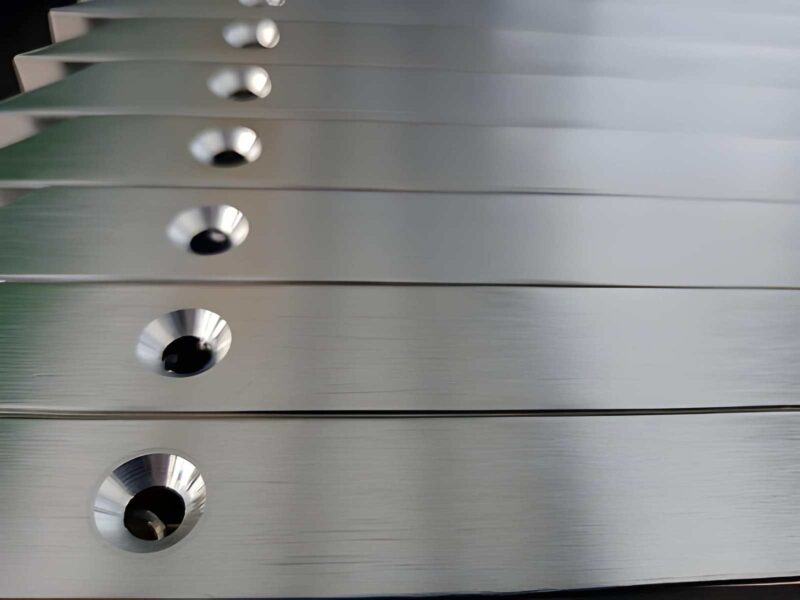
To fit various applications, D2 tool steel comes in a number of forms. The sheets are provided in cold and hot work conditions, which are usually between 0.5mm and 6mm thick.
- Bars are either round or tubular and may have a diameter of 10 mm to 250mm or higher.
- Plates are sheets, but they are thicker and used for heavy-duty purposes.
- D2 is commonly supplied in an annealed form so that it is easier to machine. Annealing is the careful heating and cooling of the steel in the furnace, reaching above 900 °C with extensive soaking sometimes in the furnace to achieve uniform hardness at about 220 Brinell.
- Being a cold-worked steel, D2 can also be provided in a cold-worked or air-hardened state. This must be done with controlled heating to 750-780 °C and air cooling to obtain the required mechanical properties without excessive heating.
Comparative differences between D2, A2,O1 and M2 tool steels
They are all cold-working steels that are applied to precision tooling, but they serve different purposes.
D2 Vs A2 tool Steel:
D2 and A2 tool steels are both cold-work steels, and D2 has a greater carbon content (approximately 1.5%) and chromium (approximately 12%), which makes it extremely hard and hard-wearing, and its edges do not wear off. It can be used in punches, dies, shear blades, and applications where abrasion and very high stress are paramount.
A2 contains less carbon (approximately 1.0) and less chromium (approximately 5 per cent), giving it increased toughness and impact resistance. It is widely applied to injection mold tooling, blanking dies, and forming tools in which chipping or cracking has to be reduced.
The heat treatment and performance of the two steels are also different. D2 is hardened at higher temperatures (1020-1060 °C) and air-cooled to its maximum hardness, whereas A2 is hardened at 900-940 °C and may be air-cooled or oil-cooled to provide a compromise between toughness and hardness.
D2 is more resilient when operating in harsh and abrasive conditions, but A2 is more versatile and able to withstand impacts. D2 tends to be a more expensive choice because it possesses wear resistance, whereas A2 provides a cost-effective choice in those applications where toughness is paramount.
D2 Vs O1 tool Steel:
O1 is oil hardening, containing lower carbon and chromium contents, thus making it easier to machine, sharpen, and less expensive. It is versatile these days and frequently applied to gauges, dies, cutters, and knives, and is good in wear resistance and toughness. O1, however, needs periodic maintenance since it contains less chromium and thus might rust.
D2, however, is air-hardening, containing more carbon and chromium, making it harder, wear-resistant, and corrosion-resistant. It best suits long-life tools with minimal wear, e.g., shear tools, punches, dies, and cutting rotary tools. The decision between O1 and D2 is based on your use and priorities.
D2 Vs M2 tool steel:
D2 is richer in carbon and chromium, which give it good wear resistance, hardness, and corrosion resistance. It is best used in cold work processes such as stamping, blanking, and forming dies where there is a need for durability and edge retention. D2 may also be heat-treated further to increase the hardness and toughness, so it is a good option to use in tools that experience repeated stress.
M2 tool steel, by contrast, is tough and shock-resistant. It contains tungsten, molybdenum, and cobalt components, thus becoming harder and more resistant to chipping in the presence of heavy loads. M2 works best with cutting tools like end mills and drill bits in machining processes where the ability to perform under impact is important.
Although D2 is more robust and slightly cheaper, M2 is tougher in more vigorous cutting processes. The decision between the two lies in the fact that you need to decide what is more important to you: wear resistance or impact resistance.
D2 Tool Steel Applications and Uses:
It is an ideal material in the extreme cold-working environment, especially in hard and highly wear-resistant tools with reduced distortion. It is a material of choice with regard to long-run dies in blanking, shearing, and trimming processes.
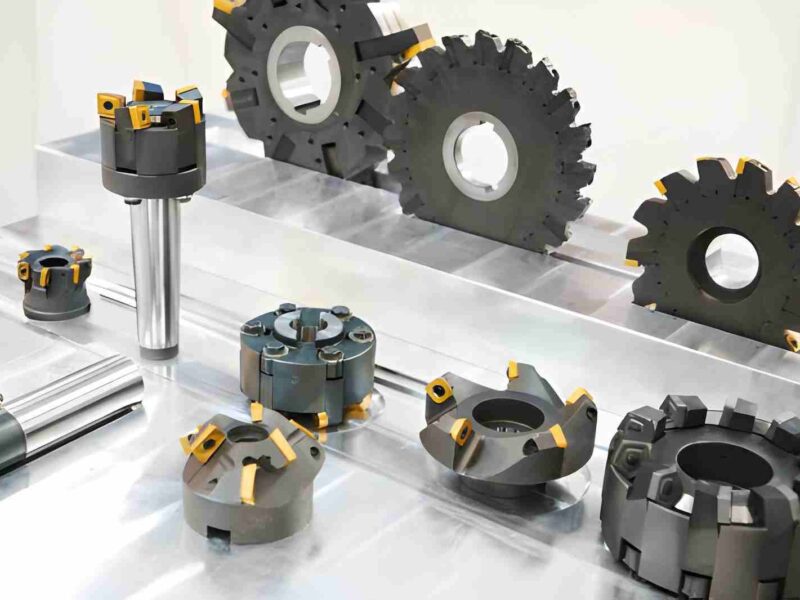
- Cutting Tools: Slitter knives, shear blades, and trimming dies manufactured using D2 have a longer life and better performance.
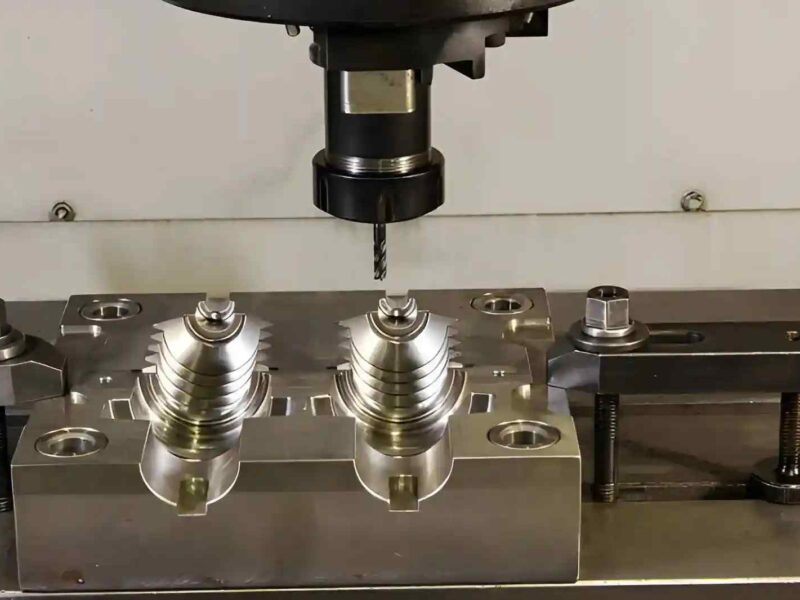
- Molding: Further, D2 is also used in molds and inserts, especially with plastic injection molds and powder metallurgy (P/M) tooling. D2 inserts, used in these applications, are highly strong and wear-resistant, which ensures durability and a steady performance.
- Forming Tools: It is also used in the forming, drawing, and extrusion tools of steel. These are deep-drawing dies, thread-rolling dies, cold and forward extrusion dies, and pressing or bending rolls. Abrasion and deformation resistance of D2 guarantees the steady outcomes of the complicated forming operations.
- Defense: This steel is used to make critical parts such as landing gear components, actuators, and ordnance.
Conclusion:
D2 tool steel is a high-carbon, high-chromium air-hardening cold-work steel that is highly hard and resistant to wear and shows high dimensional stability. It is manufactured by means of careful metallurgy, comprising metallurgical processes of melting, alloying, casting, forging, and controlled heat treatment, including annealing, hardening, and tempering to strike a balance between toughness and machinability. D2 is available in sheets, bars, and plates, both annealed and cold-worked forms, and is used in a great variety of demanding applications. Due to its combination of durability, precision, and ability to withstand wear, it is a dependable option when high-volume production is required and complex tooling is necessary.
At Premium Parts, we specialize in precision machining, controlled heat treatment, and custom fabrication of D2 steel to meet your exact specifications. Our processes ensure superior hardness, wear resistance, and dimensional stability for tools that last longer and perform better under demanding conditions.
Looking for durable, high-performance D2 tool steel components? Partner with us to get expertly crafted D2 tool steel components.
FAQs
What is the machinability rating of D2 steel?
D2 steel has a machinability rating of 27% compared to AISI 1112, which is considered low. This is due to its high carbon and chromium content, a common trait in tool steels.
Is D2 Steel Expensive as compared with other tools?
D2 tool steel is usually more expensive than steels like A2 or O1 because of its higher alloy content and complex production. Its excellent wear resistance and durability, however, make the cost worthwhile for demanding applications.
What are the drawbacks of D2 tool steel?
The main drawbacks of D2 tool steel are its lower corrosion resistance compared to stainless steel, limited welding ability, higher cost due to alloy content, and challenging machinability during manufacturing.