Drones have evolved from simple aerial devices into critical tools used across industries such as inspection, surveying, agriculture, logistics, construction, and defense. As their applications become more demanding, the performance of every structural and mechanical component becomes increasingly important.
Drone parts manufacturing involves producing lightweight, durable, and dimensionally accurate components that can withstand vibration, impact, environmental exposure, and continuous operation. From airframes and motor mounts to housings and brackets, each part must meet specific performance and weight requirements without compromising structural integrity.
This article explores the key manufacturing challenges involved in drone component production, the processes used to address them, and the factors manufacturers consider when producing high-performance drone parts.
Designing Industrial Drones: How Does Drone Parts Manufacturing Make Them Better?
The performance quality, durability, and reliability of an autonomous industrial drone not only come from a sleek design, but it also relies on smart design or intelligent software.
A drone’s performance, stability, and durability are closely linked to how its components are manufactured. Therefore, precision manufacturing plays an important role in producing reliable drone parts.
Structural Design: Building for Strength, Agility, and Efficiency
For industrial drones, the structural design dictates much more than their build. It helps ensure that the drone can carry out the demanding industrial tasks and withstand the varying environmental conditions. The drones are built to be able to resist all settings, so drone parts manufacturing must be carried out while catering to load bearing, performing well, and demonstrating power efficiency.
For larger Unmanned Aerial Vehicles (UAVs) like drones, engineers prefer to use the truss-type frameworks. They offer a higher strength-to-weight ratio, enabling the drone to carry out all industrial demands without compromising the flight dynamics.
Drone parts must be designed to maintain stability during flight while handling vibration, wind loads, and other external forces. The overall structure also depends on the drone type, whether it is a fixed-wing, rotary-wing, or hybrid design.
Engineers use simulation tools to evaluate stress, flight behavior, and airflow before production begins. This helps ensure that components such as support arms, motor mounts, and central frames fit correctly and perform as intended during operation.
Minimizing Vibration and Noise for a Stable Performance
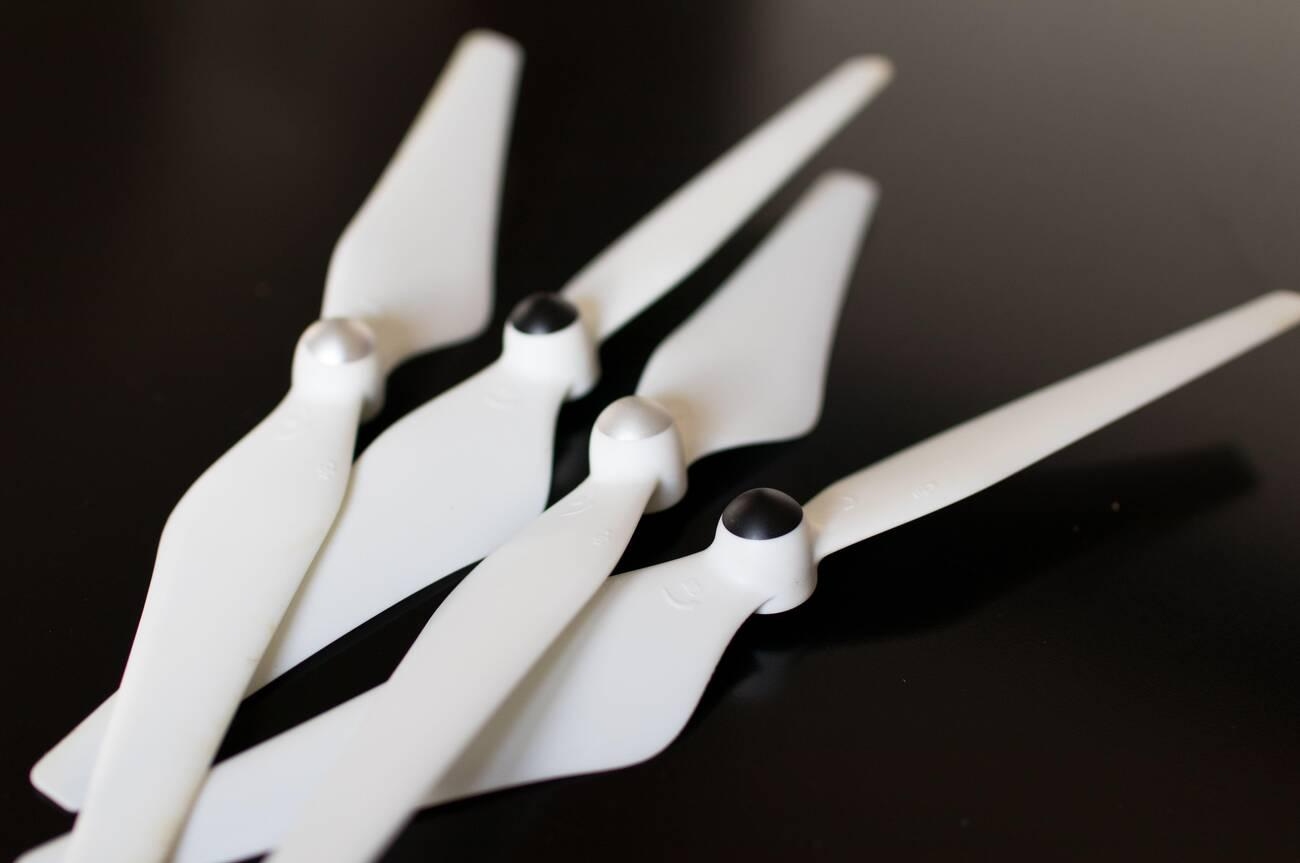 Drone propellers
For industrial drones, excessive vibration and noise aren’t just nuisances. Rather, they directly affect the performance, durability, and lifespan of different components. It enhances the wear and tear of all mechanical parts. This is why vibration and noise control are essential for precise drone parts manufacturing.
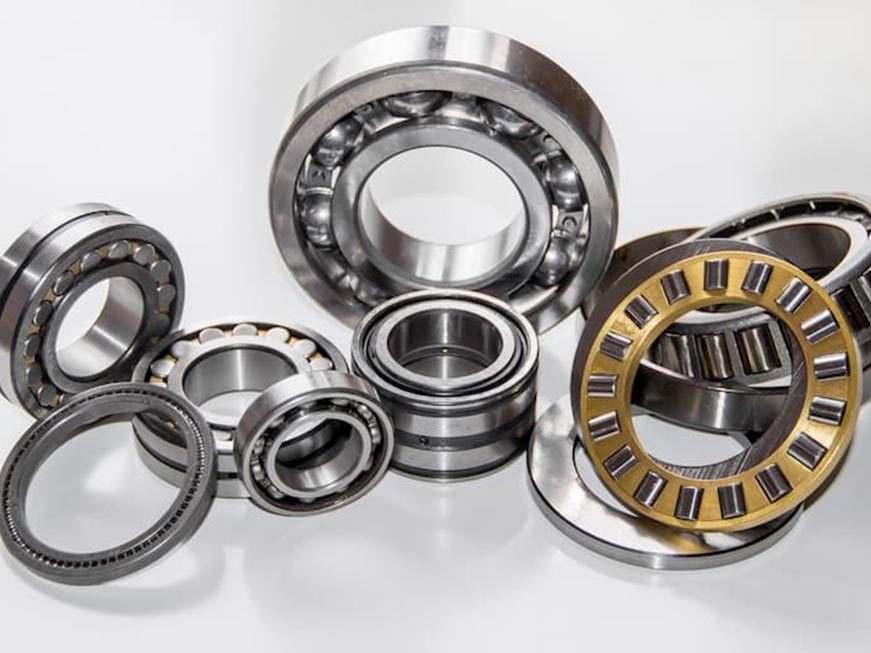
High-precision bearings must be incorporated in all rotary parts. For example, motors and propellers. Bearings help minimise friction, creating little to no noise and reducing the wear and tear of these parts. Next, balance and symmetry must be kept in mind during drone parts manufacturing. This reduces mechanical imbalance, helping remove unnecessary vibrations.
Additionally, components must be manufactured to the required tolerances so they fit together correctly. Proper fitment helps minimize vibration, prevents loose connections, and contributes to lower operational noise during flight.
Integrating Precision Components into Your Drone
Integration of precision components during drone parts manufacturing is a necessity. Every component, including bearings, sensors, shafts, and rotors, must be created with extreme accuracy to ensure consistent and safe performance across all industries.
As highlighted previously, high-precision bearings help reduce unnecessary friction and enable smooth functioning of rotors and propellers. This increases the drone’s ability to bear a greater load and prevents flight imbalance.
Similarly, the integration of components directly affects the capture and transmission of sensor data. In case of excessive vibrations, the images can turn out distorted, and signal clarity also reduces significantly. This demonstrates the importance of precision and accuracy, especially when putting together the components during assembly.
Challenges and Limitations with Drone Parts Manufacturing
1. Material Selection
For industrial drone parts manufacturing, a lightweight yet long-lasting material is preferred. This includes titanium, aluminium alloys, and composite polymers. The key is to choose a material that balances cost and functionality simultaneously.
2. Maintaining High Precision and Tolerance for Assembly
Drone components like rotor hubs, camera mounts, and motor housings must be very precise and have tight tolerances to be incorporated during assembly. Small faults can cause excessive vibrations or flight imbalance. This adds to both time and monetary costs.
3. Adapting to High-Mix Low-Volume (HMLV) Production Demands
All drone manufacturers must adapt to producing drones in a high-mix, low-volume environment. As in, highly customised pieces yet smaller batch sizes. This goes against the traditional production set-ups as it requires rapid design changes, skilled technicians, and is associated with extra costs.
Drone Parts Manufacturing Example
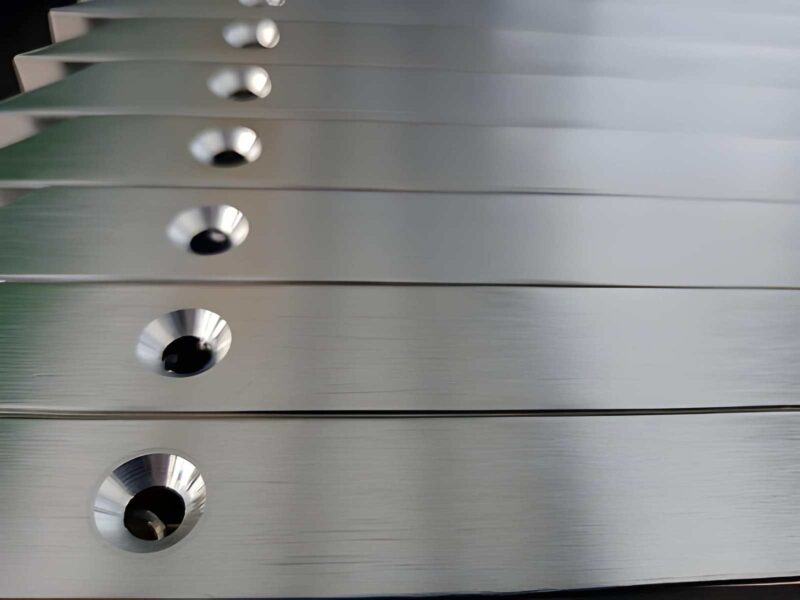
Producing drone components requires a balance between low weight, structural strength, and dimensional accuracy. Parts such as frames, motor mounts, housings, and support brackets must fit correctly and perform consistently during operation.
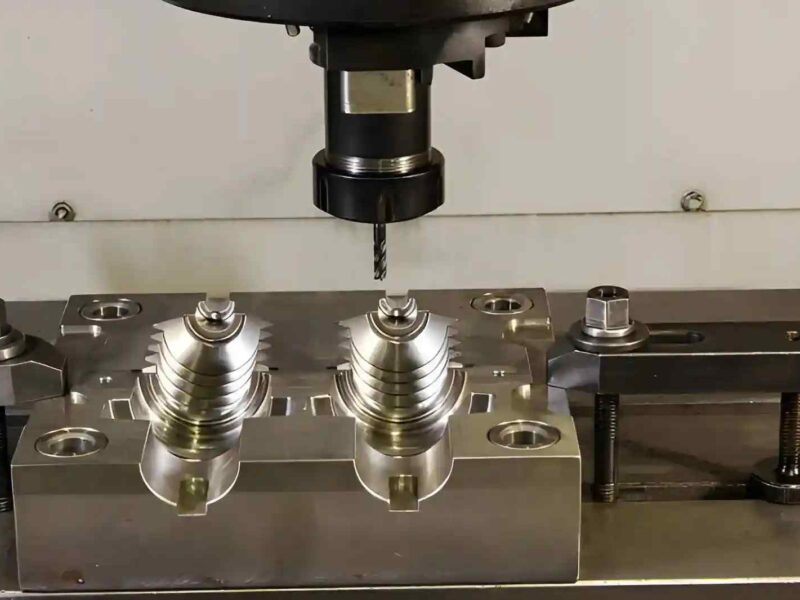
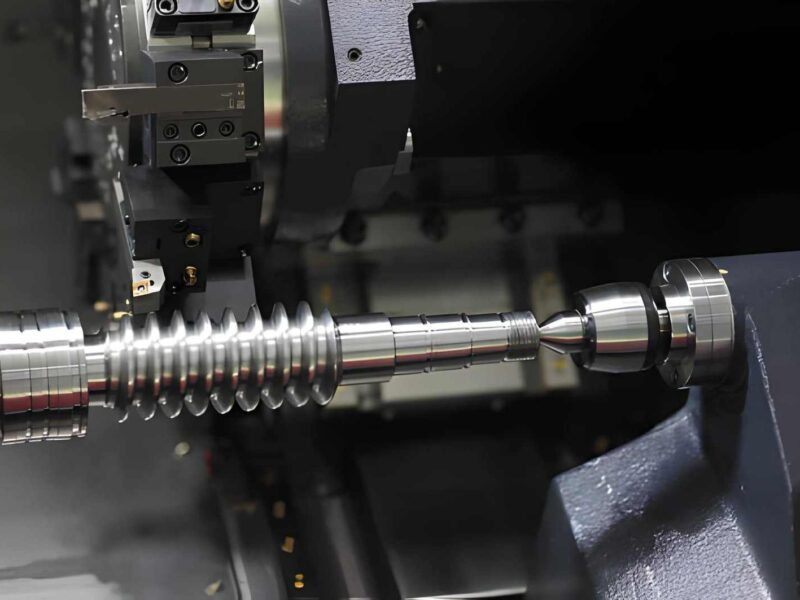
The following example shows how our team manufactures precision drone components using CNC machining, helping customers quickly move from design to functional parts while maintaining the quality required for industrial drone applications.
Designing Camera Housing Parts
1. Design Considerations:
The housing acts as a frame for the camera. Therefore, it was designed to bear strong vibrations during long journeys. Similarly, it was made modular for easy maintenance. Lastly, to meet the IP65+ environmental protection standards, there was a watertight seal that does not break due to internal heat.
2. Material Choice and Machining Strategy:
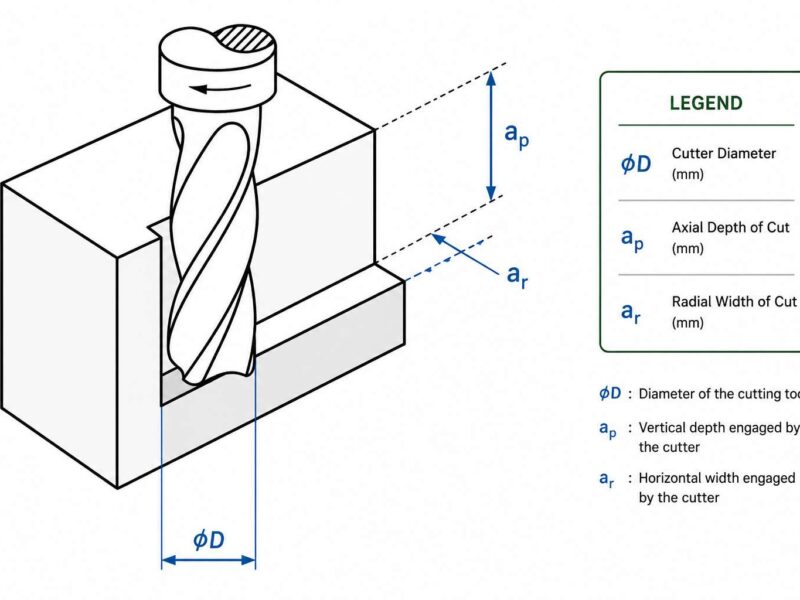
Ti6AL4V is a titanium alloy that was used to build the housing. It has a great strength-to-weight ratio and helps prevent untimely corrosion. However, this presents some challenges, like wear and tear of tools, high sensitivity to heat, deformation, etc. To prevent these, custom fixtures were used for added support, coolants to reduce heat, and high-speed, low-feed CNC parameters were employed.
Thus, we were able to achieve high accuracy by optimizing our machining strategy.
3. Surface Finish Requirements:
For the entire outer casing, a surface finishing of Ra 1.6 was required. For other sealing groves, Ra 0.8 or greater was preferred. However, direct testing was not feasible due to extremely narrow grooves, so we settled for treating small sample blocks with the same tools. At last, we were able to achieve Ra 0.6 to 0.8.
4. Dimensional Accuracy:
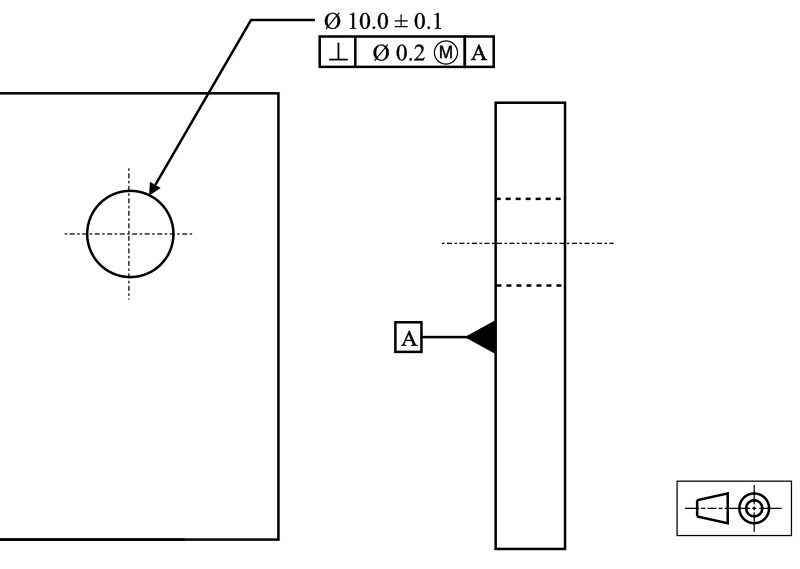
One of the biggest challenges of this project was to get a tight tolerance around bolt holes and shaft mounts. Each component was required to fit perfectly to avoid any post-machining processes, so we could save costs on the project.
We were able to get a positional accuracy through GD&T analysis, alignment holes were subject to tolerances of ±0.025 mm, and general tolerances to ±0.05 mm.
5. Inspection and Quality Insurance:
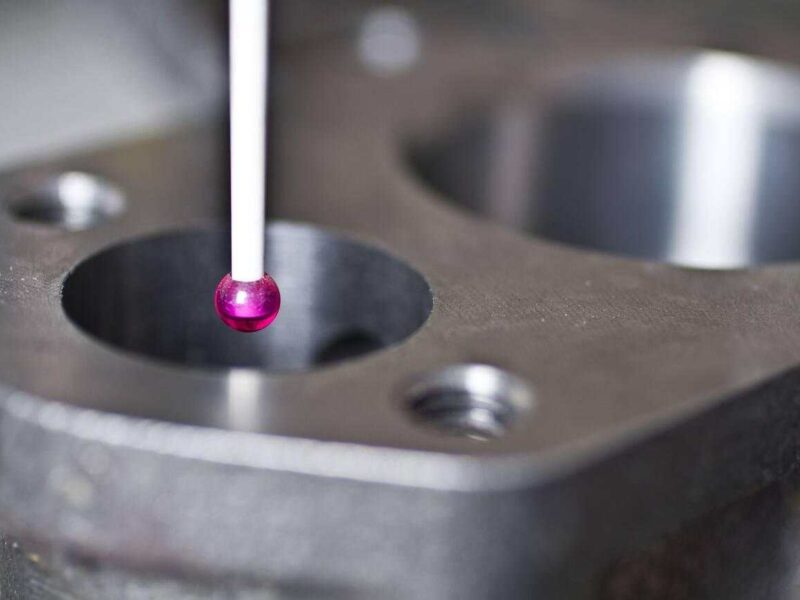
CMM (Coordinate Measuring Machine) inspection and added security checks were carried out on every component to confirm it could retain its tight tolerance.
6. Outcome:
With a lot of smart planning and coordination with our client, we were able to deliver fully functional and high-precision parts that assembled easily on their UAV platform.
Drone Parts Manufacturing at Premium Parts
At Premium Parts, drone parts manufacturing is not about producing components alone; it is about crafting solutions that are engineered to enhance drone performance in all real-world industrial applications.
We integrate advanced CNC-machining, 3D printing, and surface finishing to make sure every component produced is:
- Dimensionally accurate
- Lightweight and balanced
- Mechanically strong
- Built with tight-tolerance
We will help you customise your drone parts manufacturing without exceeding your budget. Best part? We can accommodate both low-scale and high-scale productions.
Reach out to us, so we can together turn your ideas into reality.
Applications of Industrial Drones
Industrial drones are equipped with advanced sensors, AI-powered capabilities, aerial navigation, and high-resolution imaging. Thus, they have quickly taken over a lot of industries by becoming safer, faster, and much more secure solutions to a lot of critical operations.
Infrastructure Inspection
Autonomous industrial drones have become essential tools in the inspection of infrastructure, especially for power lines, bridges, pipelines, and wind turbines.
Powered by AI-based aerial navigation, drones are able to inspect hard-to-reach areas without posing any risks to human lives. They can capture high-resolution images and sensor-based data to monitor the functionality of the systems in question. This helps reduce the operational and time-based costs.
Oil, Gas, and Energy Sector
Drones have now become a necessity in the energy and resources sector. They can help with a lot of things: monitoring, leak and corrosion detection, surveying offshore rigs, etc. They are especially useful for underwater pipelines, offshore constructions, and solar panels.
Public Safety and Emergency Response
Drones are used to carry out search and rescue operations. They also help monitor wildfire and power plant-related accidents. Since they’re used for crowd surveillance to ensure public safety, drones often document accidents without the intent. This also aids legal responses and activities.
Mapping and Surveillance
Industrial drones have revolutionised aerial mapping and land surveillance. They can effectively produce 2D and 3D models with the help of GPS, radar technology, LiDAR, and integrated photography software. Thus, they are a valuable resource for urban planning and large-scale construction.
Conclusion
As autonomous drones continue to revolutionise sectors on an industrial scale, the significance of precision-based drone parts manufacturing also becomes increasingly clear. AI-powered navigation capabilities and smart software help the drones operate reliably and safely.
By carefully managing factors such as material selection, weight reduction, structural strength, and vibration control, manufacturers can produce drone components that meet the performance requirements of demanding industrial applications.
With Premium Parts by your side, you’ll be able to not only overcome these challenges efficiently but also make your brand voice heard across the globe. Reach out, and let us help turn your ideas into reality.