Introduction to Self-Tapping Screws: Function and Working Principle
Self Tapping Screws are fasteners designed to create their own mating thread as they are driven into a material. Unlike the standard screws that normally require a pre-threaded hole, these screws cut and then form the thread themselves during the installation process. This eliminates an entire step in the assembly process, making the screws particularly practical for use in production environments.
They are commonly used in metal, plastic, and wood applications, all of which require a reliable threaded connection without the complexity of pre-tapped holes or nuts. Particularly, thin sheet metal, plastic housings, and light structural assemblies are among the everyday use cases
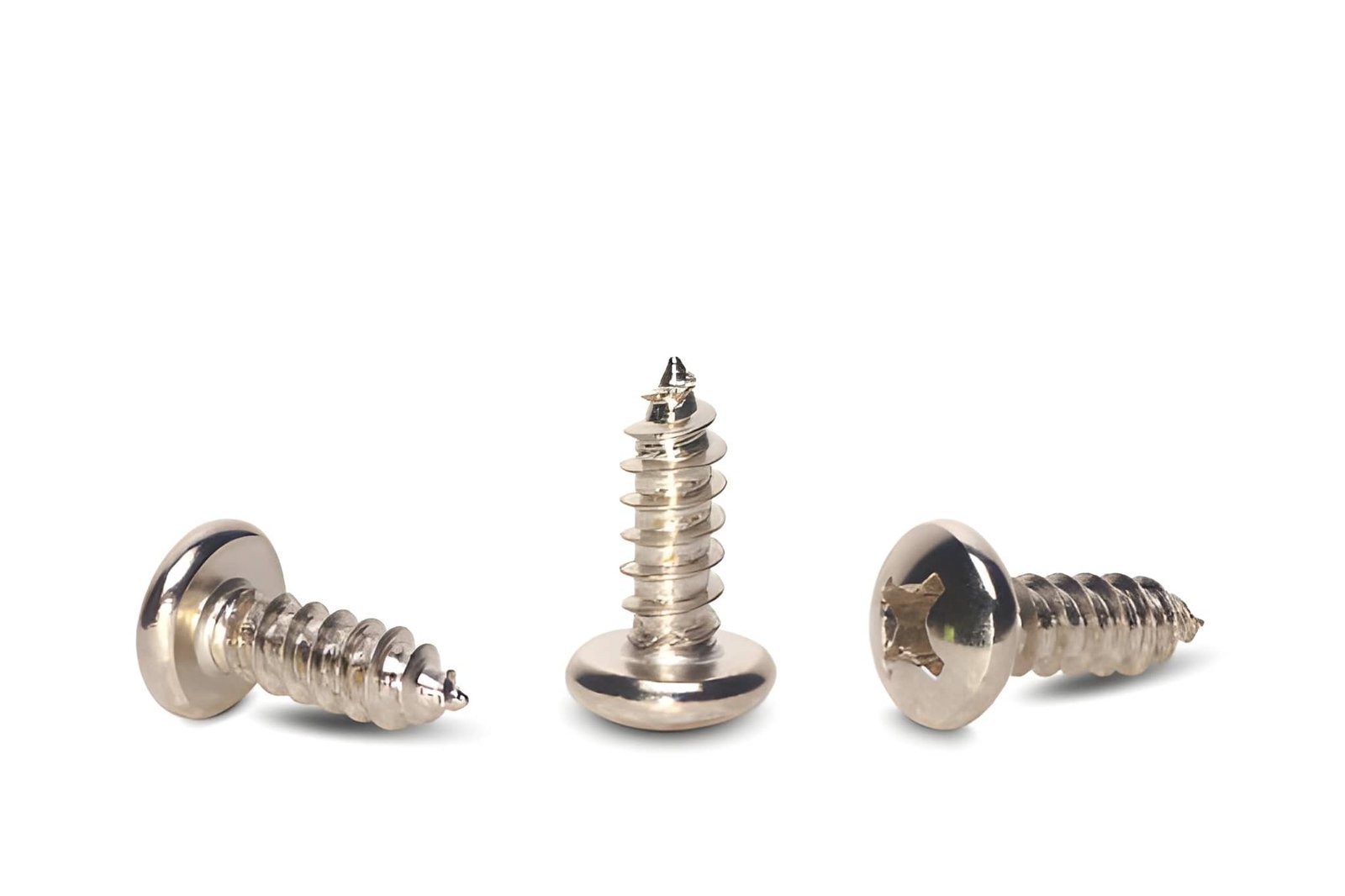 Self-tapping screws
The mechanism is also straightforward. As the screw is driven in, the tip engages the material, and the thread profile either cuts away material to form a groove or displaces it outward, depending on the screw type. This creates a thread that conforms precisely to the fastener, creating a secure mechanical connection without the need for a separate tapping operation.
Working Principle
- Pilot hole preparation: the hole diameter is selected based on the substrate material and screw size.
- Screw penetration: the fastener is driven in by employing a controlled torque.
- Thread creation: the screw cuts/displaces material to form a matching thread profile.
- Clamping and load transfer: the assembled parts are drawn together. The joint begins carrying the load.
Types, Thread Forms, and What Sets Them Apart
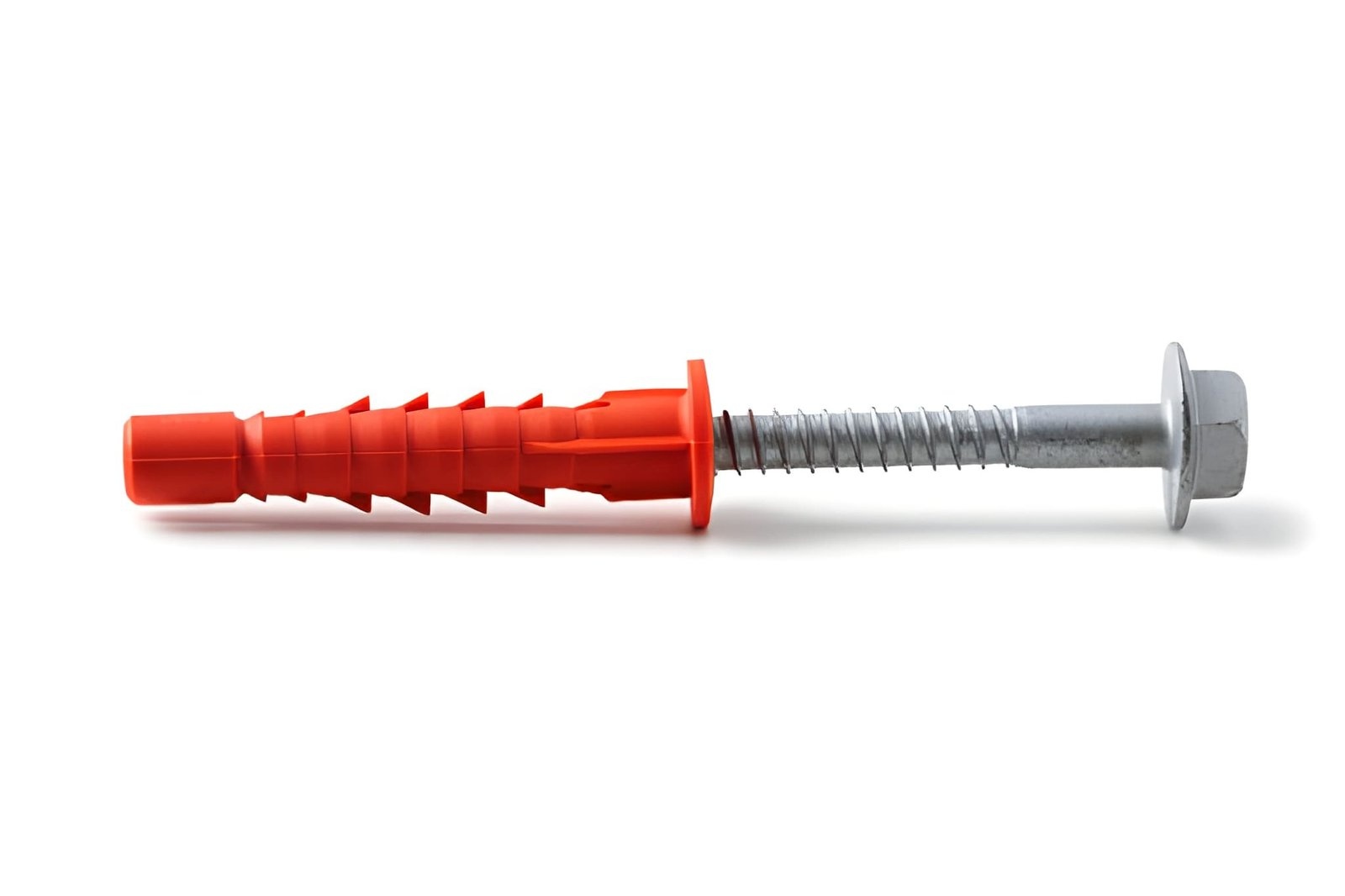 Dowel with self-tapping screw
Self-tapping screws come in different designs, each suited to specific materials and classifiable load conditions. However, the two broad categories are thread-cutting and thread-forming screws.
Thread-Cutting Screws
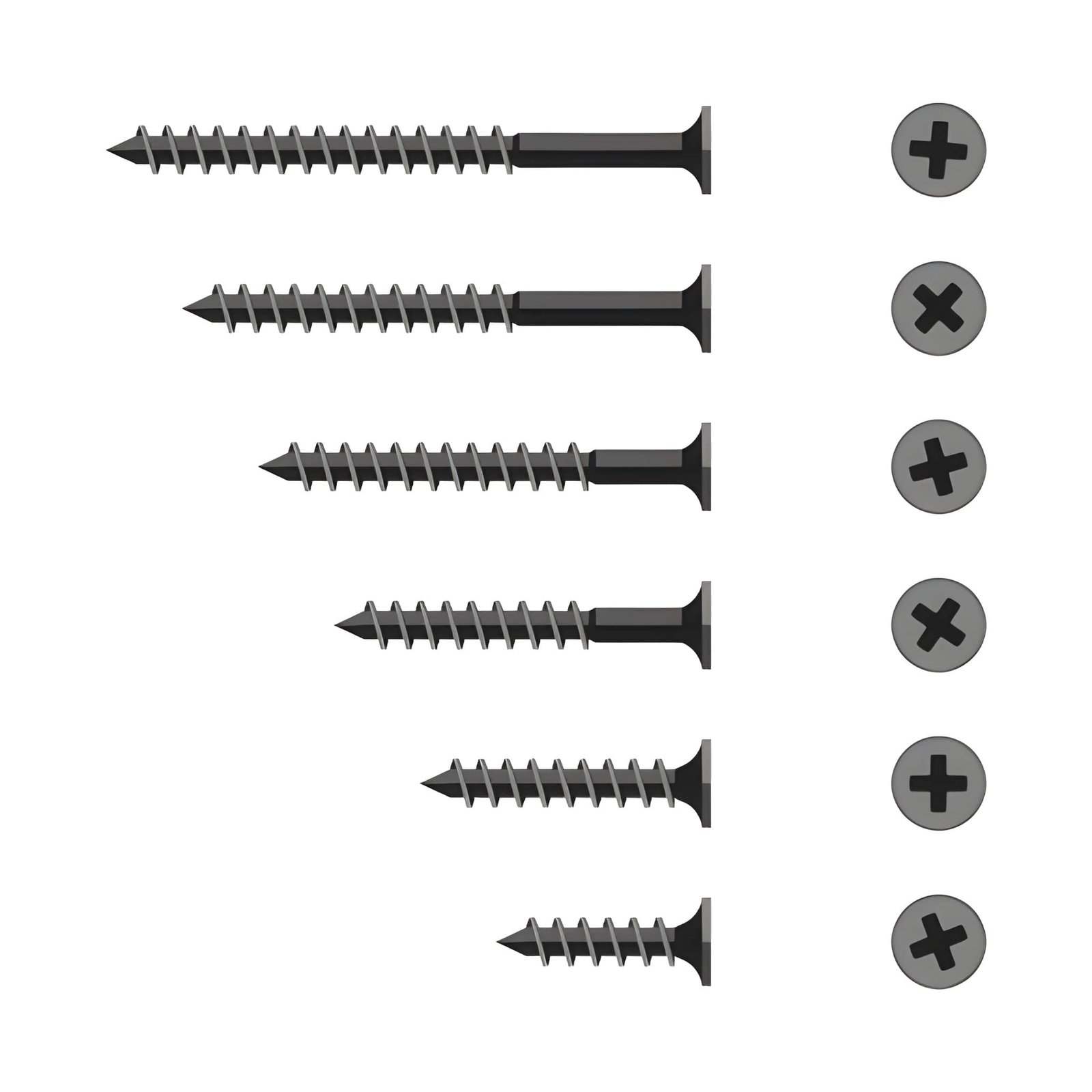 Thread cutting screws
Thread-cutting screws gradually remove material as they are driven into the workpiece. The tip geometry includes one (sometimes more) cutting edge that shears through the substrate, producing a chip and leaving a cleanly cut thread behind.
They are often used to work with harder materials: cast metals, thick plastics, and composites. They produce less installation torque and, therefore, are way easier to use with such heavy, hard, and dense substrates.
However, it comes at the cost of the cut thread being slightly weaker than a formed thread. Additionally, in case of repeated removals and re-installations, this thread tends to degrade faster.
Thread-Forming Screws
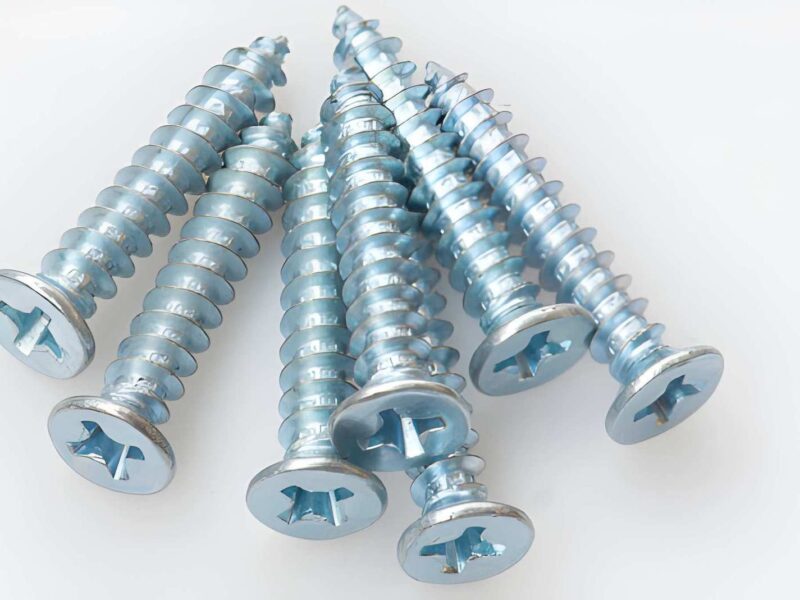
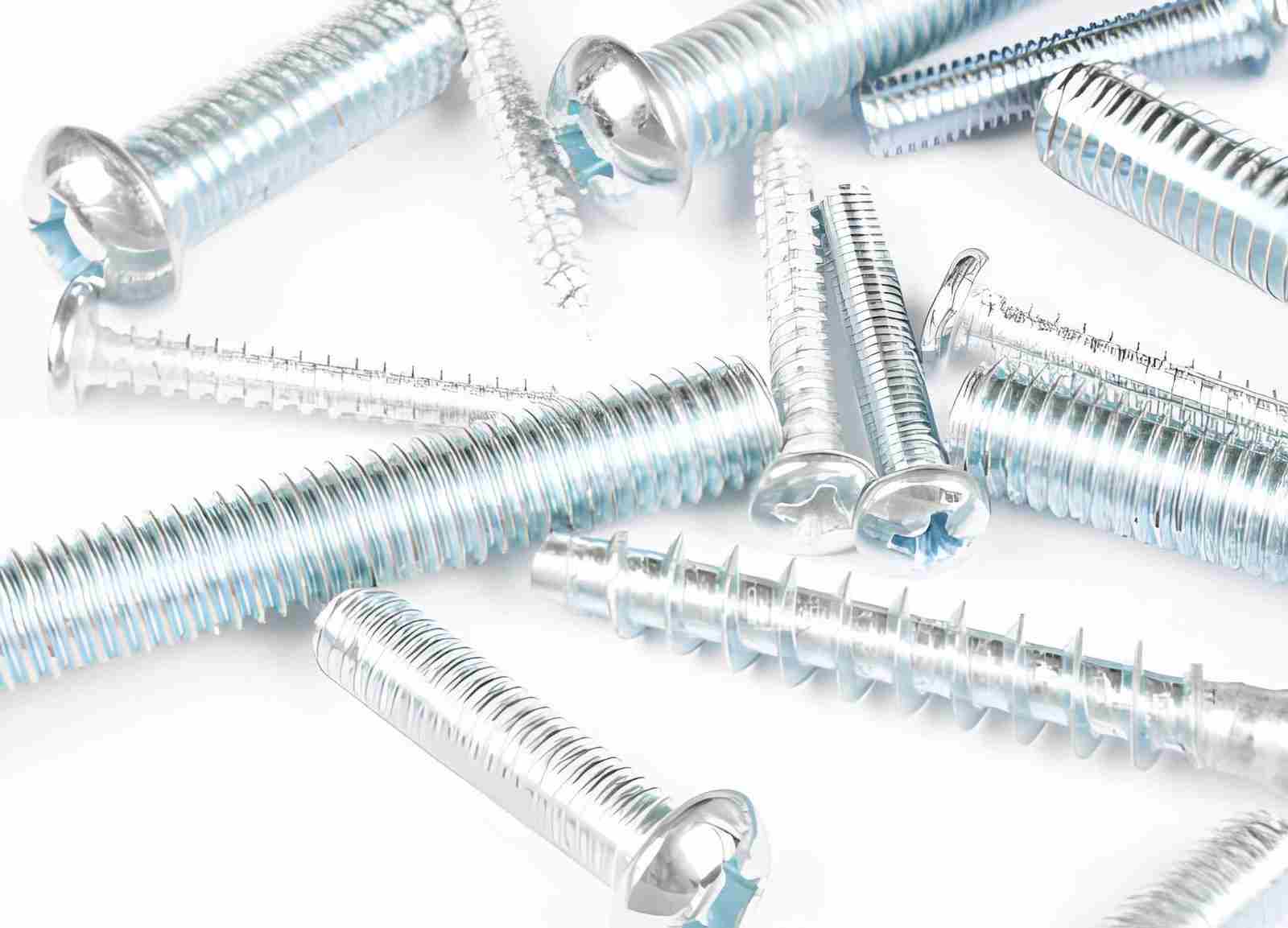 Chromed screw bolts isolated
Instead of cutting, thread-forming screws displace the material outwards as it advances into the workpiece. This cold-forms a thread that wraps tightly around the fastener profile. So instead of being removed, the material tends to get redistributed.
This process results in a thread that is much stronger than cutting because the substrate material is work-hardened during forming. Additionally, the thread contact is also continuous rather than being interrupted.
Thread-forming screws are preferred for use in ductile materials like aluminum, soft steel, and certain thermoplastics – all of which support deformation.
Thread Profile Variations
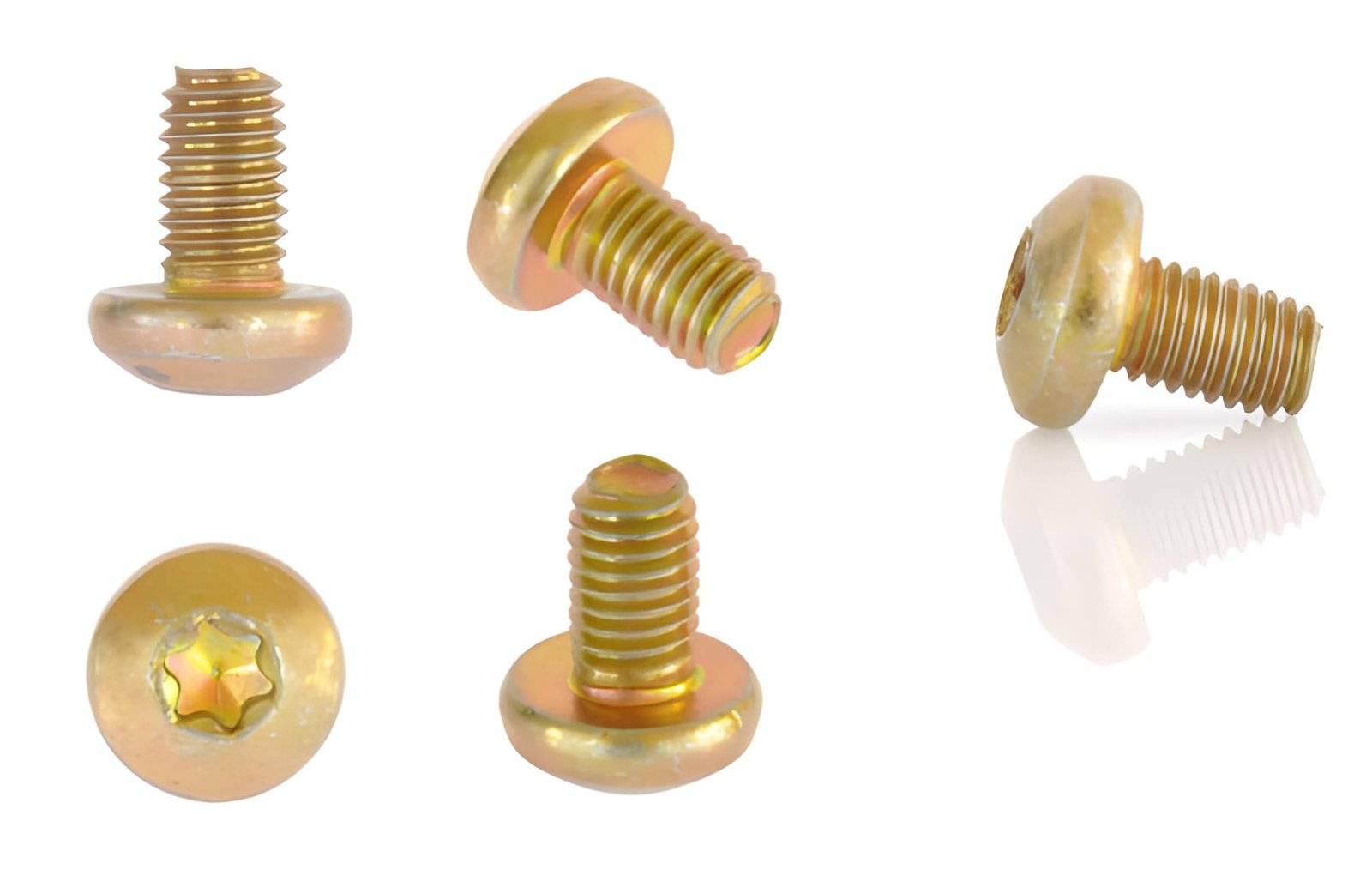 Metal zinc bolt with torx drive head
Beyond the cutting versus forming distinction, thread geometry also varies considerably across screw types:
- Coarse threads: deeper pitch, better for softer materials where grip over a larger area matters. For example, wood and plastic.
- Fine threads: tighter pitch and better load distribution in metal applications, particularly. It is also highly resistant to loosening under vibrations.
- Trilobular threads: non-circular cross-section that reduces driving torque. They tend to maintain strong retention. Commonly used in productions like precision plastic assemblies.
- Dual-lead threads: two interleaved thread starts. It allows faster installation and maximum holding strength.
What Actually Sets Them Apart
Thread form particularly determines the holding strength, installation torque, and how well the screw behaves under load over time. Similarly, material compatibility determines whether the thread forms cleanly or damages the substrate during its formation. Therefore, getting both of them right is what determines whether the joint holds or fails, regardless of what the application is.
Material Compatibility in Self-Tapping Screw Selection
Matching screw type to substrate material is necessary to determine whether the joint holds or fails, even on the first load cycle.
Metals
Thread-cutting screws with hardened steel construction are an industry-wide standard for sheet metal and rigid metal assemblies. Pilot holes must be sized to 80 to 85% of the screw’s outer diameter, and HRC 45+ hardness is recommended to prevent thread deformation during installation.
Plastics
Plastic is more sensitive than most people expect; consequently, thread-forming screws are almost always the better choice. Since they displace the material instead of cutting through it, the stress gets distributed more evenly and leads to a significant reduction in the risk of workpiece cracking. The pilot holes in this case should be sized to 70-75% of the outer diameter. Additionally, a coarse thread pitch and controlled installation torque essentials.
Construction
In the construction industry, speed and holding strength are the priorities. Corrosion-resistant coatings like zinc plating are non-negotiables for outdoor exposure. Similarly, a vibration-resistant thread design matters in all load-bearing applications. Some common use cases include roofing, framing, drywall, and facade work.
Automotive
Automotive applications always prioritise fatigue resistance over other properties. Vibration, thermal cycling, and chemical exposure all work against the joint over time. Consistent thread quality also matters for automated assembly line compatibility.
Manufacturing Process of Self-Tapping Screws
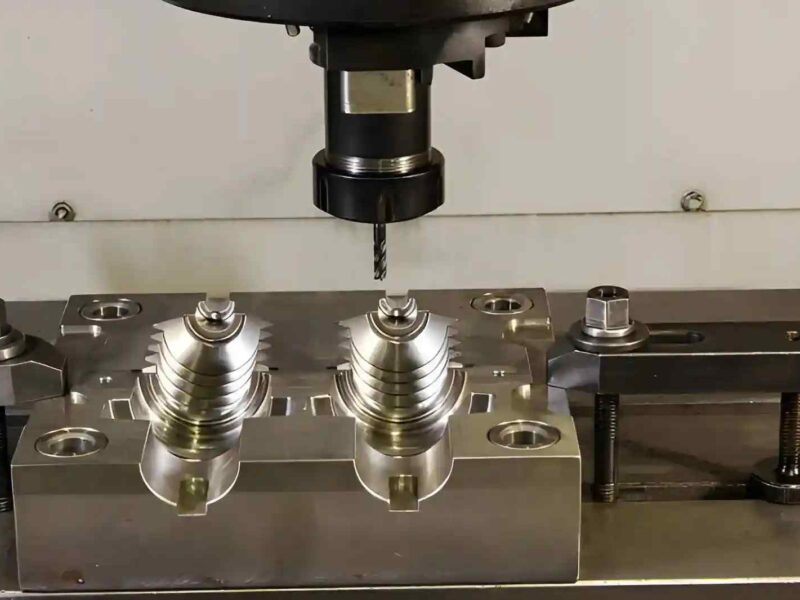
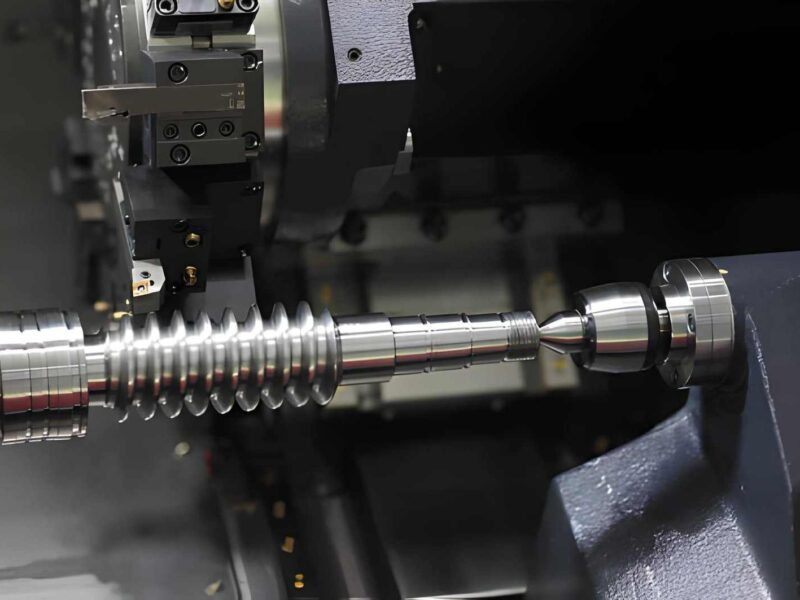
A common misconception about self-tapping screws is that they are CNC machined. However, when companies target mass production, CNC machining is mostly avoided. Instead, a four-stage process is employed to manufacture the screws on an industrial scale.
Cold Heading
The process begins when the wire is put into a cold heading machine. By applying high pressure, it forms the screw head and shank geometry both at once. However, no material is removed at this stage, and this process is carried out at high speeds
Thread Rolling
In this step, hardened dies are employed to press the thread profile into the shank. Again, it does not cut through it; rather, it preserves the grain structure of the material by pressing only. It results in a smoother surface of the thread, which consequently reduces the installation torque. When compared to thread cutting, thread rolling is much faster and produces a much better result in mechanical terms.
Heat Treatment
It is required that the screw be harder than the target material it will be threaded into; otherwise, the fastener can deform even before the thread forms. Due to this, heat treatment is used to bring the screws to the required hardness, which is typically in the range of HRC 45-60, depending on the target material.
Surface Finishing
This is the final stage. A coating is used on the screws primarily to protect against corrosion. It also helps control friction during the installation process. Among the preferred options, few are:
| Finish | Preferred for |
| Zinc plating | Indoor + general use |
| Zinc-nickel | Automotive + outdoor exposure |
| Nickel plating | Decorative use (provides moderate corrosion resistance) |
| Dacromet | Construction + marine + generally extreme environments |
| PTFE coating | Plastic assembly |
Self-Tapping Screw Selection: A Four-Factor Framework
Although screw selection looks simple on the surface, it rarely is as easy in practice. One wrong decision is all it takes to break a joint that apparently looks perfectly assembled. Be it the thread type, hardness, coating, or the pilot hole size – each of these decisions should be made very carefully. Following this four-factor framework will help you remove most of the risks systematically:
Factor 1: Substrate Material
Material compatibility affects how you make every other decision. It chooses everything: thread-cutting screw vs thread-forming screw, appropriate thread pitch, and even the pilot hole size. Generally, thread-cutting screws are used in workpieces made of harder metals, and thread-forming screws in comparatively softer and more ductile metals like aluminum.
Similarly, a plastic workpiece requires thread-forming screws in most situations because plastic has a much lower installation stress, which reduces the risk of your workpiece cracking by a significant amount.
However, in composite materials, the fiber type, the resin system, and the layup all together affect how the substrate responds to thread formation. Due to this, it is preferred to test both options, cutting and forming, to decide the best way forward.
Factor 2: Mechanical Requirements
Joints that are shear-loaded should be secured using large-diameter screws because they have a higher tensile strength, and the entire joint load gets distributed better across the fastener cross section. Next comes the pullout resistance, which relies on the length and pitch of thread engagement. Generally, finer threads having a longer engagement depth perform better when it comes to axial load.
Factor 3: Operating Environment
It is seen very commonly in the industry that a screw performing perfectly well in a controlled indoor environment often fails very quickly when it is exposed to moisture, chemicals, or different temperatures. Due to this, it is necessary to choose a coating for the screws that reflects the actual environment where the joint will be living.
Usually, for outdoor environments that have high humidity, zinc-nickel or Dacromet coatings are preferred since they offer better corrosion resistance than standard zinc plating. Similarly, chemical exposure of any form, be it oils, solvents, or cleaning agents, should also be taken into consideration. Under this scenario, stainless steel or PTFE coatings will perform better.
Factor 4: Production Volume
CNC-machined custom screws are quick to produce, easy to modify, and do not require any upfront tooling costs. For small production runs or maintenance work, standard off-the-shelf screws or small custom orders are usually the better fit. Once you’re making screws in high volumes, cold-headed screws take over, since the cost per unit drops sharply and it’s easier to keep quality consistent at scale.
Conclusion
The concept of self-tapping screws is itself straightforward, but efficient performance and consistent results both depend on other decisions, such as thread type, material compatibility, pilot hole size, chosen coating, etc. Each of these affects the joint, but it only shows up when it is put to actual use, in its actual environment.
Follow what this guide says, and you will be able to keep your production moving without any failures brought by due to uninformed fastener decisions.