Precision is a basic requirement in modern manufacturing. Every feature, size, and surface must match the design to ensure proper function. This applies to prototypes, aerospace parts, and production components where small deviations can affect assembly and performance. Machining allowance plays a key role in achieving this level of accuracy.
In real production, parts are rarely finished in one step. They are cast, forged, or roughly machined first, then brought to final size through controlled material removal. Machining allowance provides the extra material needed for this process. Without it, parts may fall out of tolerance or fail to meet surface requirements.
This article explains:
- What does machining allowance mean in practical manufacturing
- Why is it important for accuracy and surface finish
- How to decide the right allowance based on the process and material
- Common mistakes that lead to machining issues or extra cost
What is Machining Allowance?
To help during the finishing stage and machining, technicians add an extra amount of material to a workpiece. It ensures that after casting, forging, or printing, the machining of the part becomes quick and accurate in terms of both measurements and surface.
Here’s a simple way to understand it:
If you’re preparing a cake, on purpose, make it slightly bigger to be able to manually trim the edges into a neat outline. That “extra” you baked in is your machining allowance. We do the same process with metal, plastic, or composite parts in manufacturing.
The machining allowance compensates for the following:
- Dimensional variations in raw material forms (e.g., casting shrinkage).
- Warping or deformation during cooling or handling.
- Tool access and machining clearances.
- The removal of surface imperfections to achieve the required finish or tolerance.
It should not be mixed up with tolerance. Machining allowance and tolerance are not related; the first limits the extra amount you leave for machining purposes, and the second explains how precise the outcome needs to be.
Why Machining Allowance Matters in CNC Machining
An excellent outcome for CNC and subtractive manufacturing is a part that works and looks like its virtual model. Without taking machining allowance into account, manufacturers encounter various troublesome situations.
Surface Defects Remain Untouched
Raw parts that are made by casting or forging usually have irregular surfaces. Scratches, pits, and uneven layers may appear on these surfaces if enough machining allowance is not given and the cutting tools do not go deep enough.
Dimensional Accuracy Suffers
Not every piece that comes from casting or forming is always the same. There is no chance to make improvements if the part is exactly the right size with no extra material. A slight difference in the material’s characteristics or size may mean the part will be unusable.
Rework and Scrap Costs Increase
Skipping machining problems might make an operation hard and likely require you to start over. Consequently, it makes the production run behind, strains the budget, and affects the product delivery timeline.
Tool Wear and Efficiency Drop
Issues like unexpected imperfections or tight corners without any extra space tend to wear out the tools rapidly and also make machining tasks longer. Sometimes, jobs become more expensive and complicated just because they take longer to complete.
Factors That Influence Machining Allowance
Every part is unique, and so are the machining allowances that go with them. Even though there are general rules, what counts as the “right” allowance involves various factors within the process of design, engineering, and manufacturing. Here’s a breakdown:
Material Type
- Cast Iron: It is more stable and has a tougher surface than other materials, usually calling for less extra space to work with.
- Aluminum Castings: Easy to bend and can distort, so more space is needed in the design.
Manufacturing Process
- When using casting & forging, it is usual to allow for more room to fix irregular or faulty surfaces.
- Sheet Metal Fabrication can work with a short range only when accurate cutting and bending are necessary.
- Additive Manufacturing should be looked at carefully as it tends to show anisotropy and surface defects.
Machining Type (Roughing vs. Finishing)
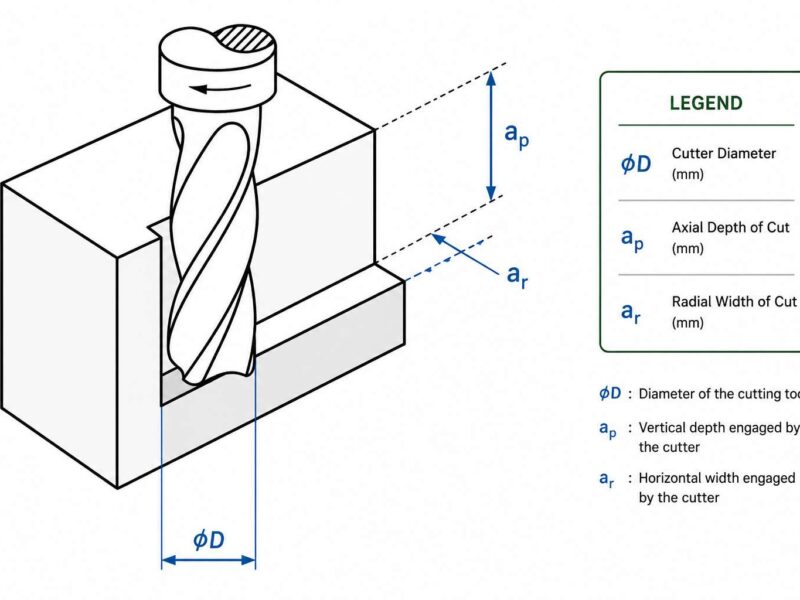
Roughing operations remove large volumes of material quickly. Steps at the end of machining make the part meet its needed tolerance. Allowances need to support both:
- Roughing: It is common to leave a 2 to 3 mm (or a bit more) allowance for this part.
- Finishing: Requires acceptable allowance (e.g., 0.1 to 0.5 mm).
Complexity of the Part
Since models have complex hollow spaces, numerous undercuts, corners, and thin walls, removing the material becomes more complicated. For these kinds of parts, allowing more room for machining must be planned out so that the structure is still secured.
Tolerance and Surface Finish Requirements
If the acceptable deviation is slight, you have to carefully select the allowance. Achieving a mirror-polished or precise surface requires that the machine maintain extra stock, which can be removed in a controlled manner using special tools.
Post-Machining Operations
Heat treatment, coating, or grinding may alter the dimensions after machining. A strong design anticipates potential adjustments and makes room for revision.
Recommended Machining Allowances by Process
Though every job is different, manufacturers tend to follow general guidelines for machining allowance depending on the production process they use. After that, the first dimensions are modified to match the part’s structure, its material, and the desired finishing effects.
Typical Allowance Ranges by Manufacturing Method
| Process | Recommended Allowance |
|---|---|
| Sand Casting | 2.0 – 5.0 mm |
| Investment Casting | 1.0 – 2.5 mm |
| Forging | 1.5 – 3.0 mm |
| Die Casting | 0.5 – 1.5 mm |
| 3D Printing (Metal) | 0.2 – 0.8 mm (depends on resolution) |
| 3D Printing (Plastic) | 0.1 – 0.5 mm |
| Sheet Metal Forming | 0.2 – 1.0 mm |
Having these ranges helps ensure that the final finishing of the product is correct and aligns it with the approved virtual design. However, every project has its nuances.
Common Mistakes to Avoid
Designers and engineers sometimes overlook machining allowance—or worse, overcompensate. Both situations can lead to difficulties in the future. Here are some of the most common pitfalls:
Applying Excessive Allowance
Having parts that are more complex wastes more time, uses tools faster, and affects the total cost of the material. It may also result in changes during the final stages, primarily in areas that are thin or subject to significant stress.
Not Leaving Enough Allowance
If there isn’t enough allowance, it may be too hard to find and correct errors or reach the proper tolerance. Because mistakes often go unnoticed in the final product, there are frequently damaged goods and a need to remake them from scratch.
Ignoring Post-Processing Needs
If heat treatment, anodizing, or coating is used on a part after machining, the part’s dimensions may change. If you do not include allowance for these in your planning, the final result might be inaccurate.
Overlooking Fixture and Tool Access
Due to the limited space, crowding the allowance on the design can keep tools out of reach and reduce the amount you can clamp. This results in poor finishes or inaccurate cuts.
Using the Same Allowance for All Materials
Every material behaves differently under machining. Treating metals and plastics, as well as casting and forging, in the same way can be unwise.
Avoiding such problems calls for early interaction between the design and manufacturing units. For this reason, at the start of each project, Premium Parts ensures the application of Design for Manufacturability (DFM). We ensure that you avoid mistakes that others typically encounter during production.
How to Determine the Right Machining Allowance
The right solution for machining allowance mixes engineering ideas with the experience gained during manufacturing. Here’s how to nail it:
Understand the Entire Manufacturing Flow
- Check the manufacturing process before you decide on an allowance.
- Is it cast, printed, or machined from solid stock?
- What post-processing steps are required?
- Are alterations in the shape or structure of the material expected to happen with heat or stress?
Simulate and Review in CAD/CAM Tools
Simulating in modern CAD and CAM software will let you observe material removal, discover places where components do not fit together, and see the differences between the rough and final shapes of a part. As a result, you can accurately set up your budget and have some extra money without wasting any.
Supplier Feedback
Your manufacturing partner often has the most practical insight. They have produced similar parts, determined the boundaries of their tools, and understand what happens to various materials in the shop. A short consultation with the experts (at Premium Parts) may prevent you from wasting days on adjustments.
Base It on Function, Not Habit
Some designers use fixed values out of habit. Instead, ensure that your allowance covers only the essential expenses that must be paid immediately. What areas are purely cosmetic or non-mating?
Think Roughing and Finishing Separately
Break down the operations. Make the initial estimate a little higher, but use a more precise number for the final calculation. This tiered approach saves time and ensures better accuracy.
Machining Allowance in Rapid Prototyping vs. Production Runs
Your production goals usually guide the changes in your machining allowance strategy. Rapid prototyping techniques differ significantly from the methods used in mass production.
In Rapid Prototyping:
- The priority is speed and flexibility. Some engineers skimp on the amount they machine or skip some post-processing entirely to reduce turnaround time.
- High surface quality and small tolerances are usually neglected in fit or function testing.
- Sometimes, prototypes that are made by 3D printers or soft machines need fine-tuning, and that’s where the allowance is maintained, only to the points that require minor changes.
In Production Runs:
- Consistency, efficiency, and repeatability take center stage. For this operation, it is crucial to establish tight tolerance ranges and apply them consistently to all batches.
- Changing raw materials is handled by adding buffer zones so that quality and uniformity are maintained.
- The expenses related to rework can increase significantly in high-volume production, so every tiny detail is checked to ensure it fits the bill.
Best Practices for Designers and Engineers
You should include machining allowance planning at the start of your design process, rather than viewing it as an additional task. This is how product designers and mechanical engineers can make sure their projects go well on the machines:
Start with Clear Drawings
- Draw the entire allowance region on the drawings and include the specific machining requirements.
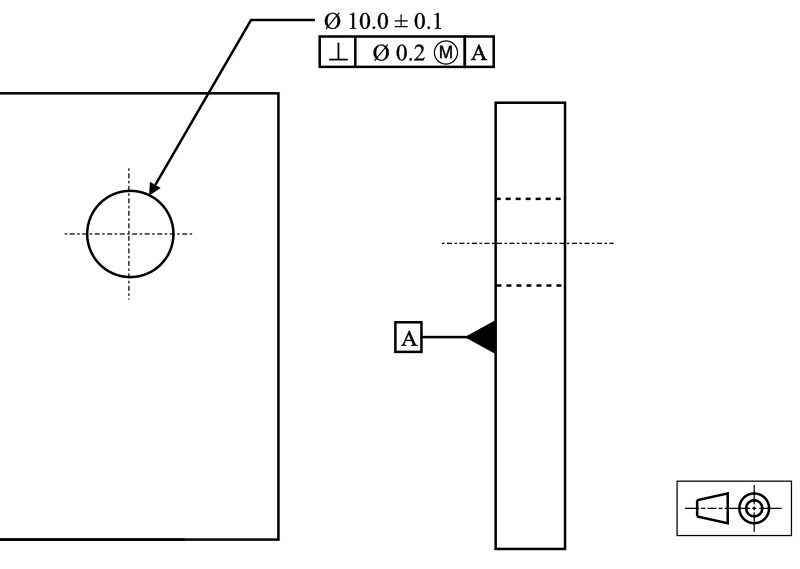
- Add relevant GD&T (Geometric Dimensioning and Tolerancing) symbols to allow your drawing to be unambiguous.
Design for Access
- Ensure that machining tools are accessible to all main areas.
- Keep workpieces simple to prevent difficulties with debris or blockages in the operating space.
Consider the Whole Lifecycle
- Imagine the part evolving from raw material to its finished form.
- Remember to include any procedures that can change the physical features (e.g., heating at high temperatures, surface coating, and polishing the surface).
Separate Critical and Non-Critical Surfaces
- Make sure to apply machining allowance to the necessary features, such as mating faces, holes, and those with tolerances.
- Skip machining areas are intended to be covered or remain barely visible unless they make a noticeable difference.
Collaborate Early with Manufacturers
- Engage your manufacturing partner during the design phase to ensure a seamless integration.
- At Premium Parts, our skilled team regularly reviews preliminary CAD drawings and sets of drawings, suggesting improved allowances, safer and easier tooling, and tighter tolerances.
Performing these actions at the beginning helps you manage supplies promptly and minimize issues related to quality and cost.
FAQ’s
Q: Do I need a machining allowance when producing 3D-printed parts?
Yes, especially for metal prints. Additive manufacturing results in layer lines, surface roughness, and dimensional differences. Ensuring there is a machining allowance means those surfaces can be improved for vital purposes or looks.
Q: What happens if I skip the machining allowance?
Skipping it might cause your product to have problems with the surfaces, be out of tolerance, or have difficulties during finishing operations. This situation can result in replacing parts or paying extra to fix the problem.
Q: Is machining allowance the same as tolerance?
No. Machining allowance is the extra material left for final shaping. The closeness of a part’s final size to the set standard is based on tolerance.
Q: Can’t the manufacturer just decide the allowance?
Although manufacturers may need to decide at last for good production results, the most significant benefits appear with teamwork. By simply consulting with your machinist, you can achieve the right balance between functionality and production efficiency.
Conclusion
The machining allowance is often small, but it plays a crucial and significant role in the entire manufacturing process. It ensures your parts look and function properly, are easy to build, and last longer. In every case, from prototyping to mass production, planning for allowance in advance helps keep the process smooth and the cost down.
Rather than just an extra space, machining allowance boosts accuracy and helps create superior results in all parts of manufacturing. At Premium Parts, our engineers, designers, and project managers coordinate with you from start till end. So that every part, from the selection of raw materials to the machining process, is done for optimal results.
When you need assistance with either prototype improvement or full production, our team uses precision, insight, and flexibility to assist you.