Are your machined parts missing sharp edges or flat walls? Do your finishes look rough or require extra post-processing? That’s a sign your milling strategy needs an upgrade fast. Many engineers rely on face milling for producing complex parts. But face milling can’t cut vertical walls or tight corner steps. This results in more setups, increased time, and reduced precision. Shoulder milling solves all of that in one clean pass. It cuts flat surfaces and vertical walls with high accuracy. You save time, improve the finish, and simplify machining.
In this guide, you’ll find everything you need to know about shoulder milling. It covers key tools, cutter types, and practical machining techniques. Whether you’re working on housings or stepped features, this guide will help you achieve better results.
What Is Shoulder Milling?
Shoulder Milling is a subtractive machining process. It cuts flat surfaces and vertical walls at the same time. The tool’s side and bottom edges perform both actions simultaneously. This makes milling efficient and precise for complex parts.
You must use special tools for optimal and desired results. Shoulder milling uses square cutters to perform cutting and designing unique profiles and shapes. These tools produce clean products and sharp internal corners efficiently. They maintain precision even in deep pockets or tight features.
It can be adopted when your parts need exact step heights. Unlike face milling, this process does more than flatten surfaces. It creates defined boundaries with excellent angular precision throughout.
Difference between a Shoulder Mill and a Face Mill?
Knowing the distinction between face milling and shoulder milling assists you in making the right choices concerning tooling. When it comes to comparing a shoulder mill vs a face mill, geometry always remains an essential aspect.
Face mills mainly cut using the bottom of the tool. It is employed when you need to flatten large areas in a short period. They are, however, unable to form vertical walls or edges. A face milling cutter usually cuts rounded edges and not sharp corners.
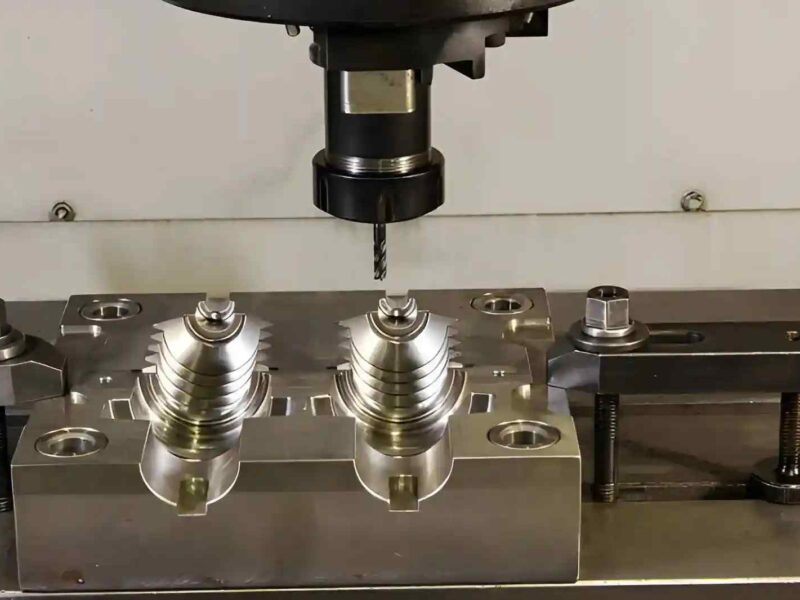
Shoulder mills, on the other hand, perform cuts using the side and the bottom of the tool. You may apply them to step faces, side walls, slots, and internal edges. This makes them perfect for creating precise geometry in 3D profiles and assemblies that have mating parts. Consider an application such as machining a metal enclosure or housing; a shoulder milling operation gives you the opportunity to complete the side and base in a single pass, cutting secondary work.
At Premium Parts, we assist you in deciding whether to face mill or shoulder mill, depending on the material type, the finish required, and the production volume. We always want to make your parts cut quicker and neater.
Shoulder Milling Tool Types
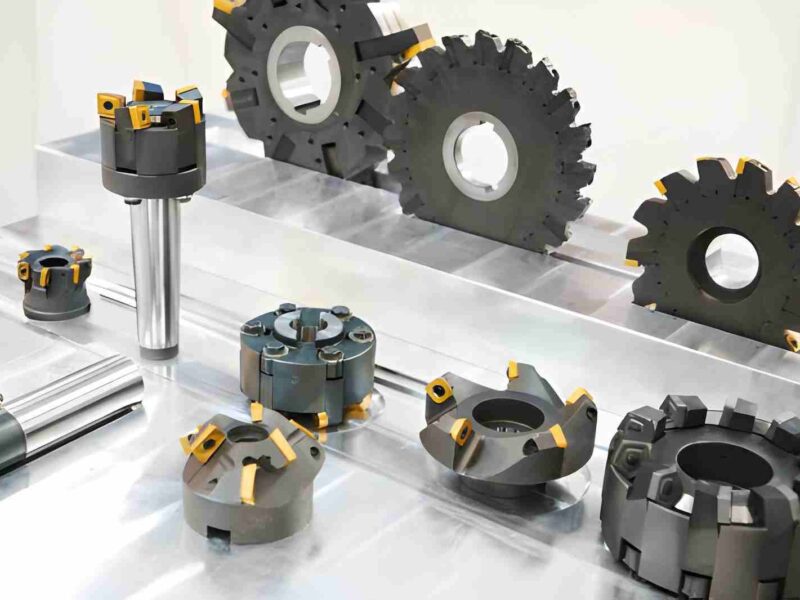
Selecting the right tool to use during shoulder milling plays a vital role. The geometry of the cutter, the insert type, and the material coating influence the performance. You must also take into consideration if the job requires roughing, finishing, or both.
Square Shoulder Milling Cutter
The square cutter gives an actual 90-degree angle. You can apply it to clean pockets, cavities, and step features. Square shoulder cutters are best for peripheral milling when the cutting is being performed on the side edge of the tool.
We incorporate square shoulder tools with firm clamping systems and chip evacuation paths. The result is a clean, vibration-free cut and tool life that is longer, particularly when cutting titanium or hardened steel.
Kennametal Tangential Shoulder Mill
The Kennametal tangential shoulder mill is a high-end cutter when you require high feed and high-performance cuts. This tool features tangentially mounted inserts. It offers higher strength and lower cutting force.
These tools can be used and run at increased feed rates without affecting the loss of finish. Usually, aerospace parts and stainless steel workpieces are processed with these. We include tangential milling tooling in the manufacture of mission-critical components, where tool rigidity and part stability are critical.
Custom Shoulder Milling Cutters
Standard cutters may not provide the reach and corner radius. It depends on your part geometry. Custom shoulder milling tools fit here. These tools are designed for a certain shape, diameter, or material.
We tend to develop our tools internally, but they are compatible with your CAD model and part tolerance. This minimizes tool chatter, manual finishing is nonexistent, and your production remains efficient.
Understanding Shoulder Milling Operation
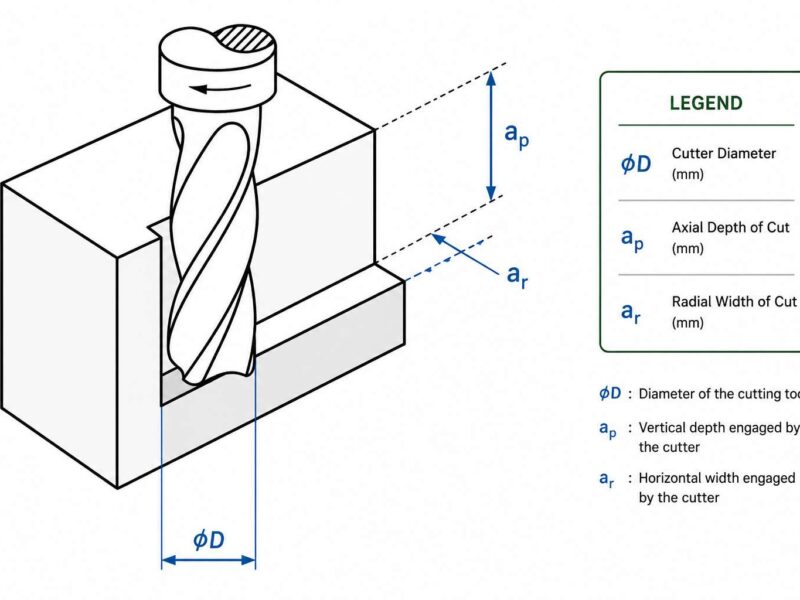
Shoulder milling cuts in radial and axial directions. The tool cuts a flat bottom and vertical side simultaneously as it travels over the workpiece. The key is to keep the depth of cut (ap), width of cut (ae), and feed rate in balance so the cut stays stable and the tool performs smoothly without overloading.
Excessive depth of cut can cause the tool to deflect. When you become very superficial, productivity goes down. High-accuracy milling is based on the best parameter control and rigidity of the machine.
| Material | Cutting Speed (m/min) | Depth (ap) | Width (ae) |
| Mild Steel | 150-200 | 2-3 mm | 1-2 mm |
| Stainless Steel | 70-110 | 0.5-2 mm | 0.5-1 mm |
| Aluminum | 300-600 | 3-5 mm | 2-4 mm |
| Titanium | 30-60 | 0.5-1.5 mm | 0.5-1 mm |
We evaluate tool deflection, heat buildup, and chip load with real-time CNC feedback systems. Dynamic adjustment of speeds and feeds to achieve optimal cuts is possible with these changes.
Shoulder Milling Vs Profile Milling
While comparing shoulder milling vs profile milling, you may notice similarities. Both of them undertake the contours of 3D parts. However, the objectives are dissimilar.
Shoulder milling generates straight walls and flat faces with cutting tools. This is required when you have part features such as step-downs or square cavities.
In profile milling, you follow the outside or inside contour of the piece. It has more to do with curving or uneven edges, most of the time on skinnier walls or shallow details.
At Premium Parts, these operations are often used together. Profile milling helps create clean outer shapes, while shoulder milling adds precise depth and defined vertical walls to the part.
CNC Machines for Shoulder Milling Operations
Good shoulder milling results depend on a stable and capable machine setup. The machine should have strong spindle torque, low vibration, and accurate motion control to maintain cutting precision.
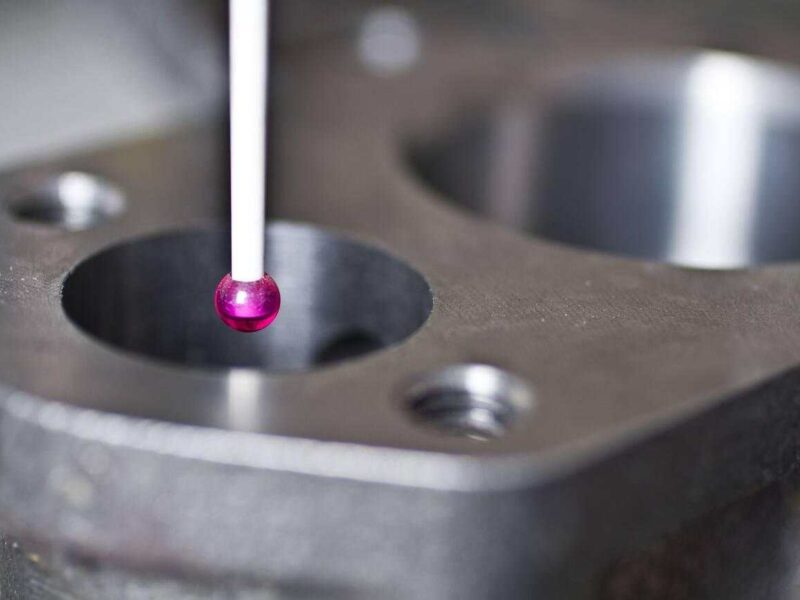
We use 3-axis, 4-axis, and 5-axis CNC mills for shoulder milling operations. These machines come with high-speed spindles (up to 24,000 RPM), rigid linear guides, and in-process probing systems for measurement checks. For larger production runs, automated workholding helps reduce handling errors and improve consistency.
These machines also support hybrid machining, allowing face milling, peripheral milling, and drilling to be completed in a single setup.
Shoulder Milling Challenges and Solutions
Shoulder milling is a critical process. Even when you have high-tech tools, you’re dealing with hard metals or thin-walled components.
Tool Breakage and Wear
Tools can be worn quickly by aggressive feeds or by an erroneous choice of insert. You must monitor cutter life with preset tool offsets and insert grades to suit your material. Our TiAlN-coated tools on hard metals, and we also check the tool wear in real time.
Surface Inaccuracy
Uneven finishes are brought about by chatter and poor clamping. It can be avoided by tighter fixturing, rigid tools, and chip load control at all times. We also optimize part-specific cutting angles.
Chip Buildup
Chips accumulate in deep cuts and clog the cutting route. Chip evacuation is improved by high-pressure coolant and spiral-flute designs. You will have a cleaner cut and less wear on the tools.
Applications of Shoulder Milling
Shoulder milling contributes to diverse applications across industries. This operation can replace other milling techniques where you need accurate alignment and functional geometry. Here are the key areas where it performs well,
Aerospace Components
Shoulder milling is used for making titanium brackets, valve blocks, and housing frames. The shoulder angles are clean so that they can be mounted flush and assembled without stress.
Automotive Structures
You can make intake manifolds, gear housings, and transmission plates. Shoulder milling provides accurate mating of moving parts with minimized vibration and heat.
Medical Devices
Shoulder milling can help you make covers, orthopaedic plates, and surgical instruments. Our operations are ISO 13485 certified. So, accuracy and biocompatibility concerns are met.
Tips for Effective Shoulder Milling
-
- Select the right cutter: Use a square shoulder milling cutter for accurate 90° corners and flat surfaces.
- Match tool material to workpiece: For hard metals like titanium or stainless steel, choose coated inserts.
- Ensure machine rigidity: Use a stable shoulder milling machine setup to prevent vibration and deflection.
- Minimize tool overhang: Keep your cutters short in length to maintain stability during deep milling operations.
- Cutting parameters: Keep cutting parameters simple and controlled. For roughing, use higher feed and deeper cuts so material is removed faster.
- Use high-pressure coolant: Its use enhances the chip removal rate, as well as minimizes heat wear on the tool.
- Monitor tool condition: You need to examine your shoulder milling cutter frequently so that it does not develop tolerance due to wear.
- Proper work holding: Hold the work firmly to avoid chatter to get reproducible results.
- Build in combination: Where possible, combine operations: integrate side milling or profile milling and save time to increase accuracy.
- CNC programming: Quality tool paths should be utilized to minimize motion and wastefulness of the machine.
Following these tips allows you to get reliable, accurate, and efficient shoulder milling performance in demanding applications.
Why You Should Trust Premium Parts for Shoulder Milling?
With high-tolerance components, you require a manufacturing ally with the knowledge of precision blueprints to final check. Premium Parts offers full-scale shoulder milling service involving 3-axis through 5-axis machining, high-speed cutters, and closed-loop quality systems.
We assist you in decreasing lead time, rework, and scale with confidence. With support in multi-materials, including aluminium and stainless steel, through to plastics and titanium, you have what you need at every stage of prototyping or production.
What makes us different?
- Milling operations are monitored in real time through manual and automatic checks
- Shoulder milling cutters with niche geometries are designed customarily
- Mission-critical components with guaranteed tolerances of +/-0.01 mm
- Instant DFM feedback and CAD-based quoting on any projects.
When accuracy is required, we do not estimate; we measure, machine, and deliver.
Talk to Us for Your Next Project
Machining mistakes can be costly in terms of time, material, and rework. That’s why many aerospace, automotive, and medical manufacturers rely on consistent, precision-driven machining to get it right the first time. At Premium Parts, we focus on accurate CNC milling work with reliable turnaround and stable production quality.
Whether you’re working on a prototype or a full production batch, our team can support your project from start to finish. Share your CAD files with us, and we’ll review the design and get back to you with a clear quote and practical feedback within a short time.
FAQs
Q1: What is the difference between face milling and shoulder milling?
Face milling uses only cutting flat surfaces. Milling produces vertical and flat cuts. You would have face mills to fill in the surface, and shoulder mills to the edge geometry.
Q2: Can I mill stainless steel using shoulder tools?
Yes, but it requires the right insert grade and proper coolant strategy. For tough materials like stainless steel or Inconel, carbide or coated inserts are commonly used.
Q3: Do you supply customized shoulder milling cutters?
Yes, custom cutters can be supplied based on part geometry. This helps reduce chatter and improve edge quality.
Q4: What is the benefit of a tangential shoulder mill?
Tangential shoulder mills offer higher feed rates and stronger insert support. They are well-suited for high-volume production and hard materials.
Q5: Can face milling and shoulder milling be done on the same job?
Yes, both operations can be performed in a single setup. This helps improve part quality and increases overall machining efficiency.