Small Batch Manufacturing combines both technical expertise and speed of the market. The method to manufacture parts at low volume (10-1,000 units) is entirely different from manufacturing parts in mass quantities. Low-volume production is managed differently across all four areas of setup cost, material efficiency, fixture design, and process selection.
If your company does not identify the differences up front, you will continuously pay more than you should. Thus, you’ll have poor quality results due to not producing parts correctly during low-volume setups.
This guide provides you with comprehensive information regarding the best methods for performing small batch production. We will cover the various costs involved in small batch production that are often overlooked by engineers. Besides, you’ll also learn how to work with minimum order quantities (MOQ) and how to create an efficient sourcing strategy while maintaining a fast iteration cycle without burning your budget.
What Is Small-Batch Manufacturing?
Small batch manufacturing refers to the production of small quantities of parts or parts of an assembly. Normally, small-batch production includes anywhere from one to hundreds of pieces or fewer than 1,000 pieces.
This manufacturing method bridges the gap between one-off prototyping and high-volume mass production. Thus, it serves product development teams, defense contractors, OEMs of medical devices, and suppliers of specialty industrial products.
Small-batch manufacturing is different from high-volume production lines that are designed primarily for mass throughput. It emphasizes flexibility and rapid changeover, as well as an ability to accommodate engineering changes made after a run. Thus, process selection, fixtures, and the qualification of suppliers must be made with very intentional engineering decisions.
Small Batch Manufacturing vs. Mass Production: Key Differences
Before choosing a process or supplier, it is important to know how small batch manufacturing is different from mass production. There are many differences with respect to the economic factors, tooling philosophy, and quality control methodology.
| Parameter | Small Batch Manufacturing | Mass Production |
| Typical Volume | 10 – 1,000 units | 10,000+ units |
| Tooling Philosophy | Soft tooling, modular fixtures, no-tool CNC | Hard tooling, dedicated dies, multi-cavity molds |
| Per-Unit Cost | Higher (setup cost amortized over fewer parts) | Lower (setup amortized over large run) |
| Lead Time | 3 – 15 days (CNC/3DP); 2 – 6 weeks (injection mold) | 8 – 20+ weeks (tooling-dependent) |
| Design Flexibility | High – changes between runs cost little | Low – mold/tooling changes are expensive |
| Quality Approach | First Article Inspection (FAI), manual CMM checks | SPC, inline automated inspection |
| Material Breadth | Broad (metals, plastics, composites, ceramics) | Often limited to production-qualified materials |
Core Small-Batch Manufacturing Processes
The right process for small batch production is not just about capability; it is also based on unit economics at lower volumes. Here are some of the most common processes used for short-run manufacturing within the aerospace, medical devices, industrial automation, and consumer product development sectors.
CNC Machining for Small Batch Production
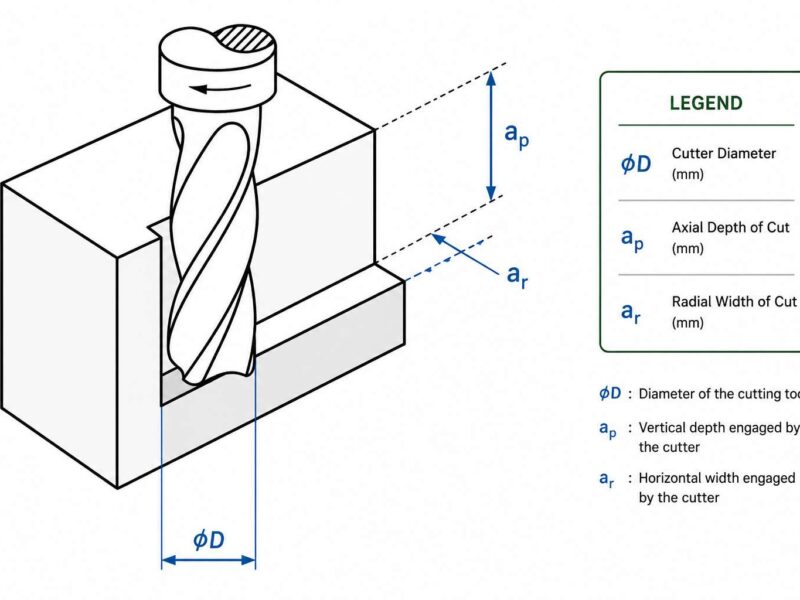
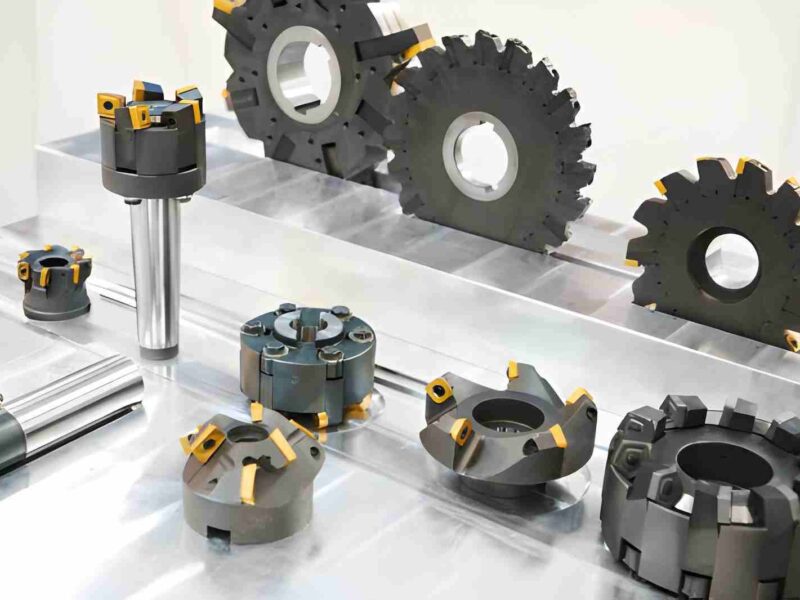
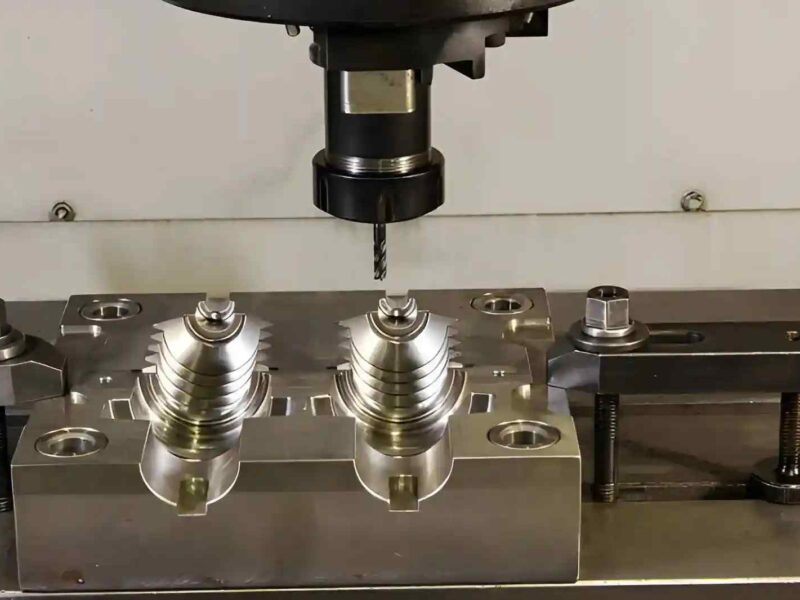
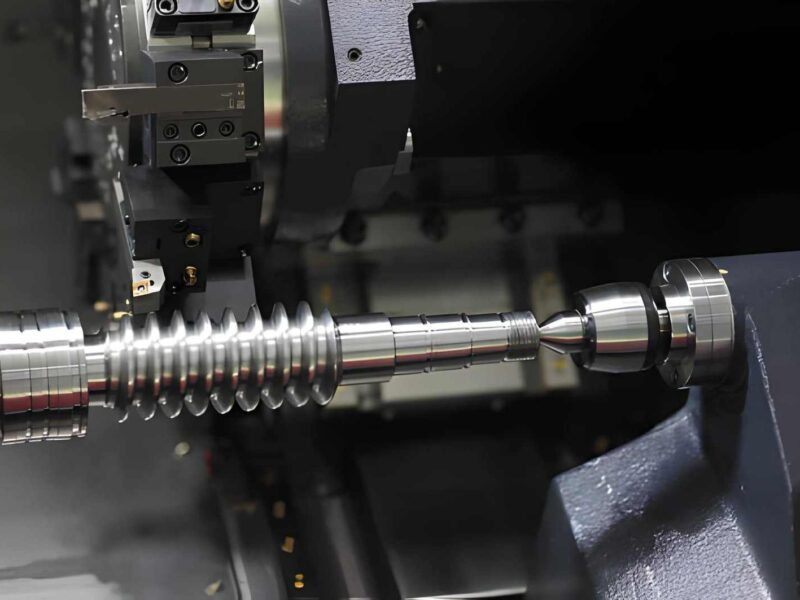
CNC machining is the primary means of producing small quantities of metal and engineering plastic parts. The reason is that it typically does not require any upfront tooling costs other than programming. An engineer submits a CAD file to the software, which generates G-code from the CAD file, and production can begin within hours after order placement.
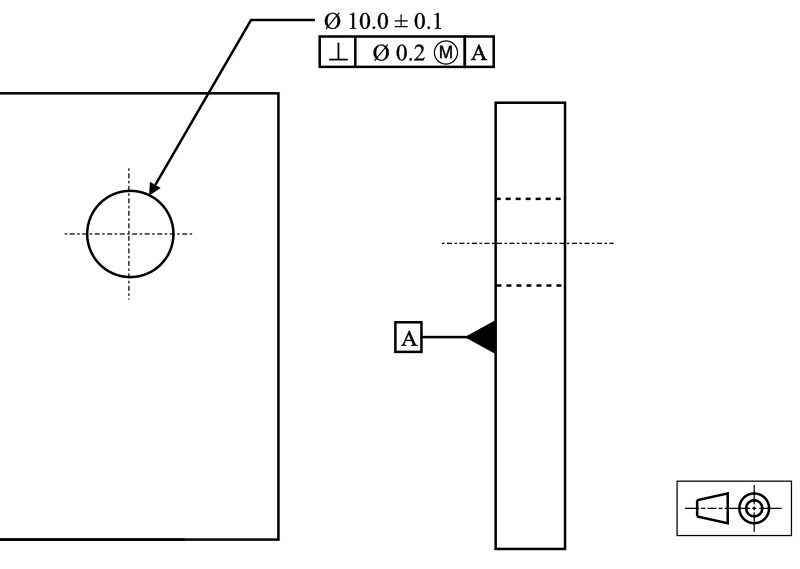
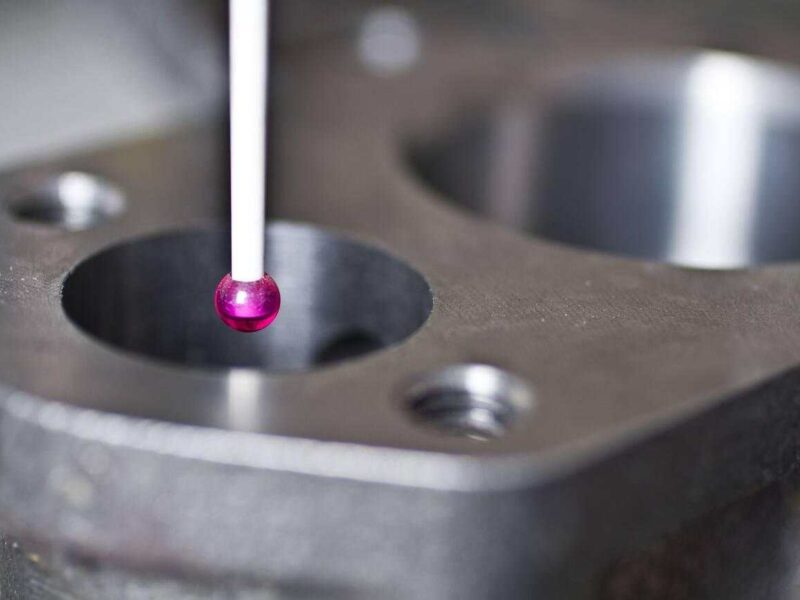
CNC machining consistently achieves tolerances at ±0.001 inch (±0.025 mm) for most standard features. This makes it the first choice for parts that need to fit together tightly or have critical geometric dimensions and tolerances (GD&T) or surface finishes of less than Ra 1.6 µm.
The range of materials that are compatible is enormous. In small quantities, you can CNC machine aluminum alloys (6061-T6 and 7075-T6), stainless steel (303, 316L, and 17-4PH), titanium (Grade 5), a variety of engineering plastics (PEEK, Delrin, and Ultem), and brass.
| Material | Typical Tolerance (±) | Min. Qty (typical) | Lead Time |
| Aluminum 6061-T6 | 0.001″ (0.025 mm) | 1 piece | 3 – 5 days |
| Stainless Steel 316L | 0.001″ (0.025 mm) | 1 piece | 5 – 7 days |
| Titanium Grade 5 | 0.0015″ (0.038 mm) | 1 piece | 7 – 10 days |
| PEEK | 0.002″ (0.051 mm) | 1 piece | 5 – 7 days |
| Brass C360 | 0.001″ (0.025 mm) | 1 piece | 3 – 5 days |
An often neglected benefit of CNC in producing smaller lots is the speed of iteration. When you make an adjustment to a feature or part after inspecting your first article, you can just edit the CAM file. There is no need for new tooling, and the only time delay incurred is for the new cycle to manufacture parts. This degree of flexibility has real commercial benefits for companies doing design verification testing (DVT) or design of experiments (DOE) as well.
Short-Run Injection Molding
Injection molding is an option for small batch manufacturing when parts require complex geometries, thin walls, and undercuts. Moreover, it’s also feasible for the production-grade thermoplastic materials that are not cost-effective with CNC machining; however, the tooling investment and lead times are quite different from those of CNC.
The standard method of using aluminum prototype tooling for runs of 500 to 5,000 parts typically requires 2 to 6 weeks for the fabrication of the mold and achieves tolerances of ±0.003 to ±0.005 inch under specific conditions. CNC does not need to contend with dimensional variability due to material shrinkage, gate placement, and uniformity of wall thickness. Therefore, short-run injection molds must undergo a thorough Design for Manufacture (DFM) review, including finalizing the draft angle (typically 1° to 3° each side), uniform wall thickness (preferably 2-4mm for most engineering thermoplastics), and proper placement of vents to avoid potential burn marks and short shots.
Simple single-cavity aluminum tool molds start at around $3,000 to $8,000. However, multi-cavity P20 steel production tooling can exceed $50,000. Therefore, injection molding is only a cost-effective process for small batches when the geometry cannot be machined. Or, it is also usable if the production volume is expected to grow in accordance with the product roadmap.
3D Printing and Additive Manufacturing
Additive manufacturing (AM) is becoming increasingly important for the production of low-stress functional parts, end-use fixtures, and non-structural prototypes in small quantities. Specifically, AM technologies such as SLA, SLS, and DMLS (Direct Metal Laser Sintering) are being used in small batch manufacturing. For example, nylon (PA12) parts manufacturing using SLS does not require any support structures and provides complex geometries internally, which could require multiple-axis CNC parts or multiple pieces to make otherwise. We can use DMLS to manufacture solid metal parts using titanium, Inconel, and stainless steel powders. DMLS can produce parts that have a mechanical property level equivalent to wrought material in most directions.
However, small quantity additive manufacturing also has significant limitations. Additionally, the as-built surfaces of parts produced by AM exhibit a typical Ra finish of between 6.3µm and 12.5µm, while the typical surface finish required for mating surfaces or bearing surfaces is Ra 0.8µm or below. Additional costs and lead times for post-processing (e.g., bead blasting, tumbling, and CNC finishing) can impact production timelines. Dimensional accuracy degrades in larger parts, primarily due to the thermal gradient during build or the anisotropic properties of the material used in the build, resulting in tensile strength reductions.
Sheet Metal Fabrication
One frequently encountered issue in small batch sheet metal work is springback during bending, particularly with high-strength steels and 5000-series aluminum. Engineers must account for material-specific K-factor values and tooling bend radii when specifying formed geometries; inadequately specified bend allowances cause costly rework even on short runs.
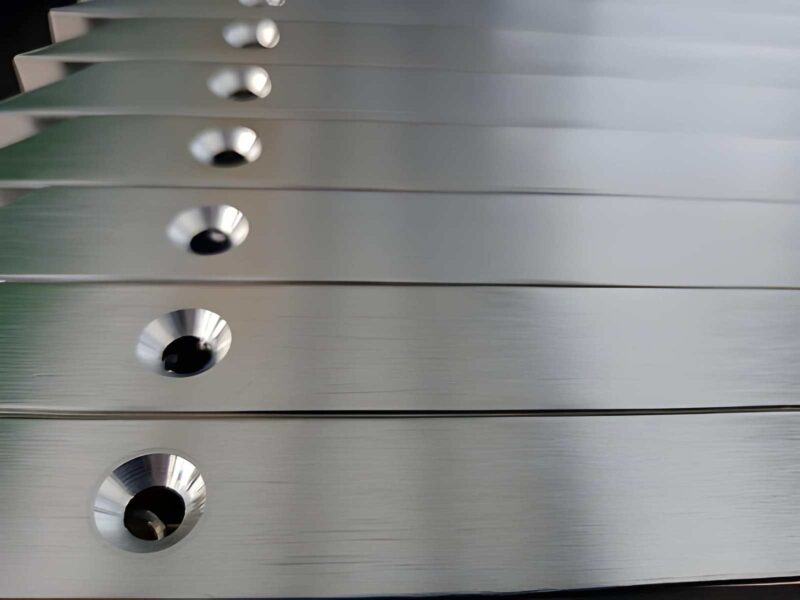
Laser cutting and CNC punching, press brake forming, and welding are the principal processes for producing sheet metal in small batches. Generally, the most cost-effective way to fabricate sheet metal parts for enclosures, brackets, frames, or other structural weldments is typically to produce low-volume applications. Low-volume application runs generally consist of 10 to 500 pieces per run. Parts made using laser cutting can be programmed directly from DXF files, with modern fiber lasers capable of cutting 3 mm thick aluminum at speeds in excess of 15 m/min. Because of this capability, small production runs of sheet metal parts are economically feasible.
A common challenge associated with small batch sheet metal fabrication is the phenomenon of springback during bending operations, especially with high-strength steel and 5000-series aluminum materials. When creating formed geometries, engineers must have good knowledge of how different materials affect the specific K-factor and the tool bend radius. This is critical when determining bend allowances; if the bend allowances are not accurately specified, they will ultimately result in costly rework.
Navigating MOQs in Small Batch Manufacturing
MOQs (Minimum Order Quantities) are one of the biggest pain points for companies dealing with small-batch manufacturing. When a contract manufacturer or material distributor has an MOQ requirement, it is to protect the manufacturer’s ability to cover their setup costs through the sale price of a finished product. For example, a machine shop that spends 4 hours to program and fixture a part cannot recoup that investment on an order for 2 pieces at their standard rates.
This often leaves engineering teams with a procurement gap: the number of parts that they need for either a testing or limited market release does not meet the MOQ that would allow them to be produced at a fair price. Here’s how engineers cop with this issue:
Strategy 1: Aggregate Demand Across Programs
When there are multiple internal projects that require the same type of material (i.e., finishes, material types, etc.), combining orders can allow all of those projects to meet the MOQ, lowering the cost per unit and creating a simpler supplier management structure. For example, a procurement team purchasing 6061-T6 bar stock for three separate development programs can place a single order for the material, and then allocate the inventory to each of the programs from the same order, thus eliminating the friction caused by the MOQ for the material.
Strategy 2: Digital Manufacturing Platforms
Digital manufacturing platforms have changed the economics of small batch sourcing. By using platforms to aggregate demand among many customers, one can amortize machine setup costs, programming overhead, and quality infrastructure, passing them down to buyers. With instant quoting, instant design for manufacturability (DFM), and network-based capacity allocation, customers can order a quantity of parts that traditional manufacturers will not accept.
Strategy 3: Supplier Negotiation and NRE Cost Separation
In small batch programs with recurring orders, negotiating a one-time non-recurring engineering (NRE) charge that covers the cost of setup, programming, and fixturing allows suppliers to reduce the unit cost of producing the same part in subsequent production runs. Suppliers commonly use this model when thinking about injection mold tooling amortization. And this same concept is being applied more generally to precision machining. In addition to reducing the unit cost of a part, separating out NRE costs can improve product cost accounting accuracy.
Cost Drivers in Small Batch Manufacturing
Being able to identify all of the different types of things that can drive costs in a small batch manufacturing setting enables engineering teams to make better design decisions prior to sending out drawings to suppliers. The items below are the predominant cost drivers associated with a number of different short-run manufacturers, and constitute the majority of the difference between manufacturing cost and the actual price paid.
| Cost Driver | Technical Explanation | Mitigation Strategy |
| Tight Tolerances | Tolerances tighter than ±0.005″ require slower feeds, additional setups, and CMM inspection time | Specify tolerances to function, not habit, only tighten where assembly fit demands it |
| Part Complexity | 5-axis features, deep pockets, undercuts, and thin walls multiply machine time and tool wear | Apply DFM principles early; favor 3-axis geometry where possible |
| Material Cost | Titanium, Inconel, and PEEK carry 5–20x material cost premium over aluminum | Prototype in aluminum; qualify final material in production runs |
| Surface Finish | Finishes below Ra 0.8 µm require lapping, grinding, or polishing, adds 20–40% to machining cost | Specify finish by function (sealing, mating, cosmetic) with clear area callouts |
| Setup-to-Run Ratio | On 5-piece orders, setup time can exceed cutting time by 3:1, setup cost dominates unit price | Batch similar parts, or accept NRE charge to separate fixed from variable cost |
| Thread and Hardware | Tapped holes, helicoils, and pressed inserts each add manual operations and QC hold points | Standardize fastener callouts; minimize unique thread sizes per BOM |
Industry Applications of Small Batch Manufacturing
Small batch manufacturing isn’t a niche activity; it provides services to some of the most rigorous industries. By looking at how leading engineering teams utilize small batch manufacturing, you can identify concepts you may be able to adapt into your own program.
Medical Device Development
Medical device original equipment manufacturers (OEMs) consistently rely upon small batch CNC machining. They use it to develop surgical instrument prototypes, perform implant trials, or create small production runs of Class II and Class III devices. For example, engineers use contract manufacturing of titanium grade 23 (ELI) components for orthopedic implant applications in small quantities (50-500 / order). They would have complete traceability from the material’s original heat lot to the final inspection of the finished product. A key aspect of the product development cycle is the ability to change or modify the geometry of the parts. That’s because sometimes they need to adjust the bone interface and modify the locking mechanism between the two parts during each manufacturing run.
Aerospace and Defense
Aerospace supply chains rely heavily on small batch manufacturing for MRO (maintenance, repair, and overhaul) components, flight test instrumentation, and low-rate initial production (LRIP) of structural brackets and fluid system components. A typical LRIP program for a new aircraft system may require 25 to 200 machined aluminum or titanium brackets per production lot, qualified under AS9100 Rev D with full dimensional and material documentation.
Industrial Automation and Robotics
Custom EOAT (End of Arm Tooling), gripper fingers, and sensor mounting brackets are nearly always manufactured in small batches for robotic assembly cells. An example would be an automated assembly line that requires 10 – 30 unique custom fixtures to be made (usually in lots of 2 – 10 at a time). CNC machinists are typically sourcing from aluminum or engineering plastic (such as Delrin, PEEK) with same-week lead times.
Final Verdict
Small batch manufacturing is a complex subject that requires a great deal of technical ability and is dependent on the engineer’s attention to detail. Therefore, good engineering practices through selecting the most appropriate manufacturing process are important. All manufacturing processes need a clear understanding of tolerance requirements, volume pricing, the physical properties of the materials, and customers’ quality specifications.
At Premium Parts, we provide precision CNC machining, injection molding, and sheet metal fabrication, as well as full engineering-level quality documentation and flexible minimum order quantities. Our team directly works with product engineers during all stages of development of new products. This includes everything from the design of the prototype to the bridge production run, to ensure every small batch has the requisite dimensional accuracy and design intent.