Let’s say two shops run the same part. They have the same material, the same tool, and the same machine. However, one of them finishes in four passes with a clean finish, but the other one runs six passes, burns through the tools, and still somehow ends up with marks on the final surface.
Apparently, both programs would look almost identical. However, the depth of cut, a decision to be set in the toolpath settings, makes all the difference. It is one of the least discussed parameters in CNC programming, but from tool life and cycle time to surface finish and part accuracy, depth of cut determines a lot about the entire process. If you get it wrong, every other parameter will be compensating for the mistake.
Introduction: Depth of Cut in CNC Machining
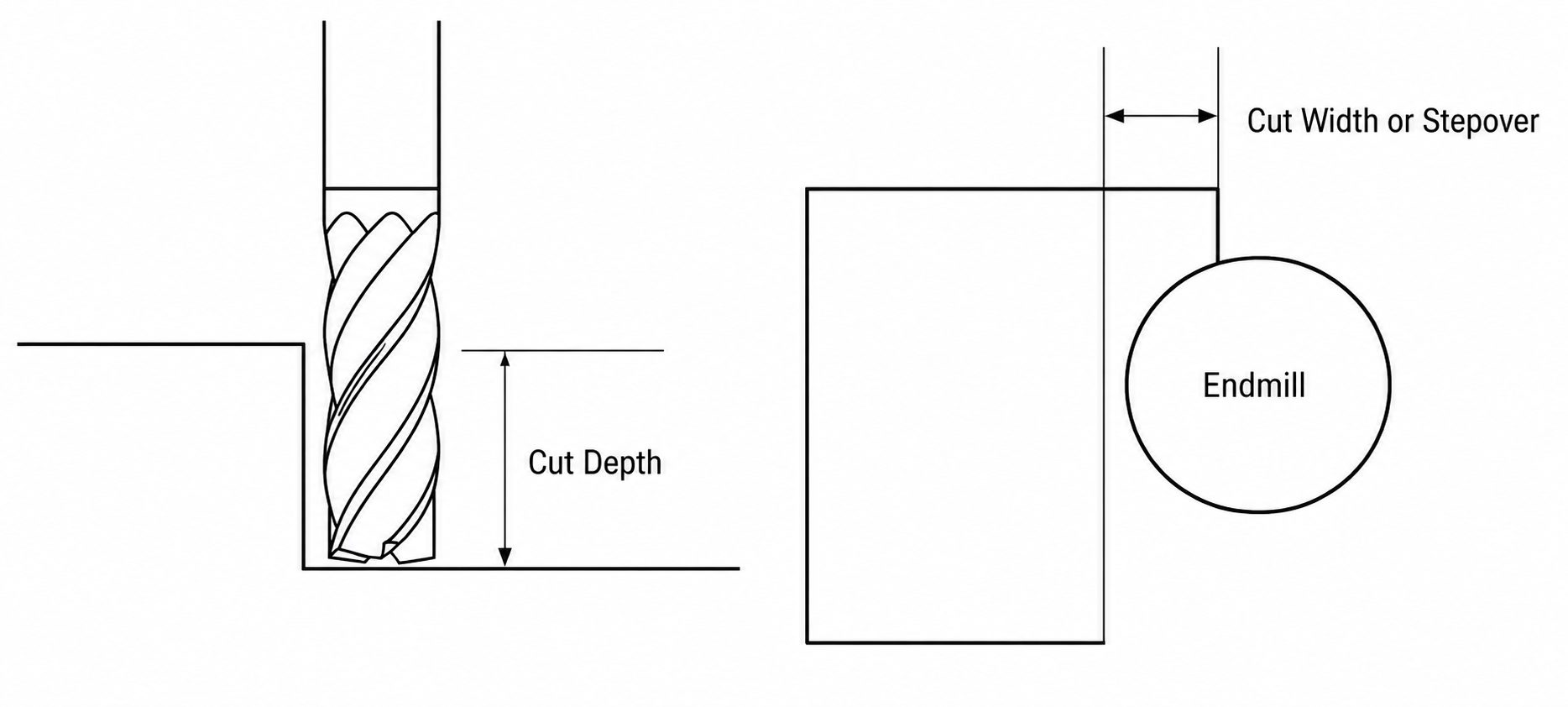 Depth of Cut and Stepover for Better CNC Milling
Depth of cut is the distance the cutting tool penetrates the workpiece material during one single pass. Normally, it is measured in millimeters or inches and represents how much material is being removed in that one pass.
A shallow depth of cut takes more passes to remove the same stock but puts less load on the tool and the setup. A deep cut removes more material per pass but increases cutting force, heat generation, and the risk of chatter. Therefore, the right depth of cut isn’t a fixed number. It changes with tool geometry, material hardness, machine rigidity, and whether you’re doing roughing or finishing.
Primary Types: Axial Cutting vs. Radial Cutting
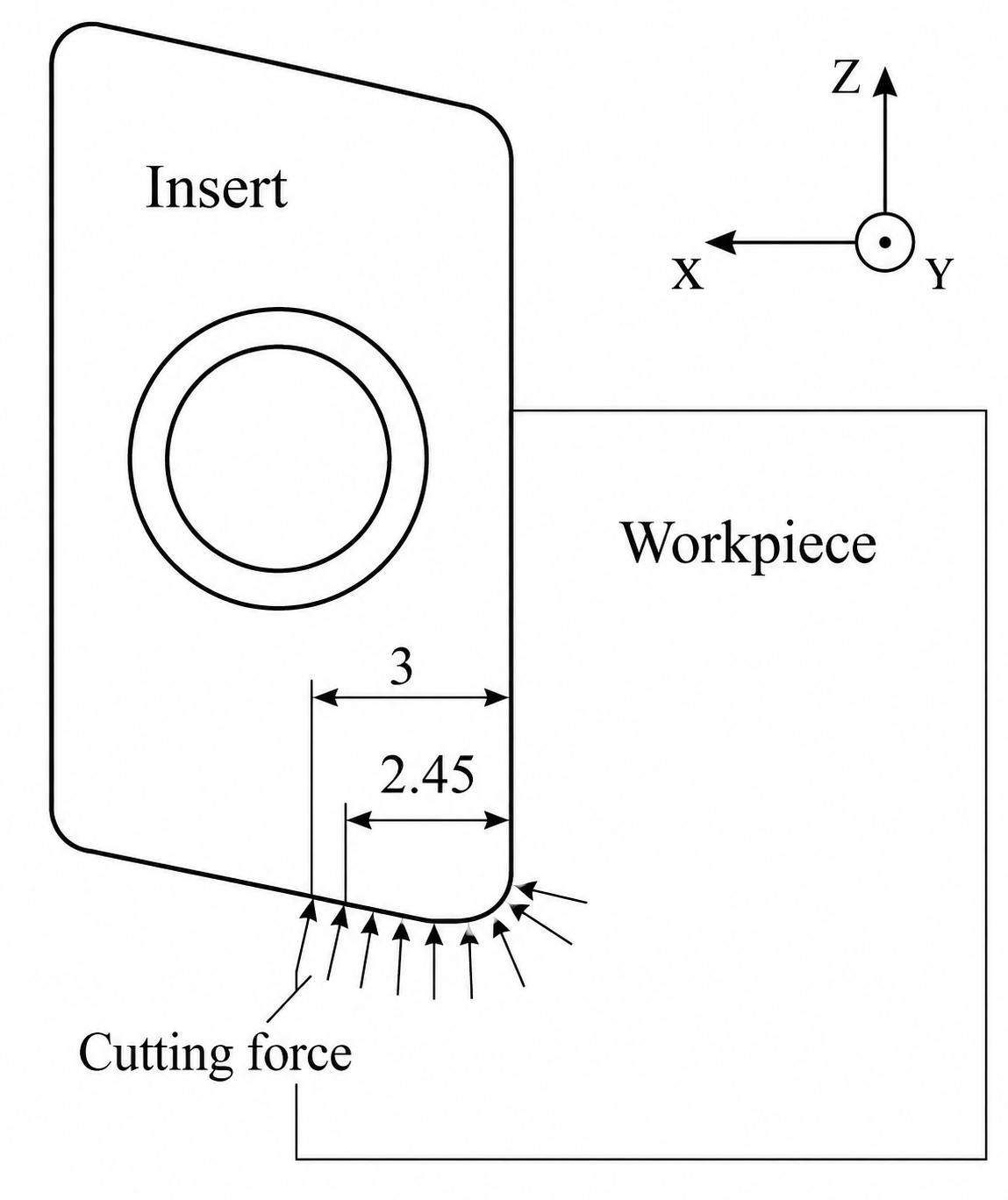 Cutting force in radial and axial directions
Depth of cut splits into two distinct directions, and confusing them is one of the most common programming mistakes in CNC work.
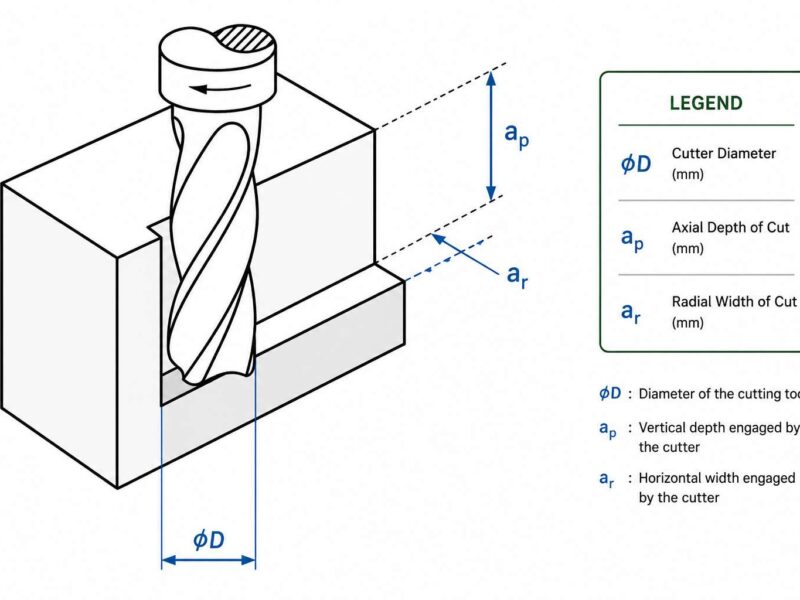
Axial Depth of Cut
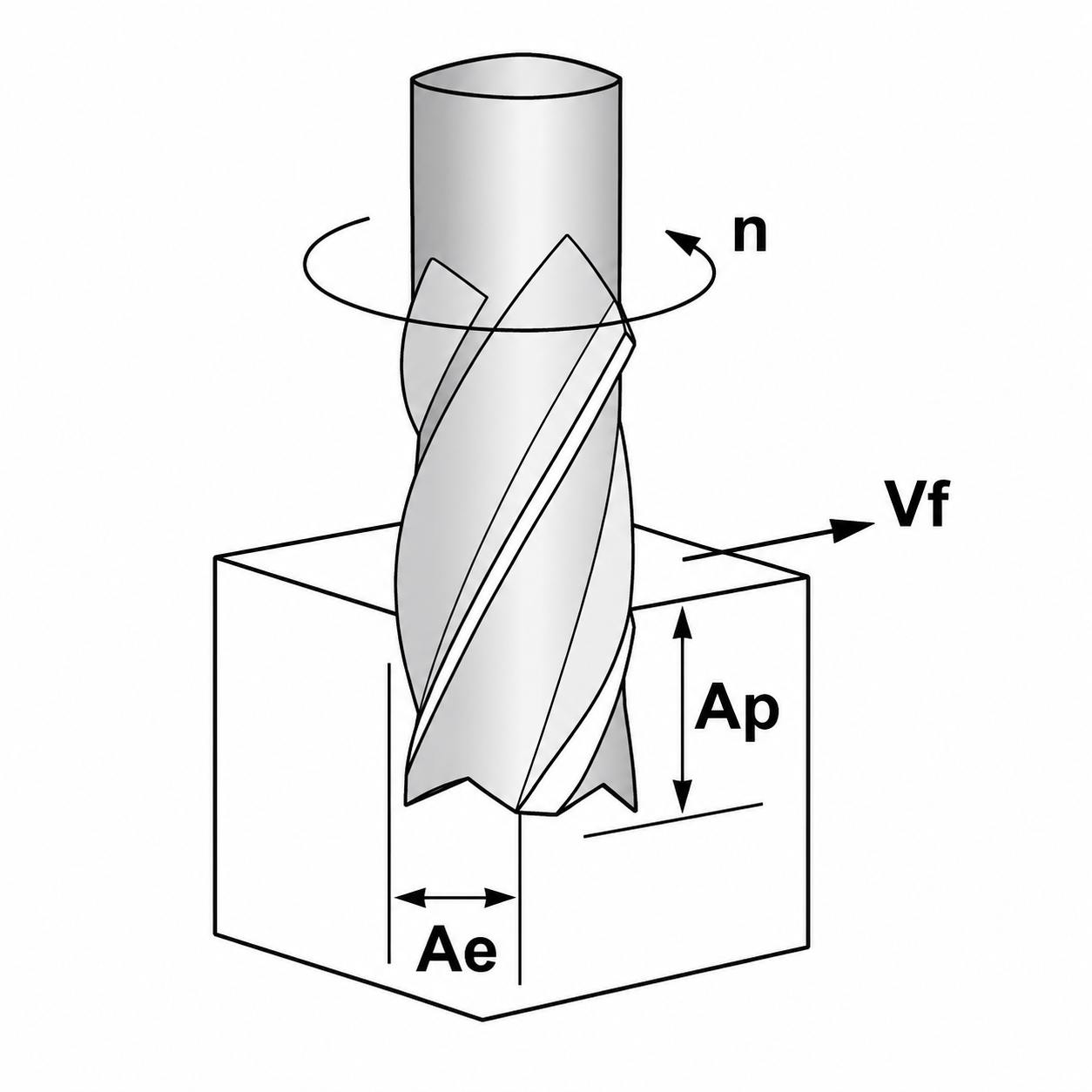 Axial Depth of Cut
Axial depth of cut is how far the tool plunges along its own axis, straight down into the material. In milling, that is how deep the cutter sinks into the part. In turning, it’s how far the tool moves into the workpiece on a facing or plunge cut.
Radial Depth of Cut
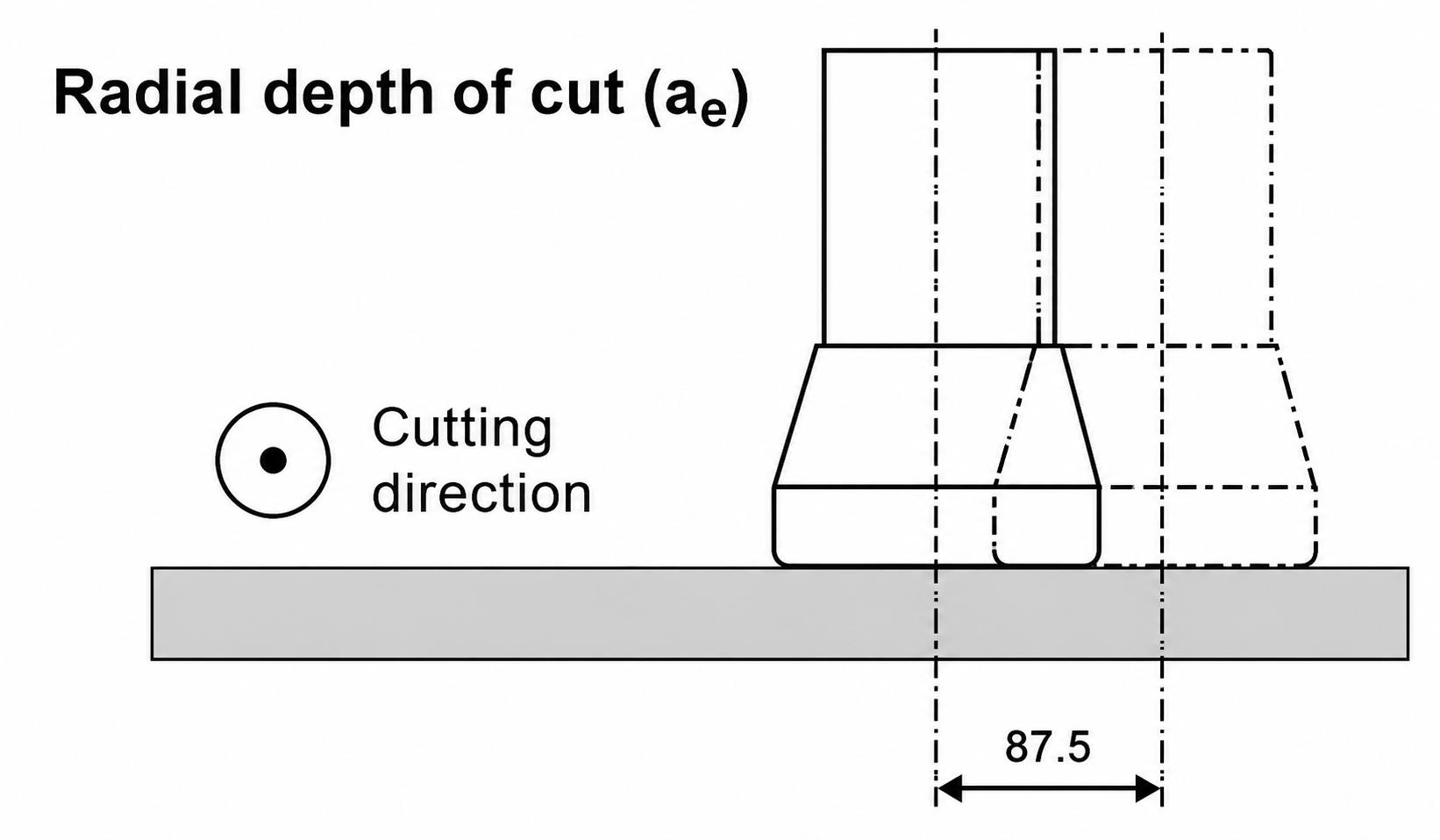 Radial depth of cut (ae)
Radial depth of cut, also called stepover or width of cut, is how much of the tool’s diameter is biting into the material side to side, not down into it. In milling, it’s the gap between one pass and the next. A full slot cuts at 100% radial engagement. A light finishing pass might only touch 10-15% of the cutter’s width.
To get different results, both of these depths have to be adjusted relatively. For example, a deep axial depth and wider radial depth result in a heavy chip load and high cutting force. However, the opposite results in high efficiency or trochoidal milling. Most chatter and broken tools usually come down to one of these two depths being off.
Why Depth of Cut Matters in CNC Machining
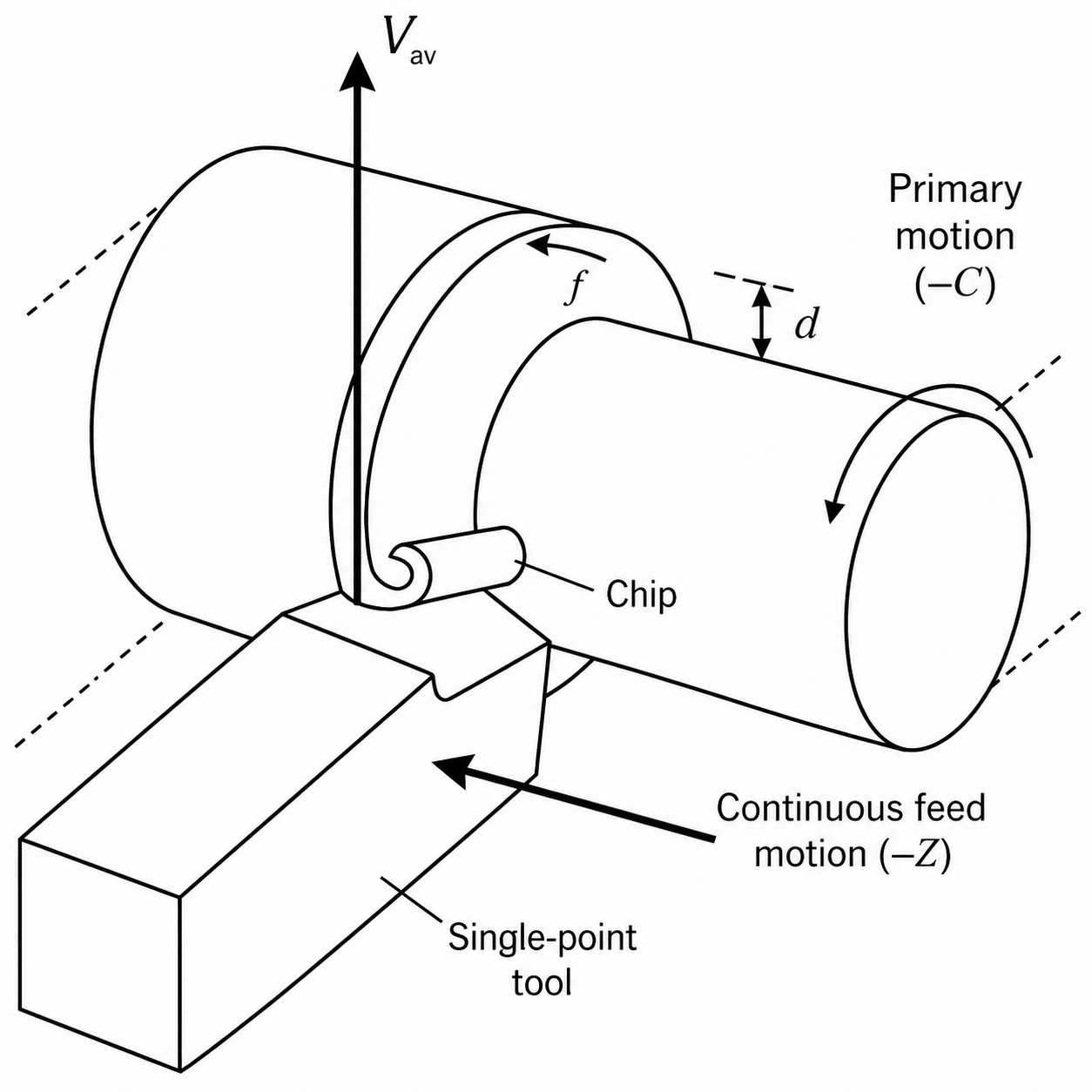 Orientations of the component forces acting on the cutting tool
The depth of cut can directly affect a lot of areas of the production, deciding if the workpiece passes the inspection or if a production run can be carried out under a specific tool budget.
- Tool life and wear: if the cut is too shallow, the edge rubs instead of cutting, but if it’s too deep, the edges get chipped or the tool stops working in between.
- Cutting force and machine load: normally, the depth, feed, and stepover together set the chip load. This chip load then sets the cutting force. If you push past what the machine can handle, you either get a stall or a deflection.
- Surface finish and dimensional accuracy: during finishing, shallow cuts are preferred (under 0.5mm) to lower tool deflection.
- Heat generation: Shallow and fast cuts trap heat at the surface, which is risky in titanium or hardened steel workpieces. On the contrary, deep cuts often carry more heat off in the chip instead.
Are you seeing inconsistent tool wear or surface finish on your current batch? Send your part drawing to Premium Parts, our team can review your cutting parameters alongside the part geometry to find where the exact mismatch is coming from.
How to Determine the Right Depth of Cut
There is no one formula for every job, but the general logic stays the same: start with what the tool can handle, check that against how rigid your machine and workpiece are, then adjust for the material.
Step 1: Check the tool maker’s numbers
Every insert or solid carbide tool comes with a recommended depth of cut from the manufacturer, tied to a feed rate and material type. Treat this as a starting point, not the final number.
Step 2: Factor in tool overhang
The longer the tool sticks out, the more it deflects. A tool reaching 4 times its diameter into a pocket needs a noticeably shallower cut than the same tool at 2 times its diameter, even in the same material.
Step 3: Match the depth to the job
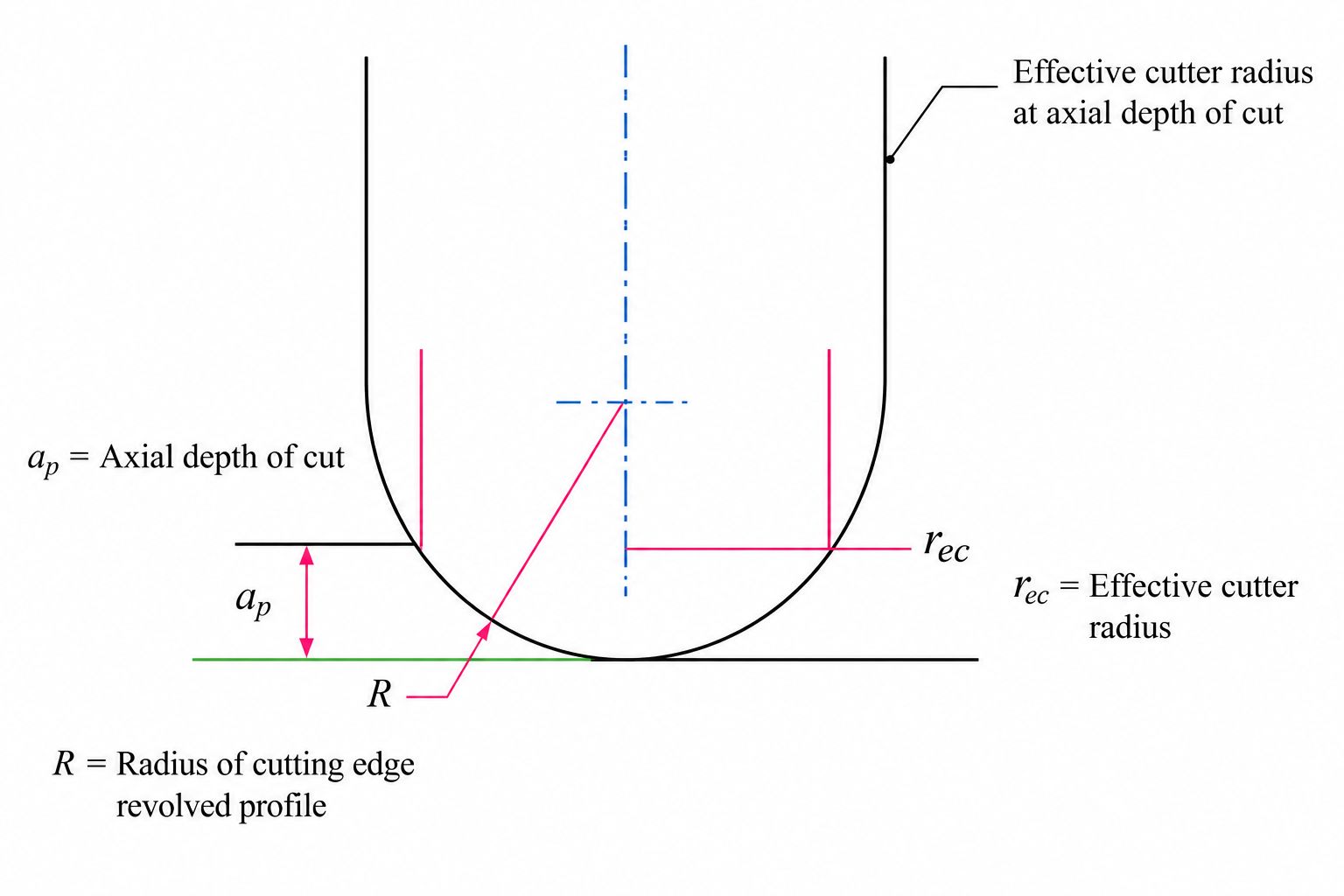 Effect of axial depth of cut on cutter radius
Roughing cares about removing material fast, so it runs 50-100% of the tool’s rated depth and accepts a rougher finish. Finishing cares about accuracy, so it drops way down, often 0.1 to 0.5mm, just to keep the tool from deflecting or overheating the surface.
Step 4: Check it against real cutting force, not just the spec sheet
A cutting force calculator gives you a useful reality check, especially on lighter machines where the spindle’s horsepower or torque runs out before the tool does.
Not sure your current depth-of-cut settings match your machine’s actual rigidity? Talk to a Premium Parts engineer before your next production run; a quick parameter review can save several rounds of trial and error on the shop floor.
Deciding depth of Cut by Process and Material
CNC Turning
In turning, depth of cut means how far the tool digs into the workpiece diameter. For steel, roughing passes usually run 2- 4 mm at moderate feed, then finishing passes drop to 0.25- 0.75 mm to keep finish and tolerance tight.
CNC Milling
Milling splits this into two calls: axial and radial depth. For general steel milling, roughing usually starts with axial depth equal to the tool diameter and 30-50% radial engagement. Finishing starts with light radial engagement (5-10%) and axial depth matched to leftover stock.
Aluminum
Aluminum generally tolerates aggressive depth of cut. Axial roughing depths of 3- 6 mm in milling are preferred. The limiting factors, however, are usually chip evacuation and surface finish.
Stainless Steel
The depth of cut in stainless should stay deep enough to cut cleanly through any hardened layer left by a previous pass. Roughing depths in the 1.5- 3 mm range with consistent feed are typical.
Working with a difficult material like titanium or hardened steel? Submit your drawing to Premium Parts and our engineers will confirm the cutting strategy before quoting.
Conclusion
You have to decide a suitable depth of cut based on tool overhang, machine rigidity, material behavior, and whether the operation is roughing or finishing. Getting it wrong shows up later in the process through tool wear, poor surface finish, or dimensional inaccuracy that then gets blamed on everything except the actual cause.
The engineering team at Premium Parts evaluates depth of cut alongside material, tolerance, and tooling requirements before a job goes into production. Therefore, even your first batch will come back with consistent results.
Talk to a Premium Parts engineer about your next CNC project, and we can help you decide the exact cutting parameters to suit your needs.
FAQs
What’s the difference between depth of cut and feed rate?
Depth of cut is how far the tool penetrates the material per pass. Feed rate is how fast the tool moves through the material during that pass. Together with stepover, they determine chip load and material removal rate, but generally, they are completely separate settings.
Why does my finishing pass leave a tapered surface?
This usually happens when the depth of cut is deep enough to cause tool deflection during the pass. The tool starts cutting at the programmed depth but deflects away from the material as cutting force builds, leaving the part slightly oversized or undersized by the end of the pass. Reducing depth of cut on the finishing pass will help resolve it.
Can my depth of cut be possibly too shallow?
Yes, cutting too shallow will cause the edges to rub rather than shear cleanly, especially in materials like stainless steel that work-harden under light cuts.
Should roughing and finishing use the same depth of cut?
No. Roughing passes prioritize material removal rate and run at a higher depth of cut, accepting a rougher surface in exchange for speed. Finishing passes, on the contrary, should run shallow to minimize tool deflection and cutting force, which will result in dimensional accuracy and a smooth surface finish on the final pass.
What happens if the depth of cut exceeds my machine capability?
Symptoms such as spindle stall, axis deflection under load, excessive vibration or chatter, and in severe cases, motor overload faults will start to occur. On lighter machines, this happens well before the tool itself reaches its rated capability.