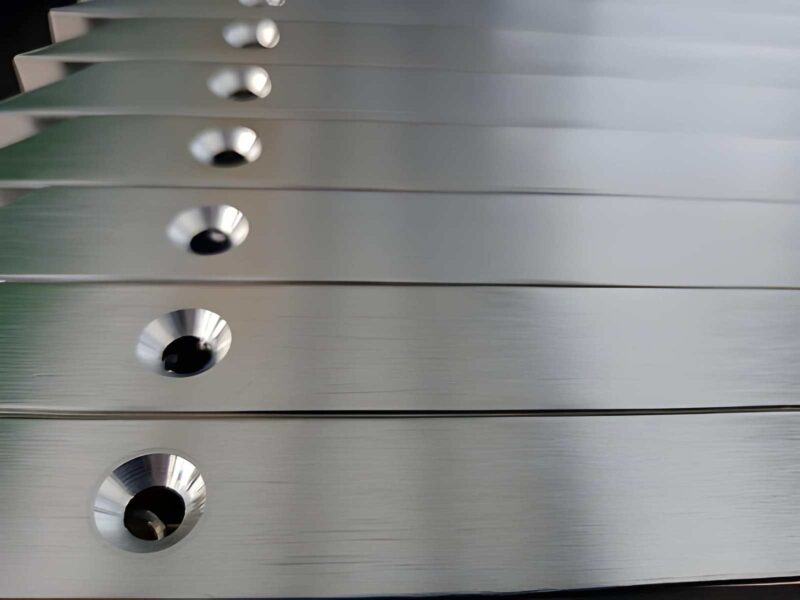
Blanchard grinding is used on large flat metal parts that come from cutting or heat treatment with extra stock. The surface is not ready for final machining at this stage. The process removes material across the full face using a rotating table and a vertical grinding wheel.
It is used when milling takes too long or gives uneven results on large plates. The goal is to bring the thickness closer to the required size before the final machining steps. The circular marks on the surface come from the rotating motion of the table under the wheel.
This process is common in base plates, fixture blocks, and large steel components. It is selected for speed on flat surfaces, not for fine finishing work.
This article will cover
- How Blanchard grinding removes stock from large flat steel parts
- Where it fits in the production process
- What surface finish and accuracy can it produce
- How it compares with surface grinding and other methods
- When engineers choose it for practical jobs
- What limits affect flatness and the final use of parts
What Is Blanchard Grinding and How It Works
Blanchard grinding is a surface grinding method used on large flat metal parts. It removes material from one face using a vertical grinding wheel while the part rotates on a magnetic table. It is mainly used when parts come with extra stock after cutting or heat treatment.
The process is chosen when fast material removal is needed across a wide surface. It works best on flat plates and block-type components.
Process Stages
Step 01: Part Setup on Magnetic Table
The process starts by placing the workpiece on a magnetic chuck. The operator checks if the part sits fully on the table without rocking. Any uneven contact at this stage affects how the wheel engages the surface during grinding. Once stable, the magnetic force holds the part during the full cycle.
Step 02: Table Rotation and Wheel Positioning
The table starts rotating at a controlled speed, usually adjusted based on part size. The grinding wheel is positioned above the surface and brought down to make contact. As the table rotates, the full surface moves under the wheel instead of the wheel moving across the part in a straight line.
Step 03: Rough Grinding Passes
Initial passes remove heavy stock left from cutting, sawing, or flame cutting. The wheel cuts deeper at this stage, and material removal is faster. The surface starts to even out, but visible marks from previous machining are still present.
Step 04: Controlled Intermediate Passes
After bulk removal, the depth of cut is reduced. The wheel is dressed if needed to restore cutting action. These passes help reduce uneven areas and bring the surface closer to uniform thickness across the full plate.
Step 05: Finishing Pass and Spark-Out
Final passes are lighter and focus on removing high points left from earlier cuts. In many cases, the machine runs a short spark-out cycle where the wheel stays in contact without further infeed. This helps stabilize the surface before inspection.
Step 06: Part Removal and Inspection
Once grinding is complete, the part is removed from the magnetic table. Thickness is checked across different points, and flatness is verified using standard shop measuring tools. Small variation is normal depending on part size and starting condition.
What Is a Blanchard Grinder?
A Blanchard grinder is a surface grinding machine used for large flat metal parts. It removes material using a vertical grinding wheel while the workpiece rotates on a magnetic table. It is mainly used to reduce extra stock after cutting or heat treatment before final machining.
Main Elements and How Each One Works
Rotary Magnetic Table
The rotary magnetic table holds the workpiece during grinding using magnetic force. It rotates the part under the grinding wheel at a controlled speed. Its main function is to move the full surface through the wheel contact.
Vertical Grinding Wheel and Spindle
The vertical grinding wheel removes material from the surface as it rotates at high speed. It cuts using abrasive grains on the wheel face. Its main function is continuous stock removal across flat surfaces.
Wheel Head Downfeed System
The wheel head downfeed system controls how far the wheel moves into the workpiece. It sets the cutting depth for each pass. Its main function is controlling the amount of material removal.
Machine Column and Frame
The machine column supports the wheel head above the table. It keeps the wheel aligned during the cutting force. Its main function is maintaining rigid positioning during grinding.
Coolant System
The coolant system supplies fluid to the grinding area. It reduces heat and removes grinding particles. Its main function is controlling temperature during cutting.
What Are the Benefits of Blanchard Grinding?
Blanchard grinding is mainly used to process large flat metal parts in the early machining stages. Its advantage is not finish quality, but how quickly it corrects uneven stock and prepares parts for later operations.
Removes heavy stock in fewer passes
The rotating table and wide wheel contact remove material across the full surface at once. This reduces the need for multiple milling or step-by-step cutting operations. It is useful when plates arrive with thick excess material.
Works well on large and rigid parts
The setup supports heavy steel plates and block components without complex fixturing. Magnetic holding keeps parts stable during rotation. This makes it suitable for oversized workpieces that are difficult to machine on standard mills.
Prepares parts for finishing operations
The process brings surfaces closer to usable condition before CNC machining or surface grinding. It reduces unevenness from cutting or heat treatment. This helps later operations focus on final size and surface control instead of bulk removal.
How Flat Can Blanchard Grinding Make a Part?
On typical steel plates, flatness usually sits around 0.1 mm to 0.5 mm across the full surface. Smaller parts with stable stock and light grinding can sit closer to the lower range. Larger plates show more variation between the center and the edges because the wheel contacts different zones during rotation. Heat during long passes can also shift the surface slightly.
When a drawing needs tighter control, the part is left with stock and moved to surface grinding. Blanchard grinding only prepares the base condition; it does not finish final flatness.
How Does Blanchard Grinding Compare to Other Grinding Methods?
Usually, the main difference comes from how the wheel contacts the part and how much material is removed in one pass.
Blanchard Grinding vs Surface Grinding
- Blanchard grinding is used first on large plates after cutting or heat treatment. Surface grinding is used after it, when the part needs the final size and flat contact on mating faces
- Blanchard handles base plates, fixture blocks, and thick steel blanks. Surface grinding is used on finished plates, precision blocks, and assembly faces
- Blanchard removes heavy stock in fewer passes due to full-surface rotation, and surface grinding removes small controlled layers using back-and-forth motion
- Blanchard leaves a swirl pattern from rotating table contact, and surface grinding leaves straight grind lines from linear table movement
Blanchard Grinding vs Cylindrical Grinding
- Blanchard grinding is used on flat plates and blocks, cylindrical grinding is used on shafts, rollers, and round machine parts
- Blanchard works on a full flat surface contact; cylindrical grinding works only along the outer diameter of the rotating parts
- Blanchard removes uneven stock from saw-cut or flame-cut plates, and cylindrical grinding corrects diameter size and roundness
- Blanchard uses rotating table motion under a vertical wheel, and cylindrical grinding uses a rotating workpiece under the side wheel contact
Blanchard Grinding vs Jig Grinding
- Blanchard grinding is used for large plates and structural steel parts; jig grinding is used for holes, slots, and small precision features
- Blanchard removes bulk stock across the full surface in one setup, and jig grinding removes small, controlled material in localized areas
- Blanchard works on surface leveling after cutting or heat treatment, and jig grinding works on fine feature correction after machining
- Blanchard uses a rotating table and large wheel contact, and jig grinding uses small tool movement for detailed geometry control
Comparison Table Summary
Table 01: Blanchard grinding vs surface vs cylindrical vs jig grinding
| Method | Motion Type | Contact Style | Main Use | Material Removal | Surface Result |
| Blanchard Grinding | Rotating table + vertical wheel | Full surface contact | Large flat plates | High | Swirl pattern finish |
| Surface Grinding | Reciprocating table + horizontal wheel | Line contact | Final flat finishing | Medium to low | Smooth flat finish |
| Cylindrical Grinding | Rotating workpiece | Line contact | Shafts and round parts | Low | Round precision surface |
| Jig Grinding | Precision spindle movement | Point contact | Small features and holes | Very low | Fine detailed finish |
Are There Any Limitations of Blanchard Grinding?
Yes, Blanchard grinding is not used for final surface control. It leaves a swirl pattern and cannot hold tight flatness across large plates.
The process also creates a slight variation from center to edge, especially on wide or thin parts due to heat and contact spread. It works well for fast stock removal, but parts still need surface grinding and machining for accurate mating faces.
Difference Between Blanchard Grinding and Centerless Grinding
Blanchard grinding is used when the job is a flat plate that needs fast leveling, while centerless grinding is used when round bars or shafts need a controlled diameter without holding them between centers.
Table 02: Blanchard Grinding vs Centerless Grinding
| Factor | Blanchard Grinding | Centerless Grinding |
| Part shape | Flat plates, blocks, and large steel sections | Round shafts, pins, long cylindrical bars |
| Contact style | Full-face contact on a rotating table | Line contact on the outer diameter between wheels |
| Work holding | The magnetic chuck fixes the full surface | No chuck, the part is supported by the rest of the blade |
| Material removal behavior | Removes uneven stock across the full surface in one pass | Removes controlled material along a continuous feed |
| Setup logic | Single setup per part surface | Continuous feed for multiple parts or long bars |
| Production focus | Surface leveling on large components | High volume diameter control on round parts |
| Surface outcome | Swirl pattern from circular motion | Smooth cylindrical finish along length |
What Materials Are Suited for Blanchard Grinding?
Blanchard grinding works mainly on materials that can stay stable under fast surface contact and can be held on a magnetic table. It is mostly used on metals used in heavy parts, plates, and structural components after cutting or heat treatment.
Steel
Steel is the most common material for this process. It is used in base plates, fixture blocks, and structural parts that come from flame cutting or sawing. The process removes scale, saw marks, and uneven stock in one setup before CNC machining.
Stainless Steel
Stainless steel is used when corrosion resistance is needed in machine bases or industrial assemblies. It grinds slower than carbon steel due to its toughness, so lighter passes are usually applied. It is often used when plates need both leveling and clean surface condition before assembly.
Cast Iron
Cast iron is often processed after casting for machine beds and heavy equipment bases. The material breaks cleanly under abrasive contact, which helps in removing surface irregularities. It is commonly used where flat seating surfaces are required in final assembly.
Tool Steel
Tool steel is usually ground after heat treatment. It is used in dies, molds, and tooling blocks where distortion appears after hardening. Blanchard grinding helps bring the surface back close to size before precision grinding or CNC finishing.
Aluminum
Aluminum is used for large plates and fixture components where weight reduction matters. It removes easily compared to steel, so cutting depth is controlled carefully to avoid surface damage. It is used when large flat areas need quick leveling before machining.
Copper
Copper is used in electrical and thermal applications like busbars and contact plates. It is soft, so grinding is done with controlled pressure to avoid surface drag. It is used when flat contact surfaces are needed for conductivity performance.
How Much Does Blanchard Grinding Cost?
Blanchard grinding cost depends on how the part comes in and how much work the machine needs to remove material from the surface. However, it changes from job to job based on stock condition, size, and production setup.
Material Removal Amount
Heavy stock removal increases grinding time because the wheel needs more passes across the surface. Plates with flame-cut scale or uneven saw marks take longer compared to near-finished stock. More removal also increases wheel wear during the cycle.
Part Size and Surface Area
Large plates cover more table area and need longer grinding cycles per pass. The wheel must travel across the full surface during rotation, so bigger parts directly increase machine time. Small blocks finish faster because the contact area is limited.
Batch Quantity
Single parts cost more per piece because setup time is not shared. When multiple parts are run together, setup, wheel dressing, and machine adjustment are distributed across the batch. This reduces the cost per unit in production runs.
Required Flatness Condition
When parts need tighter flatness after grinding, additional passes are used with lighter cuts. This increases cycle time compared to basic leveling work. Parts with a simple surface correction finish faster than those needing controlled geometry across the face.
Contact Premium Parts Manufacturing for Grinding Support
At Premium Parts Manufacturing, we review your part drawings before machining starts and help you choose the right surface grinding method based on real shop conditions. Our team checks starting stock, part size, and required finishing stage so the grinding process fits the actual production flow, not just the drawing requirement.
We support both Blanchard grinding and surface grinding decisions for large plates, base blocks, and heat-treated components. Our primary objective is to avoid and saves you unnecessary machining steps and keep the process practical from rough stock removal to final finishing.
- Free DFM review before grinding starts
- Guidance on Blanchard vs surface grinding selection
- Support for large plates, fixture blocks, and structural parts
- Process planning for roughing and finishing stages
- Practical feedback on stock removal and setup approach
Send your drawing to Premium Parts Manufacturing for a practical review before production begins.
FAQ’s
What is Blanchard grinding mainly used for
Blanchard grinding is used to remove heavy stock from large flat plates after cutting or heat treatment. It corrects uneven surfaces, removes scale, and brings thickness closer to the required size. You use it at the rough stage, so later machining focuses only on final dimensions and mating surfaces.
How accurate is Blanchard grinding for flat surfaces
Blanchard grinding typically achieves flatness in the range of 0.1 mm to 0.5 mm across the surface, depending on part size and condition. It improves the overall surface, but it does not control tight flatness and parallelism. For critical surfaces, you still leave stock and finish the part with surface grinding.
When should you choose Blanchard grinding over surface grinding
You choose Blanchard grinding when parts have large surface areas and excess stock that needs fast removal. It is more efficient than milling for wide plates and reduces machining time before finishing. Surface grinding is selected later when the part needs a tight tolerance, a smooth finish, and accurate mating surfaces.