Blind holes are precision-machined cavities that penetrate a workpiece to a specified depth. However, they do not go through and will therefore have a closed bottom. To distinguish them from through holes, blind holes will have important differences regarding programming tool paths, chip removal method, coolant delivery method, and positive verification of the dimensional sizes/mass of the completed part.
Blind holes are also used to provide retention for threaded fasteners, dowel pin registration, sealing of fluid passageways, and mounting sensors within the part while maintaining the overall envelope of the part. Therefore, engineers need to understand and follow the geometric shapes, tolerances, and machining limitations of blind holes before beginning production of their design.
What Is a Blind Hole? Core Geometry
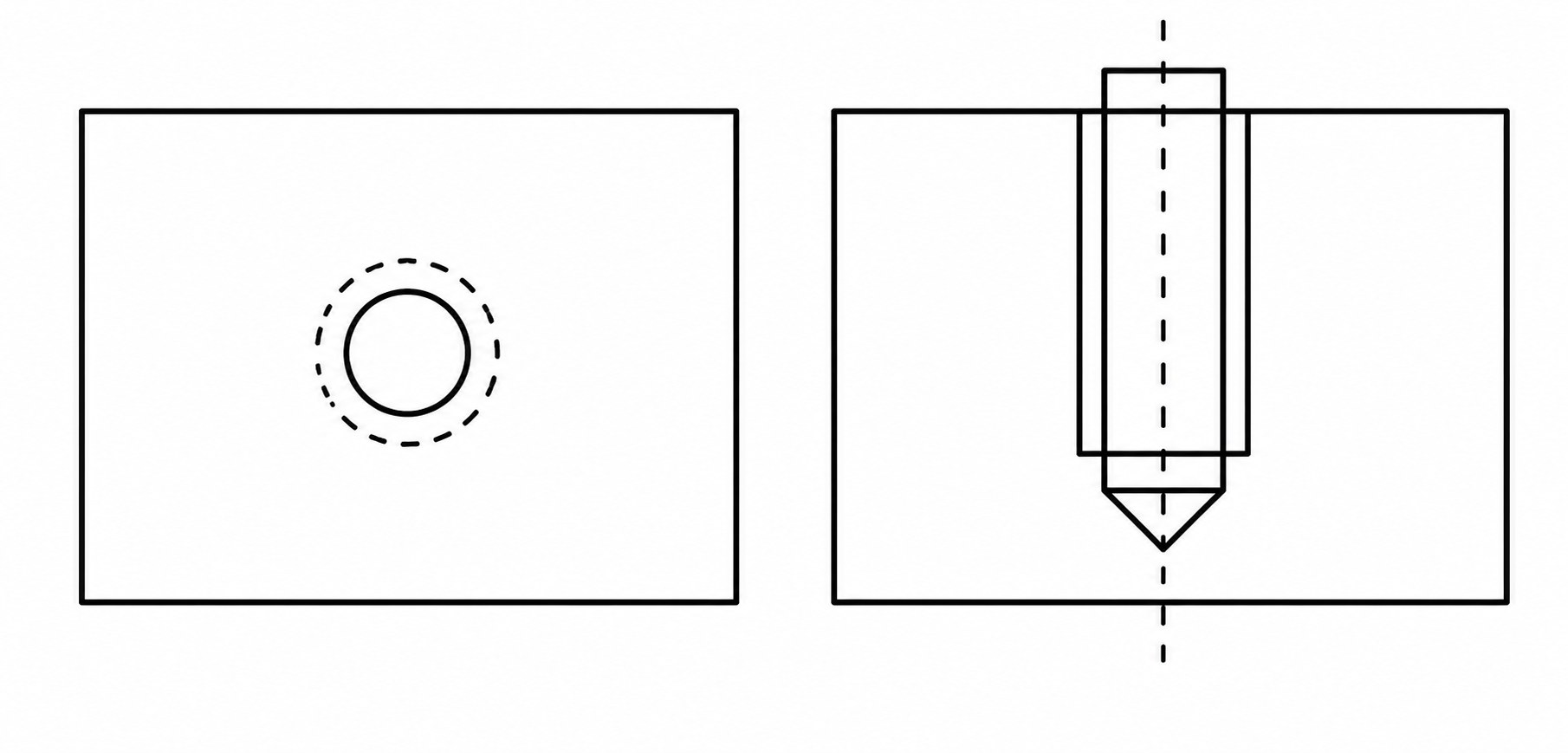 Blind hole
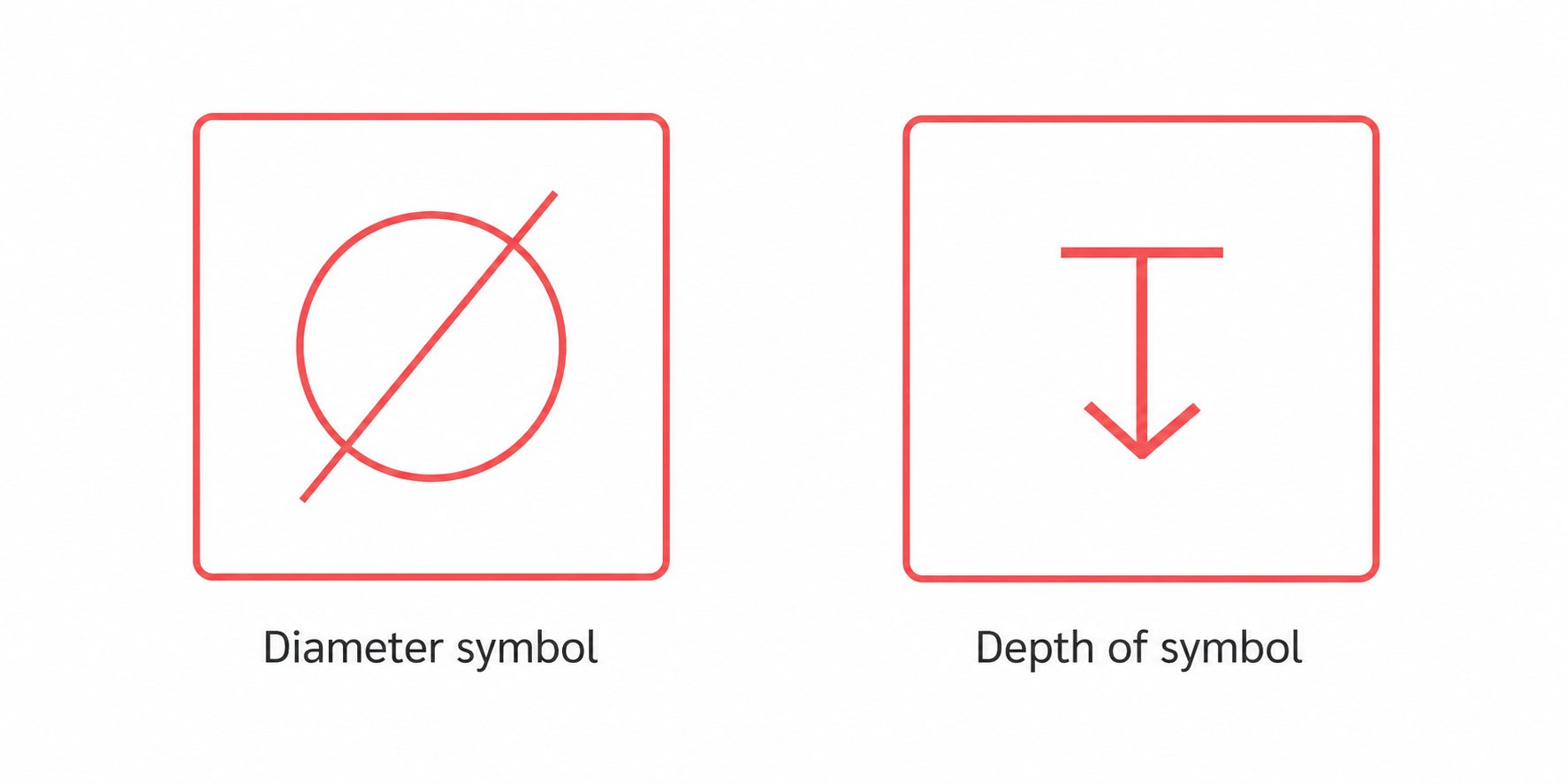
Three main geometric parameters that define a blind hole are diameter (⌀), depth (↧), and bottom geometry. On a technical drawing, the ⌀0.098 ↧0.200 refers to a hole that measures 0.098 inches in diameter and 0.200 inches deep.
By default, the bottom geometry of a standard drilled blind hole has a 118° cone-point (included angle of a standard twist drill). However, it is possible to create a blind-hole flat-bottom geometry via secondary boring or a flat-end mill. This is important whenever full thread engagement must commence from the very bottom of the hole’s face.
Blind Hole vs. Through Hole: Key Technical Differences
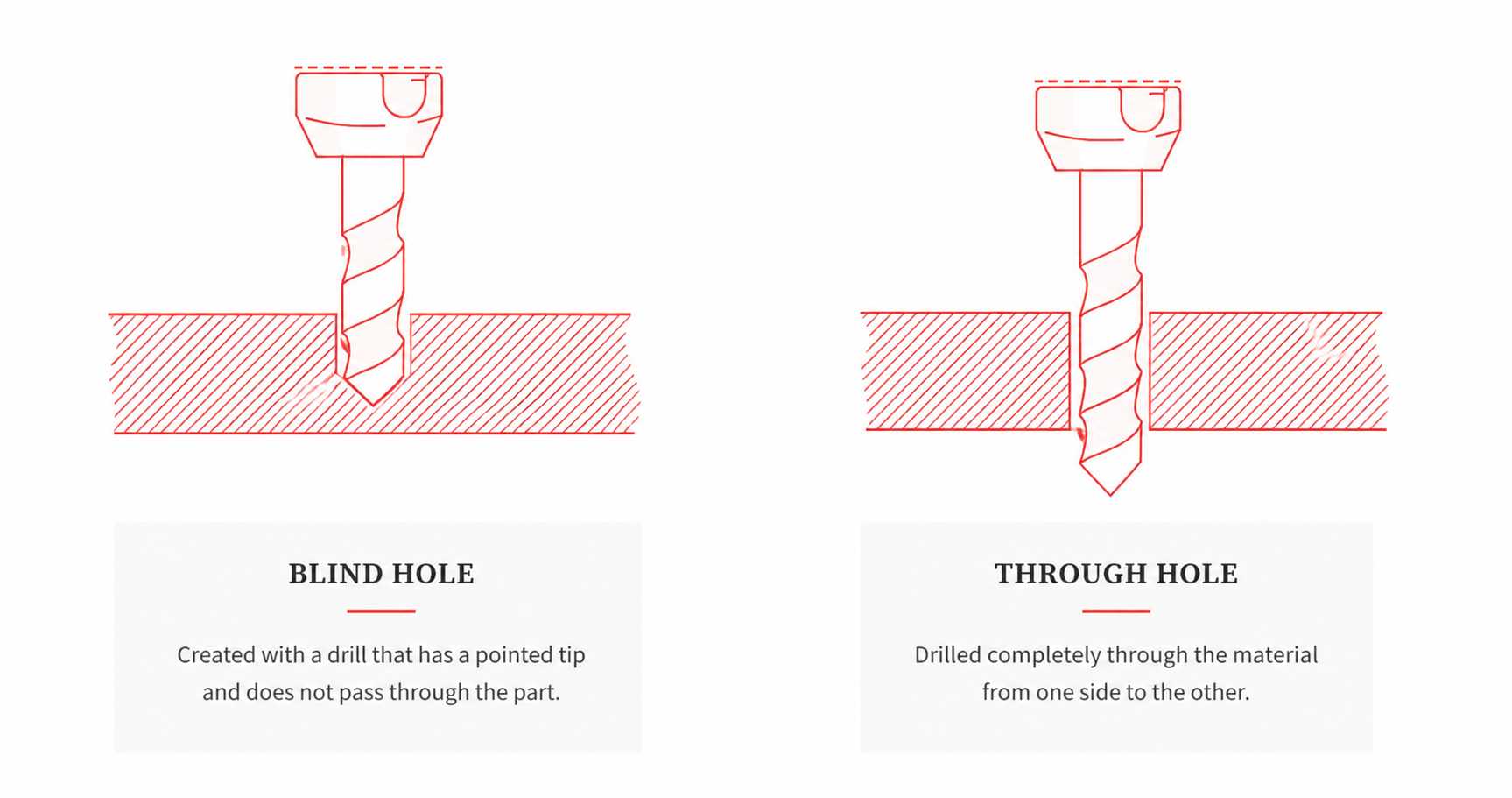 Blind hole vs through hole
| Parameter | Blind Hole | Through Hole |
| Depth | Terminates within material | Penetrates completely |
| Bottom geometry | Conical (118°) or flat | Open/exit face |
| Chip evacuation | Constrained: requires peck drilling | Unrestricted |
| Thread engagement | Limited by blind depth | Full stock thickness |
| Structural integrity | Higher: preserves material mass | Lower: removes more material |
| Inspection difficulty | Higher: requires bore gauge or CMM | Lower: direct measurement |
| Coolant delivery | Critical: pressure-fed recommended | Conventional flood acceptable |
| Applicable materials | Metals, plastics, composites | Same |
Types of Blind Holes in Machining
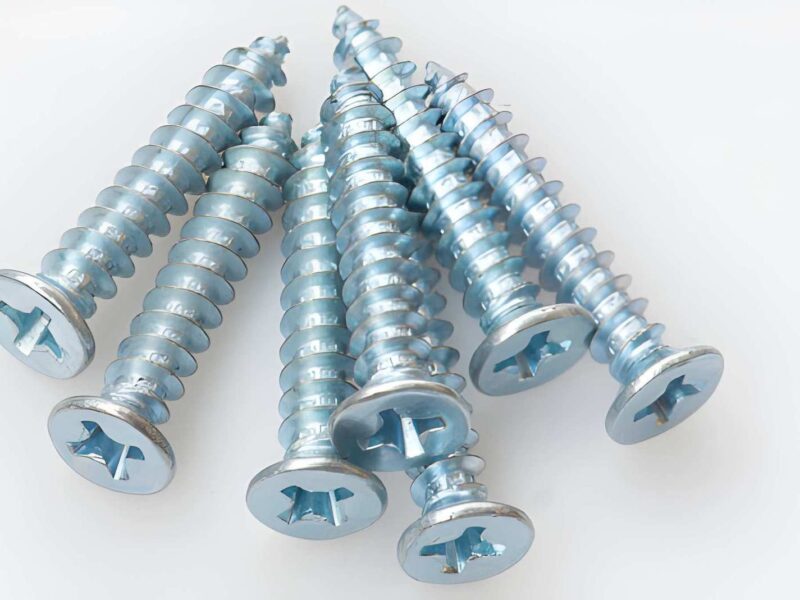
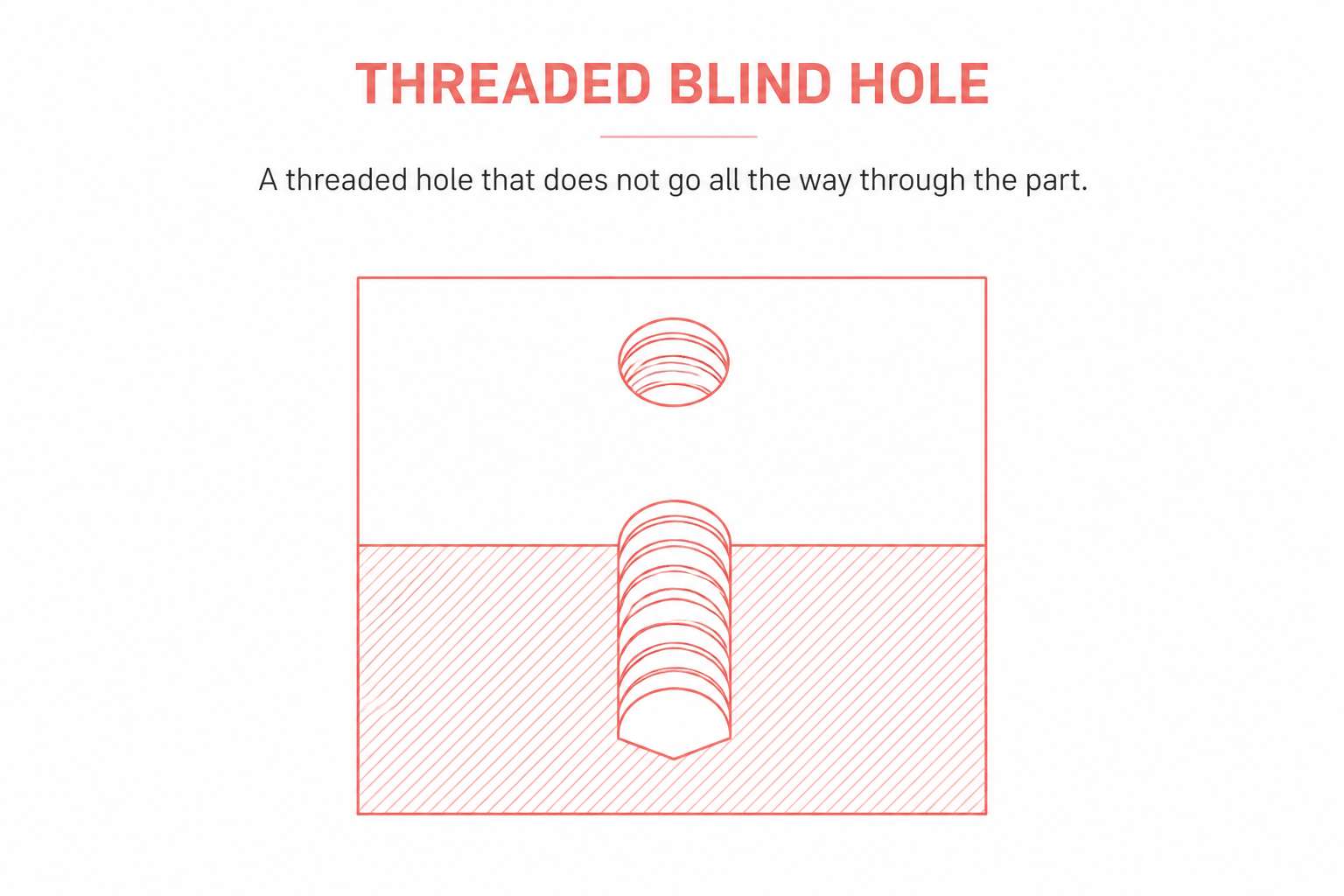 Threaded blind hole
There are various functional profiles for blind holes. The choice made directly impacts tooling selection, machining sequence, and end-use functionality.
- Standard drilled blind hole: This is the most used type of blind hole created via a twist drill. As a result of the conical tip of the twist drill, approximately 30% of the nominal diameter will remain as residual depth. This type of hole is suitable for both clearance and non-critical fastener holes.
- Flat-bottom blind hole: This type of blind hole is created by an end-milling cutter or a flat-bottom drill. This type of hole is necessary when fitting an O-Ring, plugging a hydraulic port, or performing precision counterboring to achieve a flush mating surface at the bottom of the hole.
- Threaded blind hole (Tapped blind hole): This is a drilled blind hole that has been tapped to a specified thread form (UNC, UNF, or metric coarse/fine). The unusable partial thread at the bottom of the hole (called thread runout) must be included when calculating the minimum drilling depth.
- Reamed blind hole: The drilled hole is undersized and then finished to achieve tight diameter tolerances, typically IT6 to IT7, using a reamer, with the surface finish improved to Ra < 1.6 µm. This type of hole is typically used to fit precision dowel pins and to locate bearing bore locations.
- Counterbored blind hole: A larger-diameter, shallow blind hole that is concentric with a smaller through or blind hole located beneath it. This type of hole is used for counterboring socket head cap screws to be flush or below the surface of the part.
- Undercut or blind hole: Machined with a T-slot cutter or undercutting end mill. Useful in snap-fit joint design, where a cantilever arm needs to engage the recessed groove of a blind hole.
Blind Hole Design Considerations for Engineers
Depth-to-Diameter Ratio
When designing blind holes, the most important constraint is the Depth-to-Diameter ratio (D:d). According to industry standard guidelines, the practical maximum for general machining is 3:1 and the absolute maximum for specialty tooling (gun drill or deep hole BTA drill) is 10:1. If the depth to diameter exceeds these ratios, the machining tool will deflect from its programmed position, chip packing will occur in the cutting area, and heat will increase, harming the positional accuracy of machined parts and the surface finish as well.
| D:d Ratio | Machining Approach | Typical Tolerance Achievable |
| ≤ 3:1 | Standard twist drill | ±0.05 mm |
| 3:1 – 6:1 | Peck drilling with coolant | ±0.03 mm |
| 6:1 – 10:1 | Gun drill / BTA drill | ±0.02 mm |
| > 10:1 | Specialized deep-hole systems | ±0.01 mm (application-specific) |
Thread Engagement and Drill Depth Calculation
To make a blind hole (tapped hole), engineers must determine the length of the drill by using this formula:
Minimum Required Drill Length = Thread Engagement + Thread Runout + Allowance for the Drill Point
The standard runout distance for taps is 2 to 3 threads. The allowance for the drill point is about 0.29 times the diameter of the drill for a drill with an included angle of 118°. Failure to consider any of these values will result in inadequate thread engagement, which is one of the leading causes of fastener pull-out failure in assemblies.
Tolerances and Surface Finish
Blind holes that fit together precisely must have greater dimensional tolerance than clearance holes. The table below provides the typical specification targets for various applications:
| Application | Diameter Tolerance | Depth Tolerance | Surface Finish (Ra) |
| Clearance/fastener | ±0.1 mm | ±0.25 mm | 3.2 µm |
| Dowel pin (transition fit) | H7 (+0.000/+0.021 mm for ⌀8) | ±0.05 mm | 1.6 µm |
| Hydraulic port | ±0.025 mm | ±0.05 mm | 0.8 µm |
| Bearing bore (blind) | H6 tolerance | ±0.025 mm | 0.4 µm |
Material-Specific Machining Parameters
The selection of materials will determine the feed rate, spindle speed, and chip handling method used for machining blind holes.
- Aluminum Alloys (6061, 7075): High RPM (up to 15,000); 2-flute tungsten carbide drill bits; fast feed rates. Risk of built-up edge from gummy alloys; use TiN-coated tools and high-pressure coolant on tools.
- Stainless Steel (304, 316): Difficult-to-machine; must drill at low RPM; requires high torque to break through; at risk for work hardening. Use cobalt high-speed steel or solid carbide drill bits with TiAlN coating; requires peck drilling (multiple increments).
- Titanium (Ti-6Al-4V): Very low thermal conductivity means a high concentration of heat at the tip; through-spindle coolant is required; cutting speeds average 40–60 m/min.
- Engineering Plastics (Delrin, PEEK): Standard high-speed steel drill bits with moderate feed rates; risk of melting and chip welding while drilling deep blind holes; use compressed air to clear chips from the drilling area.
Machining Blind Holes: Processes and Best Practices
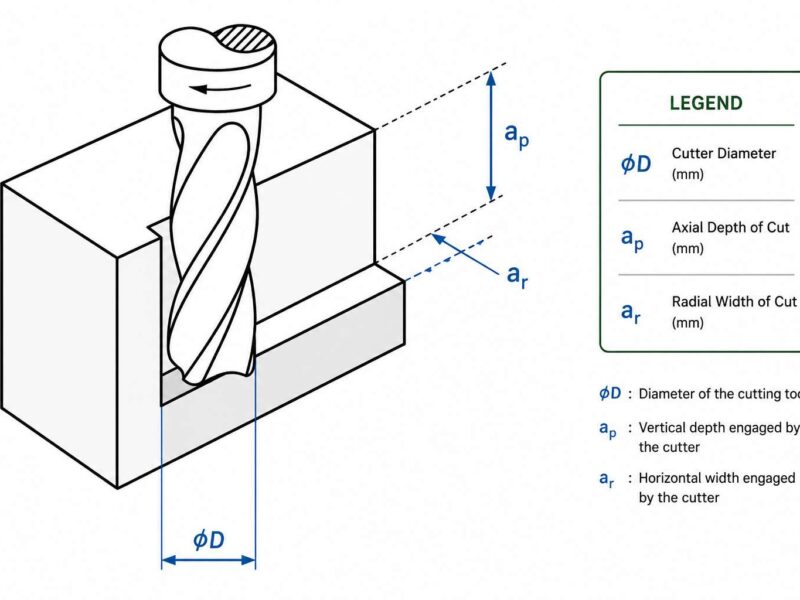
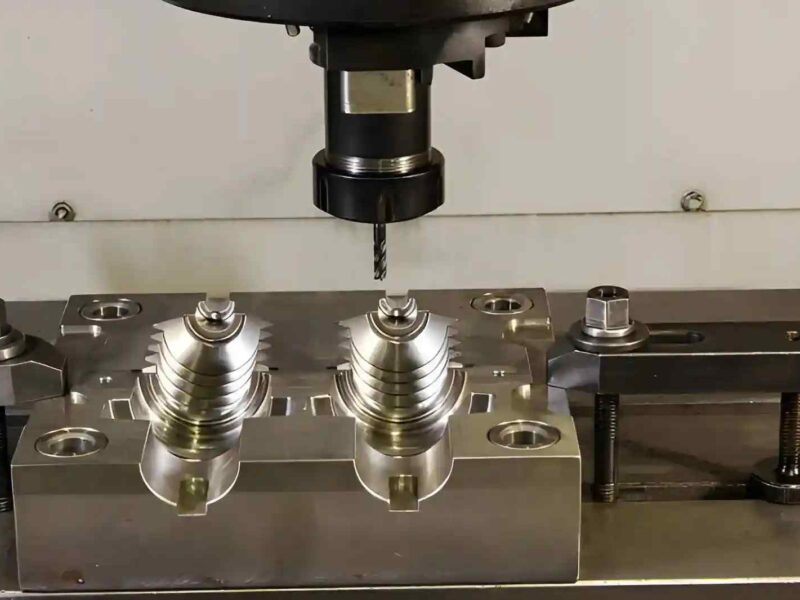
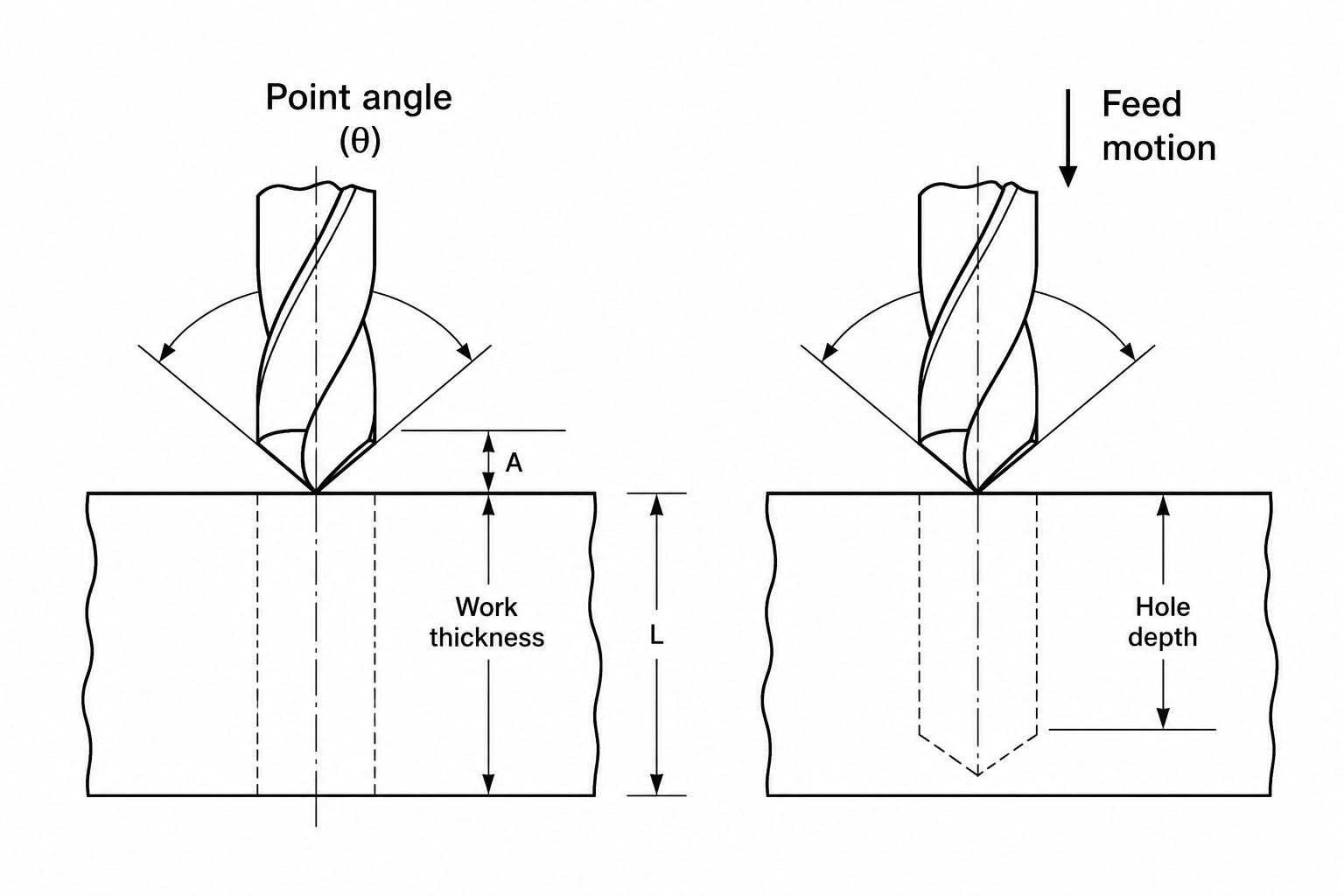 Machining blind holes
Blind holes are commonly produced in production environments using conventional twist drilling. For deep blind holes with D:d greater than 3:1, peck drilling cycles help produce the blind hole. Peck drilling allows the drill to be removed at programmed intervals (typically 1-2 times the hole diameter) to ensure proper chip removal and coolant access to the drill’s cutting edge.
For high-volume production of blind holes with very tight positional tolerances, gun drilling delivers the best results. A gun drill incorporates a single-flute tool design that uses pressure-fed coolant delivered to the drill’s end through an internal channel, simultaneously flushing chips back down the drill’s flute. This design will eliminate the problems associated with chip packing that are common with traditional drilling methods in deep blind holes.
CNC Programming Considerations for Blind Hole Machining
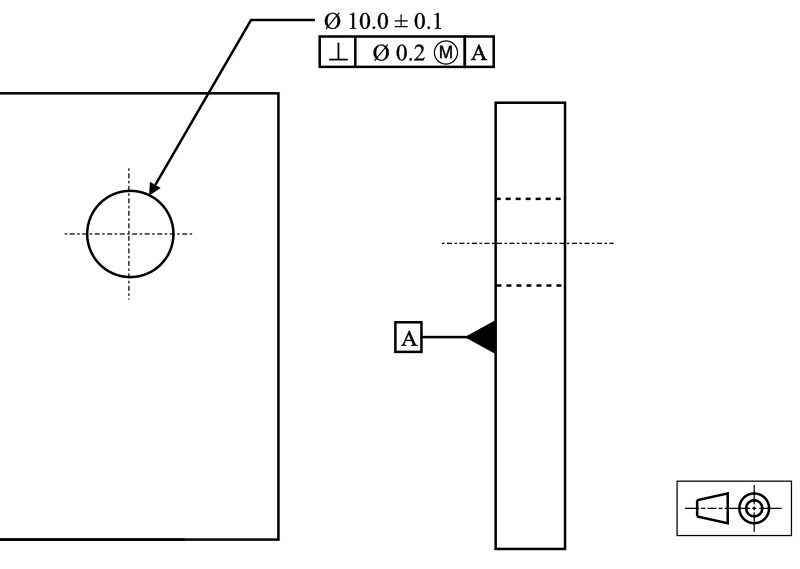
 Blind hole symbol
CNC Machining Centers will use canned drilling cycles as standardization for blind-hole processes. The most common canned cycle codes for blind-hole processes include:
- G81 – standard drilling cycle (single pass, non-peck)
- G83 – peck drilling cycle (Q value specifies peck increment)
- G73 – high-speed peck (chip laser break and partial retract)
When programming the drilling cycle for blind holes, it is important for programmers to set the Z-axis reference plane (R-plane) and establish the final Z depth to avoid crashing into the tools. Also critical at the bottom of the hole is transitioning the feed rate. This means reducing the feed rate by 20-30% during the last 0.5x the diameter of depth to minimize tool-point load deflection and increase dimensional repeatability.
Inspection and Quality Control of Blind Holes
Blind-hole inspection is more challenging than through-bore inspection because there is less direct access to the hole. The following are some of the ways to verify a blind hole:
- Telescoping bore gauges and dial bore gauges can provide direct access for measuring diameter at an accessible depth. However, a skilled technician can achieve an accuracy of ±0.005 mm.
- Coordinate Measuring Machine (CMM) with ruby probe: Will take accurate measurements of the diameter, depth, perpendicularity, and position to a selected reference point. The ruby probe is necessary when qualifying parts for use in aerospace and medical applications.
- Thread plug gauges (Go/No-Go): Can provide an acceptance criterion for a threaded blind hole based on ASME B1.2 (inch) or ISO 1502 (metric) standards.
- Borescopes and endoscopes can visually inspect the bottom condition and surface finish of a blind hole, as well as any chips. This technique is particularly important for inspecting hydraulic and pneumatic manifold bores.
- Non-Destructive Testing (NDT): Technicians use ultrasonic testing to detect any sub-surface cracking or delamination in high-stress blind hole areas for critical safety applications.
Engineering Applications of Blind Holes Across Industries
Blind holes in engineering are found in nearly all fields of precision manufacturing, serving a wide range of functional purposes depending on the area of application. Some examples of how industries utilize blind hole technology are as follows:
Aerospace
In aerospace, blind holes serve to reduce weight while maintaining load-bearing cross sections. Structural ribs, wing spars, and fuselage frames all have blind tapped holes to secure the fitments inside while preserving the aerodynamic surface of the structure.
Automotive Engineering
Blind-tapped holes are critical in manufacturing engine blocks, as they are used for mounting cylinder head studs, oil gallery plugs, and sensor bosses. Transmission housings also rely on blind holes for close-tolerance reamed bearing bores.
Medical
One example of medical device manufacturing using blind hole technology is seen with orthopedic implants; both bone plate and spinal cage designs utilize blind holes for screw retention. Clean-room manufacturing and an electropolished finish (Ra ≤ 0.4µm) are standard requirements to limit the potential for bacterial growth on the surfaces of these implants.
Electronics
In electronics/semiconductors, printed circuit board (PCB) substrates have blind holes in PCB design (also known as a blind via), which connect the outer copper layers to the inner layers without going all the way through the PCB stack; this provides the means for enabling high-density interconnect (HDI) designs.
Hydraulics
In hydraulic and pneumatic systems, manifold blocks use flat-bottom blind holes (per SAE J1926) to serve as O-ring face seal ports, providing a leak-free connection for pressures above 5,000 psi.
Advantages and Limitations of Blind Holes
Advantages
- Structural integrity: A blind hole has a back wall, allowing the area behind the hole to maintain bending stiffness, fatigue resistance, and the ability to stretch, compared with a true/through hole.
- Environmental sealing: A blind hole is self-sealing, keeping out dirt, coolants, or oil from the back side of the hole.
- Aesthetics and cleanliness: The surface finish of the outer face remains intact, which is especially important in consumer products or precision tools.
- Fastener retention: Tapered threads tapped into the blind hole provide a means of positively engaging threads, without having any fasteners visible from the opposite face of the blind hole.
Limitations
- Chip evacuation complexity: Chips from the cutting process accumulate at the bottom of the blind hole, requiring additional work to ensure cleanliness, such as peck cycles or a coolant stream to assist chip removal.
- Inspection difficulty: It is very hard to inspect the hole depth; no reliable means exists to assess whether the taper threads are engaged.
- Thread runout loss: Only the threads at the base will engage to secure the fastener, causing a reduction in the amount of thread engaged; therefore, it will take a longer distance than just the depth of the thread engagement markings to reach the entire length of the hole.
- Machining cycle time: It takes longer to machine blind holes than through holes because of increased peck drilling and re-boring compared to the equivalent through-hole operations.
Frequently Asked Questions (FAQs)
Q1: What is the maximum recommended depth-to-diameter ratio for a blind hole?
Normally, they are manufactured with twist drills, which have their maximum depth of blind holes limited to three times the diameter of the drilling tool. BTA or gun-drilled hole depths can reach 10 or more times the drill diameter when coolant is pumped through the spindle.
Q2: How do you calculate the correct drill depth for a tapped blind hole?
You add together the length of engagement needed for the thread fixings, the runout allowance (2-3 x threads), and the tip allowance (≈ 0.29 × drill diameter) to give you a minimum depth to drill. Ensure you allow for used cutting tools by adding an extra one or two thread lengths before removing from the hole.
Q3: What is the difference between a blind hole and a blind via in electronics manufacturing?
A blind hole (when cutting with mechanical tools) is a recess in an item where fittings can be inserted and must be faced off during finishing operations. However, in PCBC production, a blind via is a plated hole that provides connectivity between the outer copper layer and the inner copper layers. Because there are many more conductive pathways, the use of blind holes in PCBs significantly increases the density of multilayer PCBs.
Conclusion
Blind holes are a critical design element in precision engineering. While they seem simple on the surface, they are difficult to create accurately. Blind hole systems have limitations on the depth-to-diameter ratio and criteria for thread engagement. Machining strategies for controlling chips and procedures/standards for inspecting these types of holes are all part of the design and manufacture of a blind hole from an engineering perspective. The selection of blind hole type and drilling method, with tolerance considerations, significantly influences whether it will be a good performer or cause problems during manufacturing.
Premium Parts manufactures blind holes in a broad range of materials and with varying levels of complexity. We offer everything from standard tapped blind holes in aluminum to deep flat-bottom hydraulic bores in stainless steel and titanium.
Our CNC machining processes include through-spindle coolant, high-pressure peck drilling, and complete CMM inspection with GD&T reporting. Contact us today or upload your part file for a quick DFM review and instant quote.