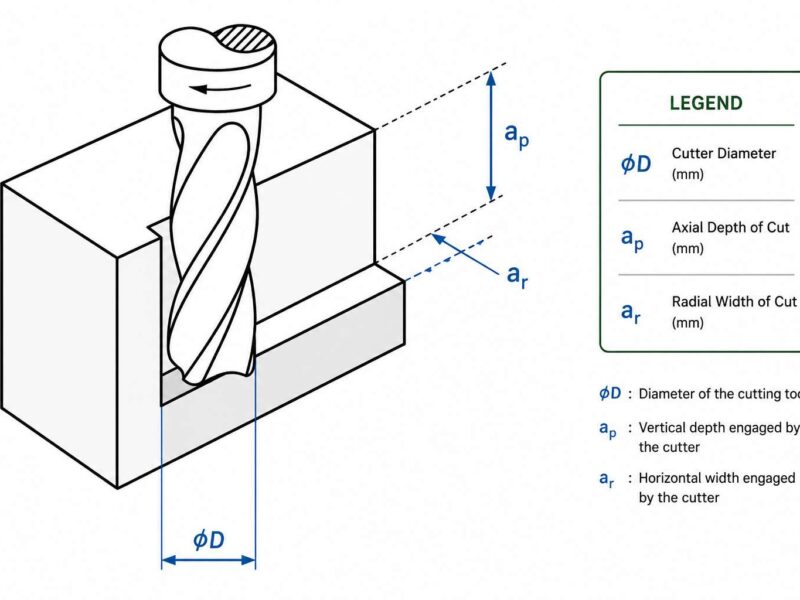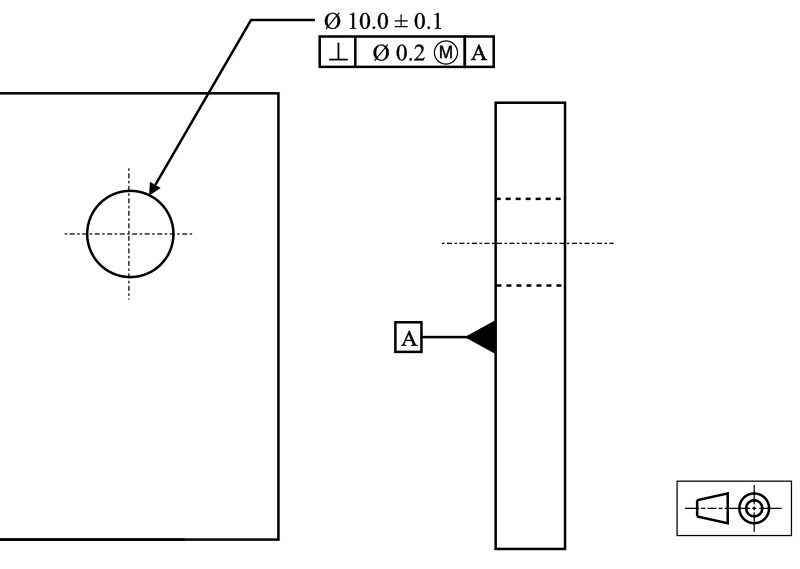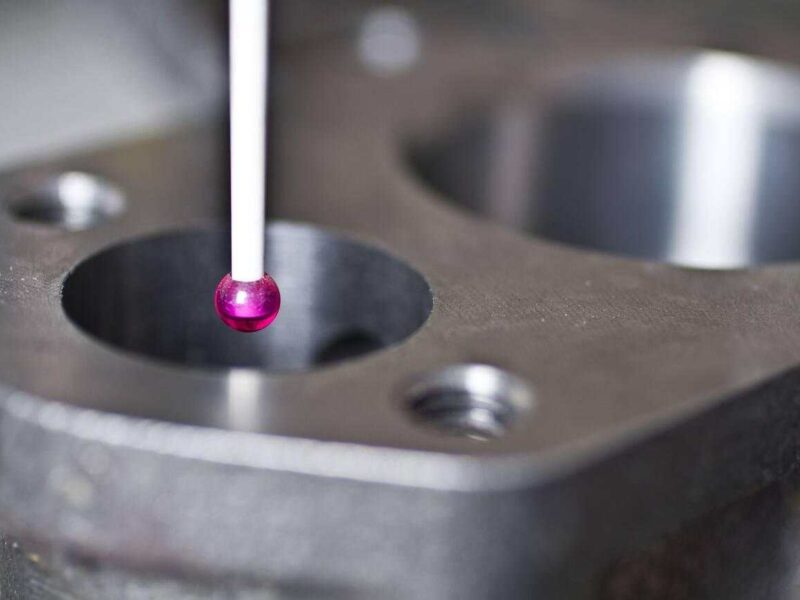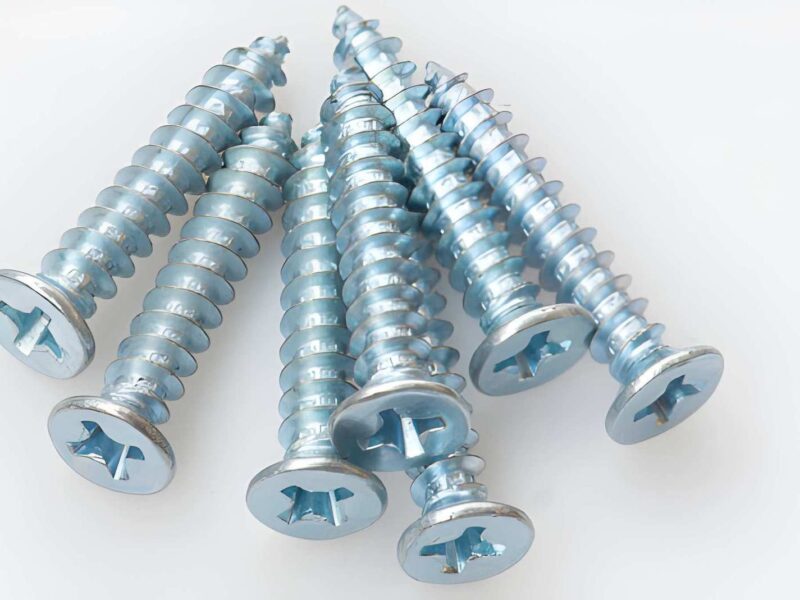
Thread milling is a precise CNC process used to create internal and external threads in metals and engineering plastics. A rotating multi-flute cutter moves along a helical path, gradually removing material instead of forcing a tap through. This gives you control over thread depth, pitch, diameter, and shape, and ensures consistent accuracy even in hard or brittle materials.
Thread milling reduces stress on the workpiece compared to traditional tapping. Cutting forces spread across multiple flutes, lowering torque and avoiding cracking or deformation. You can machine deep holes, large threads, or angled features without breaking tools.
The process also produces smooth surface finishes, tight tolerances of around +/- 0.05 mm, and allows easy adjustments for different thread standards. It is widely used in aerospace, automotive, medical, and precision engineering, where high accuracy and reliability are critical.
What is Thread Milling in Manufacturing?
 Thread milling techniques
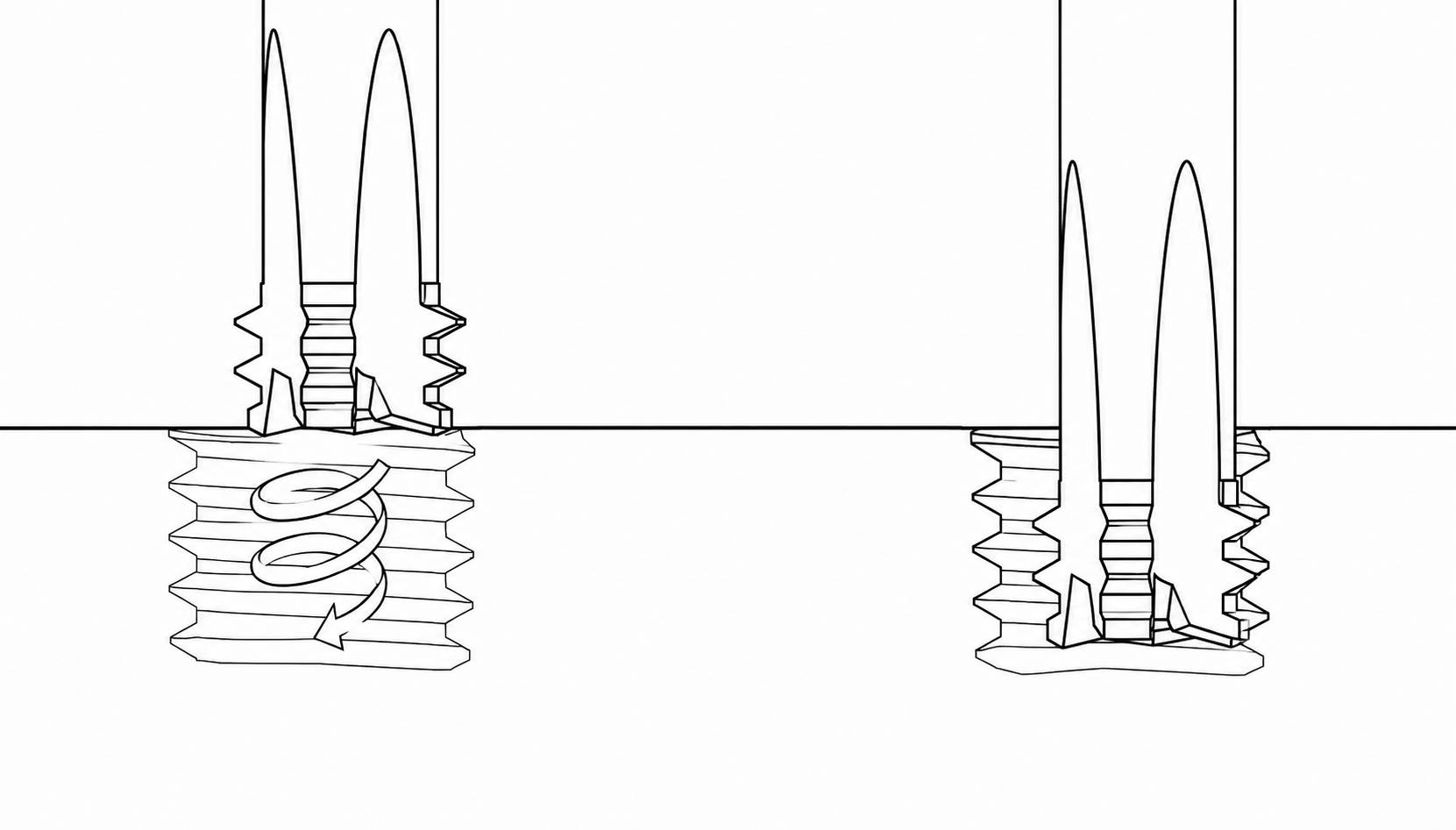
Thread milling is the process of cutting threads using CNC (computer numerical control) and a rotating cutter with a helical path. Thread milling, unlike traditional tapping processes, which remove material in an uncontrolled manner, can remove material at a controlled rate, which will reduce torque and eliminate cracking or part deformation.
With thread milling, you can accurately control the diameter, depth, and pitch of threads. It enables working on hard metals, machining deep holes, and engineering-type plastics that tapping processes cannot handle! Tool wear is low, and multiple threads with different sizes can be run with only one tool.
How Thread Milling Works
Multiple steps aim to produce a satisfactory part, meaning they need to ensure accuracy, repeatability, and minimal stress on the material.
Material and Thread Selection
Before machining, you should choose the correct material and thread to cut. Engineers typically consider hardness, thickness, and tolerances. Always start by selecting the thread standard (metric, UNC, UNF, or custom), along with the required pitch, diameter, and depth.
Moreover, material properties should also be considered, as they directly affect feed rate, spindle speed, and tool selection.
Tool Selection and Orientation
The engineer selects a multi-flute thread milling cutter based on the material being machined. Carbide tools are typically used for hard materials such as steel or titanium, while high-speed steel (HSS) is suitable for plastics and softer alloys.
The tool is then mounted in the CNC spindle and aligned correctly with the hole or workpiece before machining.
CNC Programming
A CAD/CAM software defines the cutter’s helical motion that corresponds logically to the thread pitch and diameter. The engineer fills in parameters such as spindle speed, feed rate, depth per pass, and retract strategy. Often, the threading requires multiple passes.
Workholding, Clamping, Finding Center and Alignment
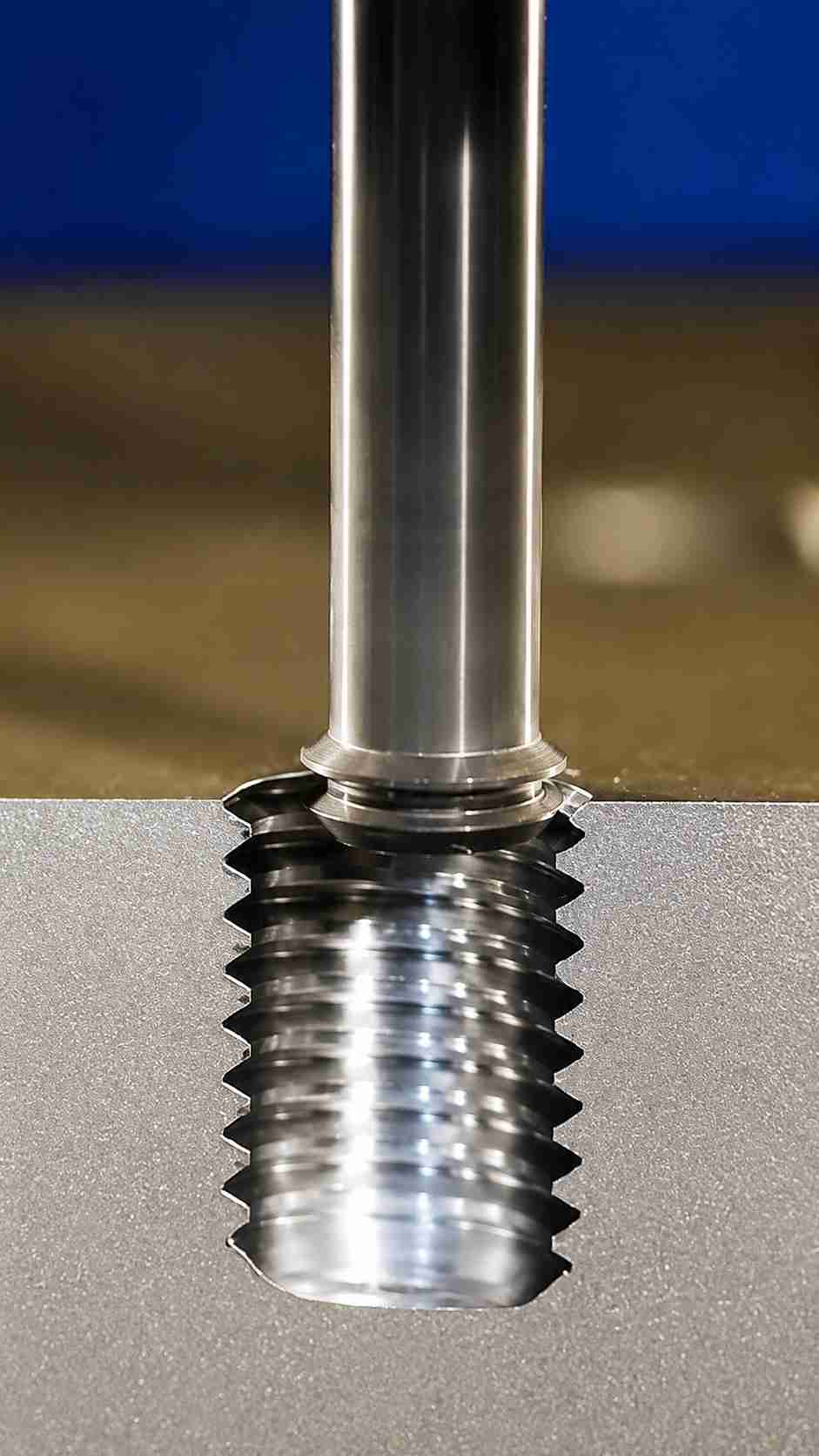 Thread Milling produces high-quality threads
To reduce the risk of misalignment, proper workholding on the CNC table is essential for producing accurate threads. Start by securing the workpiece correctly:
- Use vises, fixtures, or clamps based on part geometry.
- Ensure the workpiece is held firmly with no movement during machining.
- Align the hole center with the tool axis before starting.
- Double-check the setup to avoid tool breakage and thread misalignment.
Initial Passes
Initial passes will produce a thread interior to slowly remove the material. By cutting a bit at a time in each pass, it will reduce the workpiece stress on the tool and heat occurrence. If cutting deep threads, repeat passes until it has reached the proper depth. Take care to check for chatter (vibration) or deflection of the tool.
Finish Pass
Once you reach a depth, you are finishing the threading with a final pass to make it easier to cut off, finish the surface better, plus they make a pass to confirm the accuracy of the thread, eliminating all dimensional work.
This will add a nice surface finish, thread profile, and probably dimensional repeatability on all parts. If needed, using a cutting fluid or air to cool the threading will reduce friction and heat damage during cutting.
Inspection
Measurement of the thread diameter, pitch, and surface finish will depend on your requirements, precision needs, etc. Using gauges, micrometers, and measuring tools can accomplish optical inspection. Confirm your tolerances, alignment, and repeatability. Adjust the CNC parameters for minor corrections (for your future parts).
Post Processing
Threads might also be deburred, polished, or coated. For metal threads, protective coatings such as anodizing or passivating can serve corrosion resistance needs. For threads in plastic, they should be minimally finished, although plastic threads go through mild sanding or polishing.
Types of Thread Mills
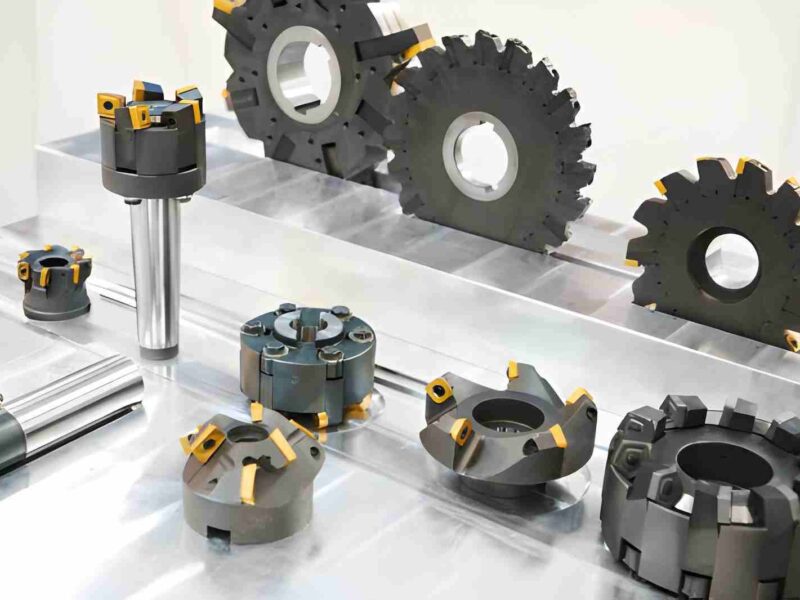
In thread milling, you will need to select the proper cutter based on the workpiece material (the steel alloy), the pitch, size, and shape of the threads being cut, as well as the application.
Continuous Thread Mills
Continuous thread mills make a complete thread shape that progresses as the cutter advances linearly in conjunction with rotary motion. These cutter types usually have high tolerance and can be used to cut class 1 to class 4 threads.
Continuous thread mills can also create through-hardened steels or other thread depths, where torque remains critical during machining. The incremental retention with continuous milling leads to minimal cutter breakage and repeatable thread shape.
Multiple thread mills
Multiple thread mills will mill on two (or more) threads as the cutter advances. Multiple thread mills are especially efficient on large diameter threads, on soft materials like aluminium, or plastic applications.
Multi-start thread mills can machine up to five threads at the same time. This distributes the cutting load across multiple teeth. Thus, it reduces tool wear and shortens cycle time while maintaining thread accuracy.
Tapered thread mills
Tapered thread mills are usually designed for producing tapered threads, or threads that take on a steep cone shape. They are the best option to create sealing threads on threads found in pipes and fittings and hydraulic connections. The helical relief angle of the cutter is matched to the specifications of the thread, such that the cutter can produce a thread with fit. They usually produce internal tapered threads in metals and engineering plastics.
Profile thread mills
Profile threaded mills are manufactured to cut the complete thread profile into the cutter. A profile thread mill can create standard threads in a single pass. These types of thread mills have good throughput in high-volume production runs. Profile threaded mills often have an excellent finish, near tolerance, and repeatable characteristics for applications with close tolerance specifications.
Helical interpolation thread mills
Helical interpolation thread mills are threaded cutter designs made particularly for internal threads in depth or difficult-to-access holes. The cutter will follow a helical tooling path and incrementally form the thread by removing material at the diameter. The cutter’s motion reduces the torque applied to the workpiece, lowering the risk of part failure. The cutter is ideal for very hard or difficult-to-machine materials such as some stainless steel or titanium.
Specialty custom thread mills
Sometimes, a custom thread mill is necessary to create a special thread that needs to achieve a particular shape. Specialty cutters can be made to accommodate different pitches, diameters, and shapes. Specialty cutters can be developed for aerospace, medical, or precision industrial component applications where standard equipment cannot be used.
Standard CNC Thread Milling Methods
CNC thread milling employs controlled cutter motions and repetitive methods to make threads. The proper method ensures accuracy and repeatability and is capable of minimizing stress on the component.
Helical Interpolation
Helical interpolation is a popular method for milling internal threads and is advanced in a circular, helical path, corresponding to the thread pitch at that location, while continuously removing material. Helical interpolation is effective at achieving depth control and diameter while minimizing induced stress on metals or plastics.
Single-Pass Thread Milling
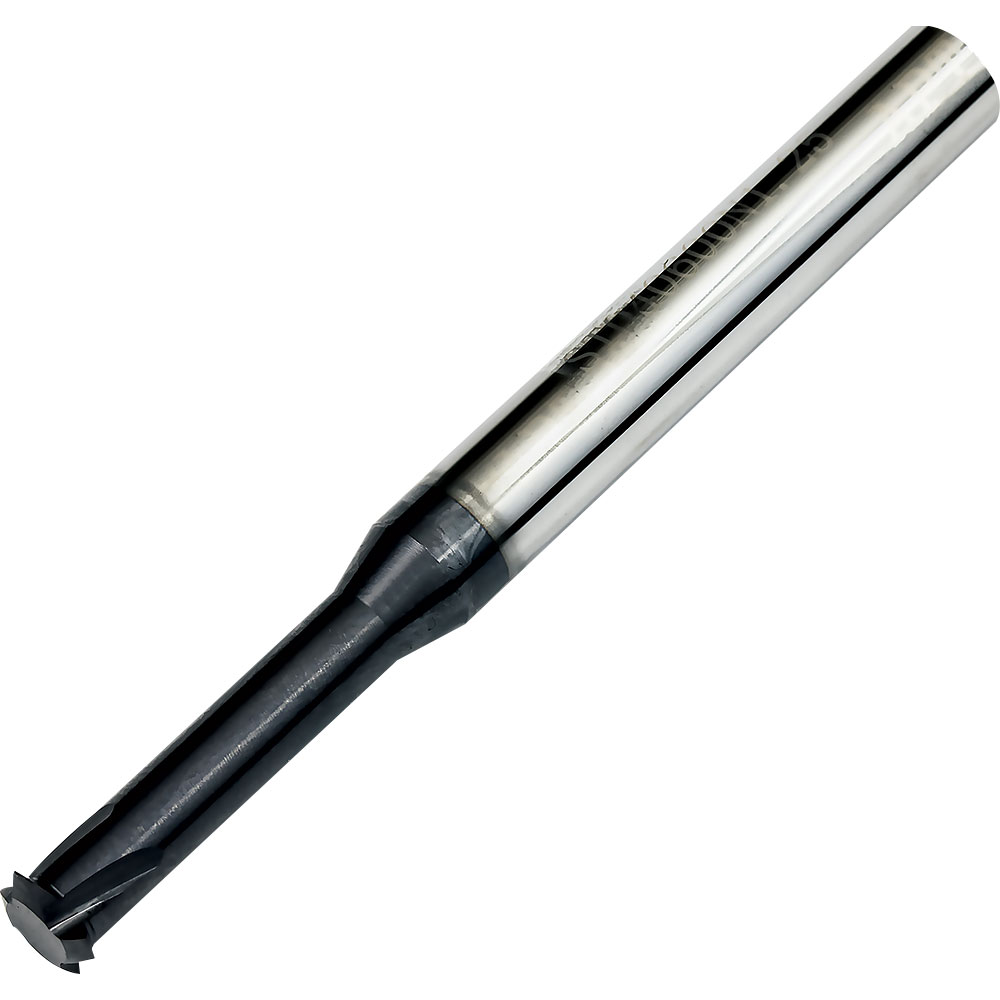 Internal Single Tooth Carbide Thread Mill
In single-pass thread milling, you cut the profile of the whole thread in one pass with the thread mill cutter.
- Form or profile thread mills are commonly used for single or standard threads.
- It is relatively faster and simpler to machine.
- It can maintain tight tolerances and a consistent surface finish.
Multi-Pass Thread Milling
Multi-pass thread milling methods are where you finish with the cutter taking multiple smaller cuts instead of a full-depth cut with one pass. This takes away the cutting forces, lowers the chance of tool deflection, and is useful for threaded holes that are long or have hard material or wide diameter depths of threads.
Tapered Thread Milling
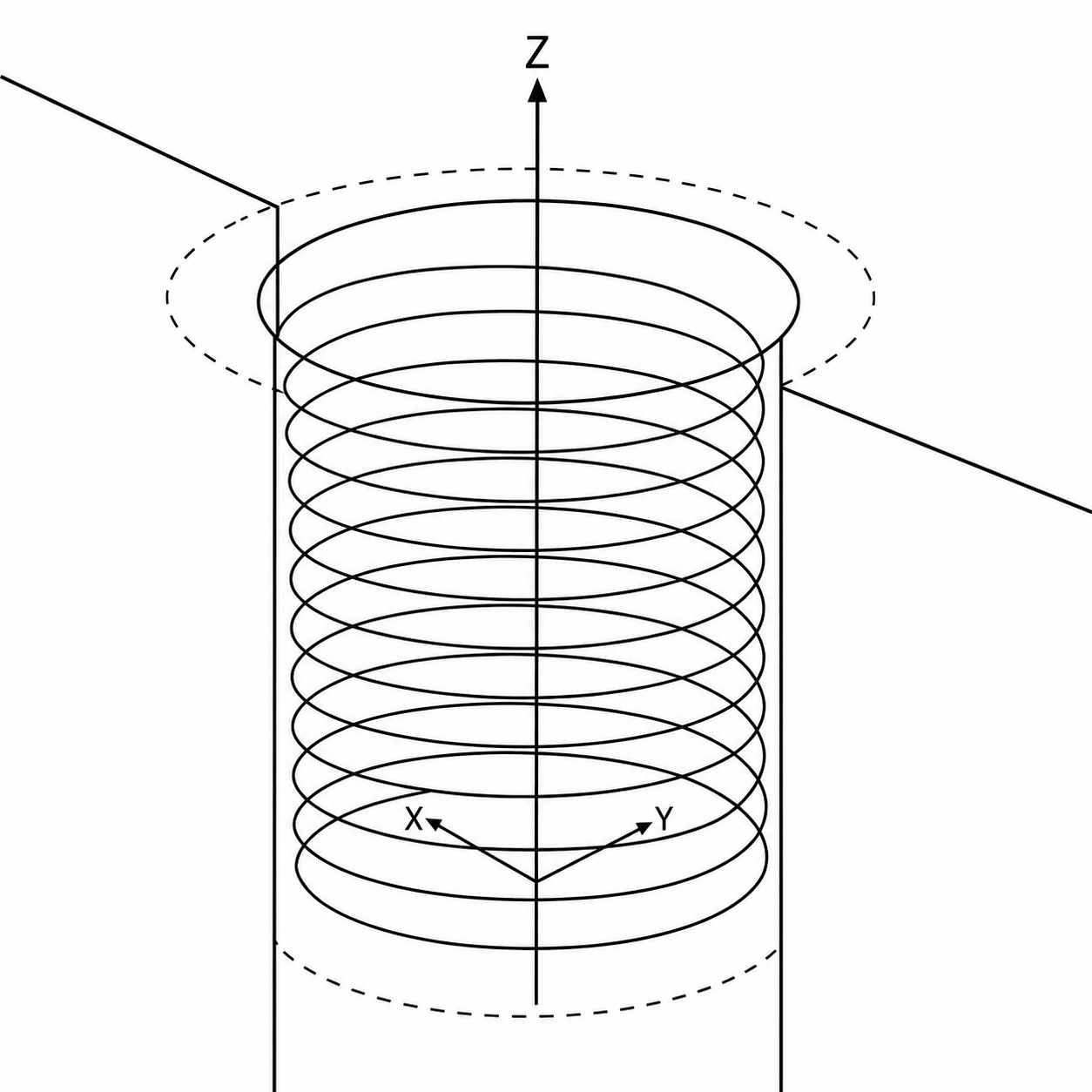
Tapered thread milling
It is employed for cutting threads on conical threads, as in pipe threads for hydraulic and plumbing fittings. The cutter moves in the tapered helix according to the angle and pitch that you require and produces sealing threads exactly.
Step-Down Circular Interpolation
Step-down circular interpolation is mostly used on hard materials or threads with high tolerance. The cutter takes multiple small incremental helical passes after each step down until it reaches full depth. This eliminates chatter through the workpiece surface by removing cutting force, reduces heat for better tool maintenance, and extends tool life.
Variable Pitch Thread Milling
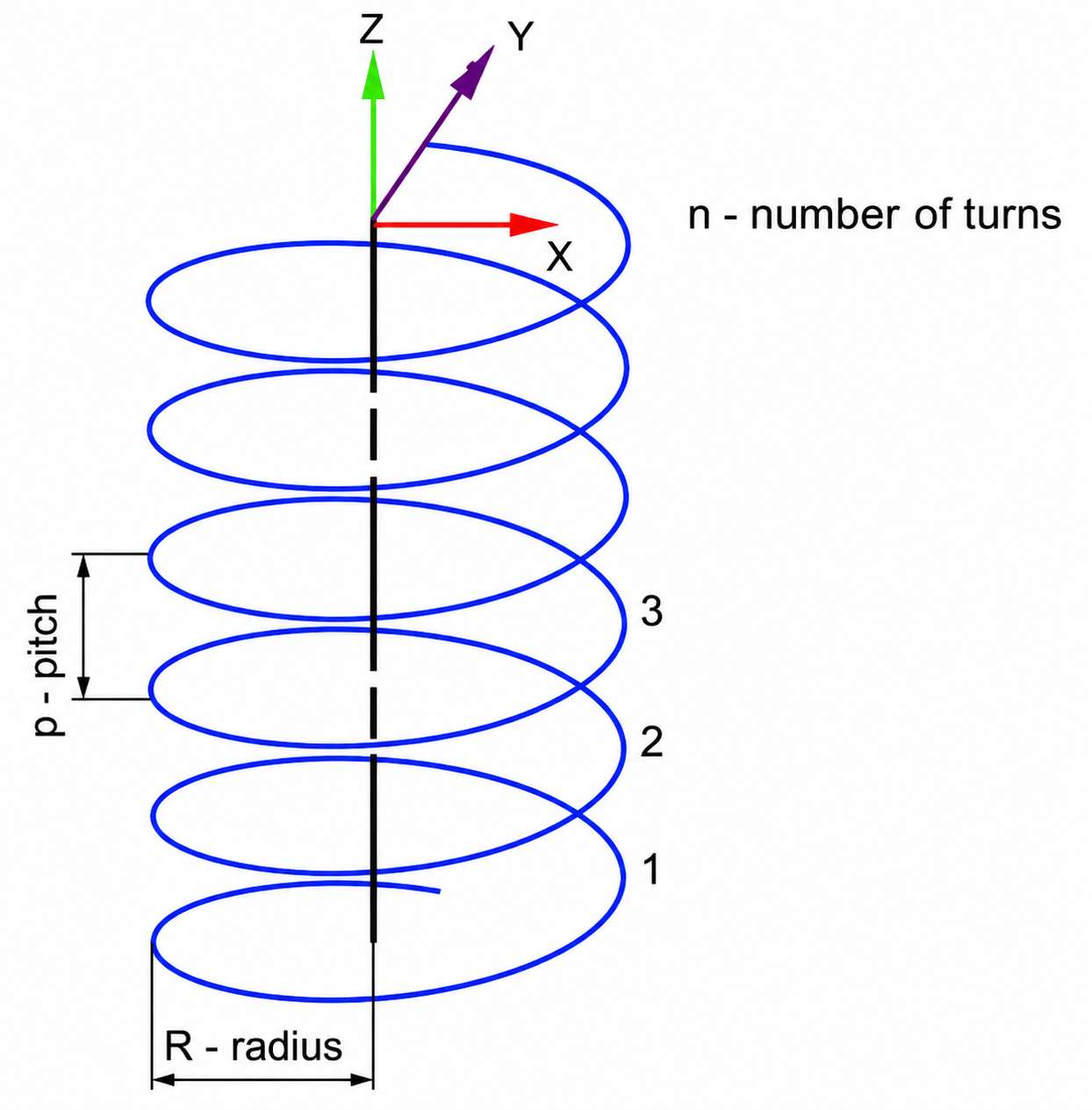 Variable pitch thread cutting on a CNC milling machine
Some specialized threads need a Variable pitch (different spaces) and thread length. CNC machines support variable pitch programming without extra hardware. They can create toolpaths with increasing and decreasing thread pitch in a single operation. This is particularly seen in some aerospace, automotive, and medical parts.
What Materials Work for Thread Milling?
Thread milling is compatible with a wide range of metals and engineering plastics, as the correct material selection yields precision threads, tool wear considerations, and part performance.
Aluminum
Aluminum alloy features are lightweight, malleable, and easy to machine. Thread milling can provide precision threads quickly with little tool wear. Typical parts may include aerospace brackets, automotive enclosures, and structural components for industrial machinery.
Steel & Stainless Steel
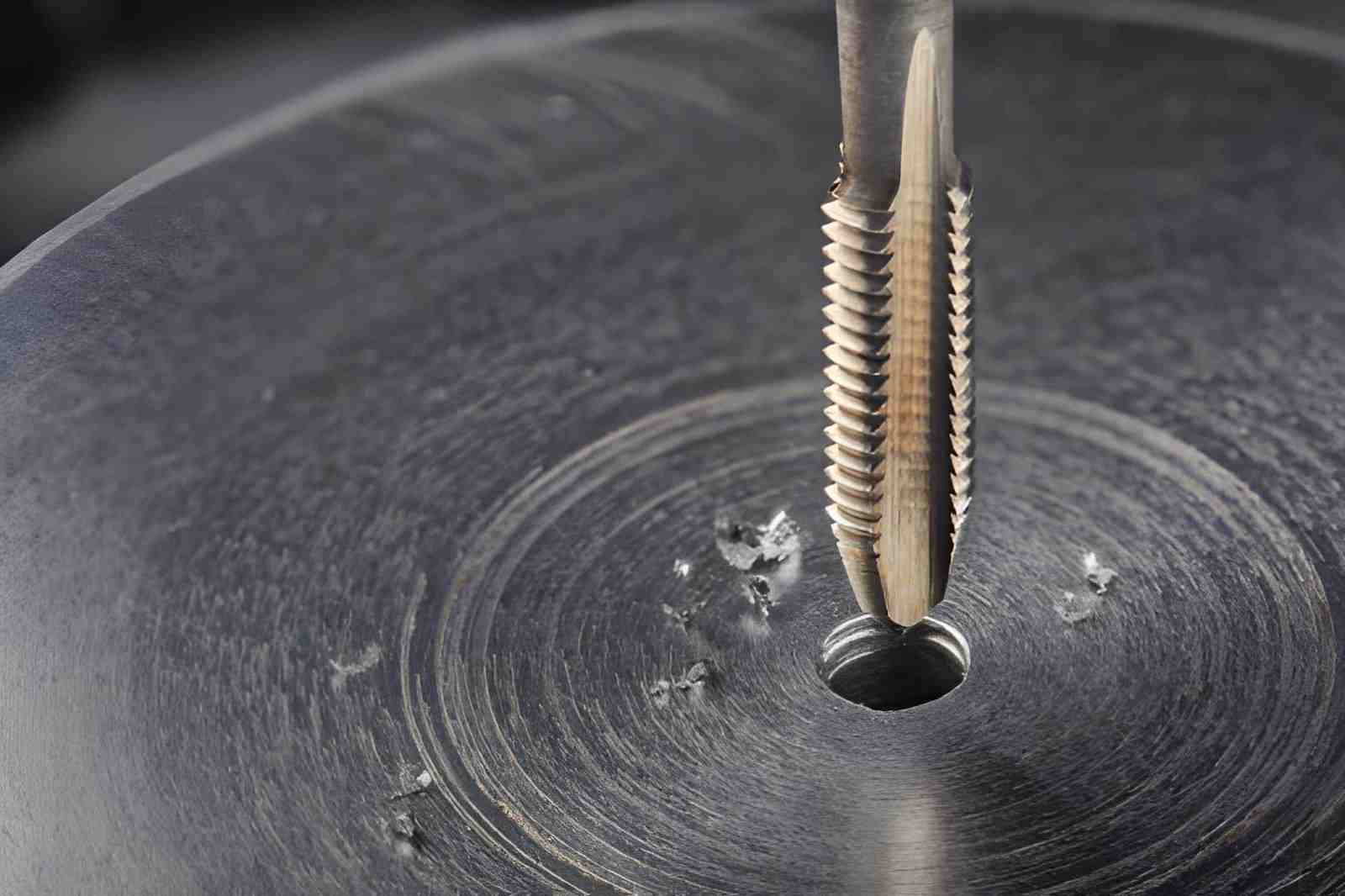 Thread tap drill steel billet
Mild steel, alloy steel, and stainless steel are typical materials used for thread milling. Harder steels will require a slower feed rate and the use of carbide cutters or tools to maintain threading accuracy. Common parts can be industrial connectors, mechanical assemblies, automotive hardware, and medical devices.
Titanium
Last but certainly not least, titanium is one of the strongest metals, highly resistant to corrosion, and lighter than steel materials; it is not surprising to see titanium in aerospace and medical devices. Thread milling can lower torque and stresses during thread cutting, and avoid cracking of the titanium metals. Typical parts include aerospace structural hardware, medical screws, and parts for oil and gas drills.
Copper & Brass
Copper and brass are readily available soft metals and are often considered easy to machine. Thread milling is a fast way to create precise threads with smooth finishes. Common part types include electronic terminal fittings, plumbing parts, valves, and decorative hardware.
Engineering Plastics
PEEK, Nylon, Delrin (POM), PTFE, and other engineering plastics can be threaded using low torque and controlled feed and speed rates. This helps prevent cracking and ensures clean, accurate threads in plastic parts. Common parts include any mechanical part, chemical-resistant screw fittings, insulators, and medical device components.
Exotic or Custom Materials
Exotic, enhanced, or custom alloys, composites, or harder metals can also be machined with thread milling accordingly through selectable tooling. Common parts include aerospace components, robotic fixturing and holders, and custom machinery assemblies.
Disadvantages of Thread Milling
While we can see that thread milling provides high levels of accuracy and flexibility, we must examine some disadvantages from a design and manufacturing standpoint.
Higher Machine Requirements
Unlike most common taps that attach to CNC machines or conventional machines as attachments, thread milling is a process that requires CNC machines with multi-axis control and spindle precision. Older machines or manual rotary machines may not have the accuracy or helical interpolation that is needed.
Slower for Small Internal Threads
For small diameter internal threads, thread milling may not be used in production for a slower cycle time than a traditional method of tapping due to a constant helical path followed by the cutter and potentially multiple tool passes produced in the deeper thread.
Tool Price
The cost of a thread mill, either a carbide or multi-flute threading mill, is more expensive than a standard tap. Replacement of these tools adds cost, especially in high-quantity production applications, if a tool is not maintained properly.
Best Practices for Successful Thread Milling
Some common challenges in material selection include choosing a material that is not suitable for the intended application, using costly materials too early in development, and overlooking manufacturing requirements.
Select the Proper Tool
When selecting a thread mill, consider the following:
- Choose a tool suitable for the workpiece material.
- Carbide tools are commonly used for hard metals.
- HSS (high-speed steel) tools are often used for softer metals and plastics.
- Match the tool to the required thread pitch.
- Ensure the tool size is suitable for the thread diameter.
Use the Right CNC Programming
Accurate CAD/CAM tool paths are essential for successful thread milling. Before machining, verify the following:
- Use the correct helical interpolation strategy.
- Set spindle speed and feed rate according to the workpiece material.
- Select an appropriate depth of cut for the thread.
- Define a safe retract path for tool clearance.
- Run a tool path simulation to check for errors or potential collisions.
Control Cutting Forces
Using multiple passes on deep or tough threads will minimize torque and workpiece stress. Avoid full cut depth passes when threading, especially with difficult metals or large diameter threads.
Secure Workpiece
Secure the workpiece properly before thread milling:
- Use clamps, vises, or fixtures to hold the part securely.
- Prevent movement during machining.
- Help maintain thread alignment and accuracy.
- Reduce the risk of tool breakage.
Apply Coolant and/or Air blowing.
Using cutting fluid or air flow during thread milling helps remove heat from the cutting zone. It improves surface finish, reduces the risk of material distortion or melting, and helps extend tool life.
Check Threads Frequently
Check threads regularly between production runs to maintain accuracy:
- Measure thread diameter and pitch to confirm tolerance.
- Inspect surface finish for wear or defects.
- Use thread gauges, micrometers, or optical inspection tools.
- Adjust spindle speed or feed rate if results drift out of spec.
Maintain your tools
After every few dozen threads, make sure to check the thread milling tool for any unintentional wear or breakage. If wear or breakage occurs, immediately replace or recondition your tools prior to generating threads to avoid poor thread quality and a reduction of accuracy and repeatability.
Summary
Thread milling is a precise CNC process that cuts internal and external threads by moving a rotating cutter along a helical path. Unlike traditional tapping, it removes material gradually, reducing torque, workpiece stress, and tool breakage. This method delivers accurate control over thread diameter, pitch, and depth, making it ideal for metals like aluminium, stainless steel, titanium, copper, brass, and engineering plastics such as PEEK, Nylon, and POM.
Premium Parts offers advanced multi-axis CNC thread milling capabilities using 3-axis, 4-axis, and 5-axis machines. Our team can handle single-start, multi-start, tapered, profile, and helical interpolation thread mills.
We ensure tight tolerances, repeatable accuracy, and high-quality surface finishes, even for deep threads or complex geometries. Our engineering expertise helps select the right cutter, feed rates, and machining strategy for each project.