When thinking of laser marking vs. laser engraving, what comes to mind? Whether both are the same or different?. Well, these two are prevalent techniques in precision manufacturing. However, they are used interchangeably, but there are significant differences between them.
The wrong selection of process can compromise the durability, traceability, and affordability of your product. Although both technologies involve laser technology, the processes and outcomes are unique and different. These differences are imperative to understand so that you can make the best decision regarding the needs of your product.
This article will walk you through a detailed comparison of the processes, applications, and benefits. Also, the circumstances under which they perform best, whether you need high-contrast marks for traceability, permanent identification, or durable engravings.
What Is the Laser Marking Process?
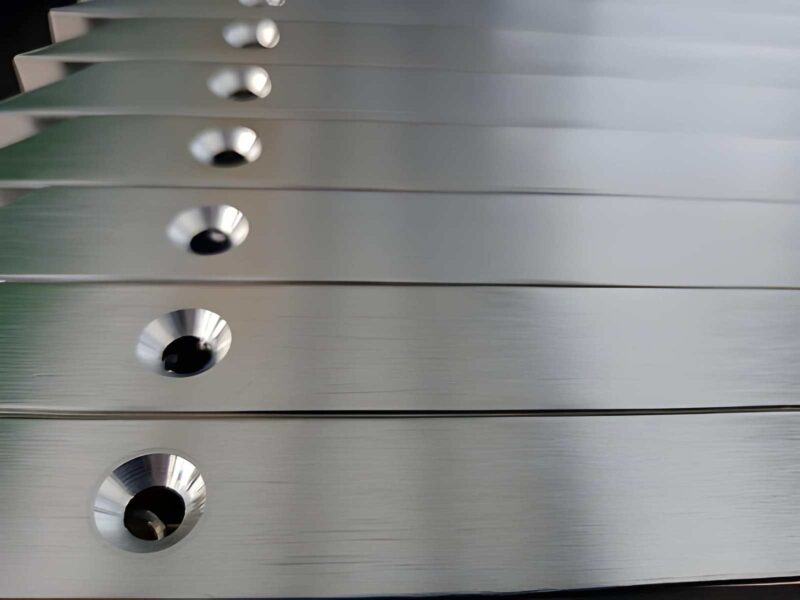
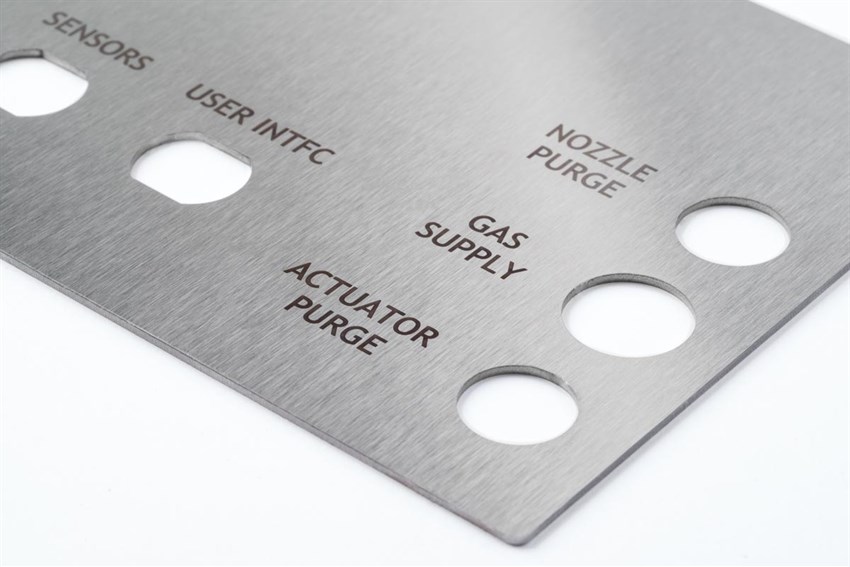 Stainless steel laser marking
Laser marking refers to surface modification. It employs a laser beam to make permanent marks on a material. In contrast to engraving, laser marking does not wear off the material and changes the surface in one way or another. It often results in high-contrast marks, which are abrasion-, corrosion-, and fade-resistant. It is considered an ideal technology for part identification, traceability, and branding.
The process uses thermal energy on the material. The laser beam heats the material surface, leading to physical or chemical alteration and forming visible marks. It retains the material integrity intact, leaving it structurally sound but still producing a permanent mark.
Types of Laser Marking Techniques
Here are some of the common types of laser marking techniques employed
Laser Foaming
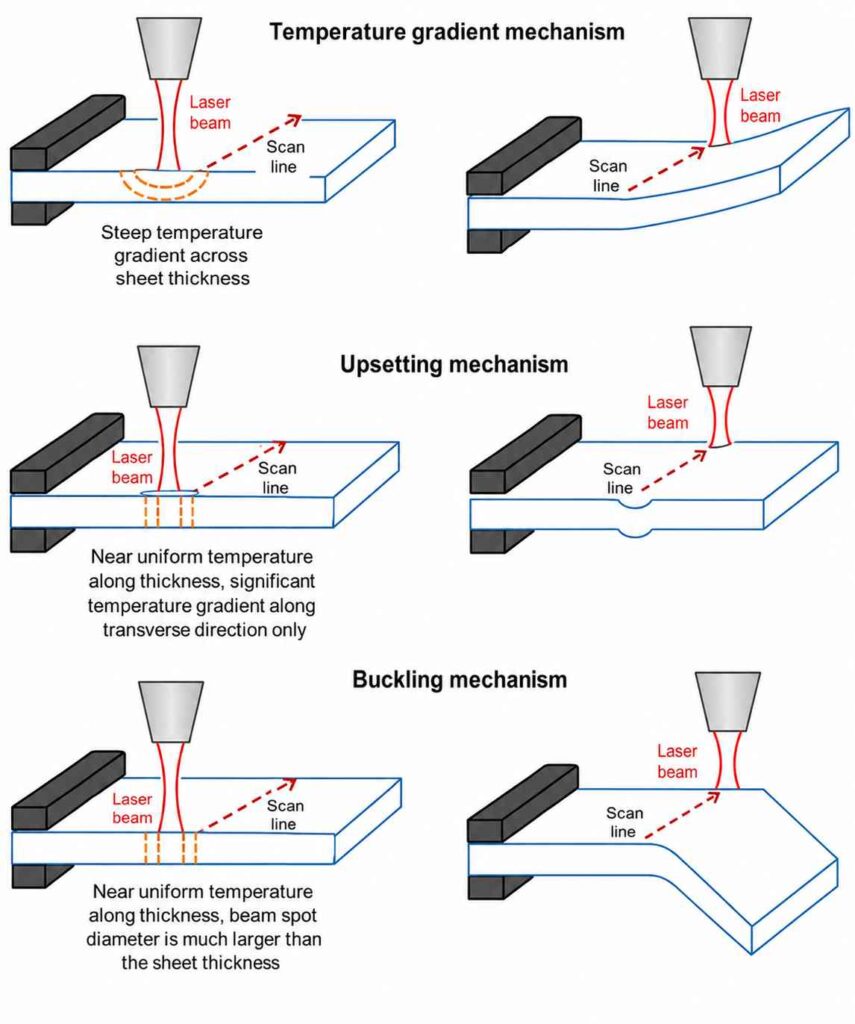
Laser processing of metal foam
Laser foaming is a special type of laser marking in which a laser heats the surface of materials, and the gas bubbles appear on their surface. It results in raised and frothy marks, which are highly visible with great contrast. The method applies mostly to plastics, including ABS, PE, and polycarbonate.
Advantages of laser foaming include:
- No Surface Damage: There is no surface damage, and as a result, no impairment to the structure.
- High contrast: The raised marks provide good visibility and readability. It is good for identifying products.
- Chemical resistance: The raised marks are chemically resistant. As such, they remain durable even in hard conditions.
The electronics and automotive industries mostly use laser foaming for part marking and branding purposes.
Laser Annealing
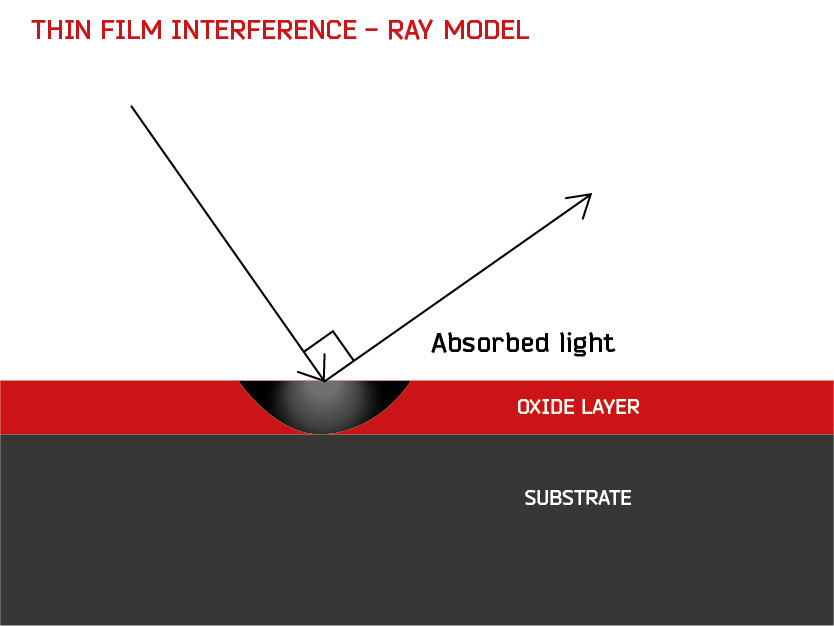 Laser annealing
Laser annealing involves heating the material surface to a high temperature by employing a laser beam. This high temperature between the surface and the material leads to thermal oxidation under the surface.
As a result, the material colour changes. However, there is no damage or impact on the material strength. Stainless steel, titanium, and aluminium are the common materials laser annealed.
The alteration of colour remains permanent and provides strong wear resistance. The process is heavily used across medical equipment (where biocompatibility is of great importance) and in aerospace. In these industries, part traceability remains essential without undermining the structural integrity of the material.
Laser Carbon Migration
Laser Carbon Migration (LCM) is a non-invasive surface marking process. Laser Carbon Migration is a surface marking process used primarily on stainless steel and other high-alloy metals. This leaves a black, permanent, and strongly visible mark which remains rust-free.
The process is thermal-chemical, not mechanical, and there is no deep diffusion of carbon from the interior to the surface. It is mostly suitable for components that are used under extreme conditions. The common industries include the
- Tooling
- Aerospace
- Automotive
Laser carbon migration is safe for the material, and it works best on strong products where the mark needs to last in tough conditions.
Laser Coloration
Laser colouration is a biocompatible treatment. It applies laser interference of light to alter the thickness of the obtained surface layer of material, resulting in colour changes. Design manufacturers can produce vibrant colours by setting the wavelength, scanning speed, and laser power on materials, including stainless steel, aluminium, and copper.
How It Works:
- A laser heats the surface layer of metals (examples are titanium or stainless steel).
- This heat causes controlled oxidation and creates thin oxide films.
- The film thickness changes as light reflects, which produces different visible colors. Some common colors are blues, golds, purples, and greens.
Some aesthetic uses of laser colouring include branding and decorative marking, for instance, in the luxury goods, consumer electronics, and medical devices industries. The resultant colours are permanent, implying that the markings will not diminish over time.
What Is the Laser Engraving Process?
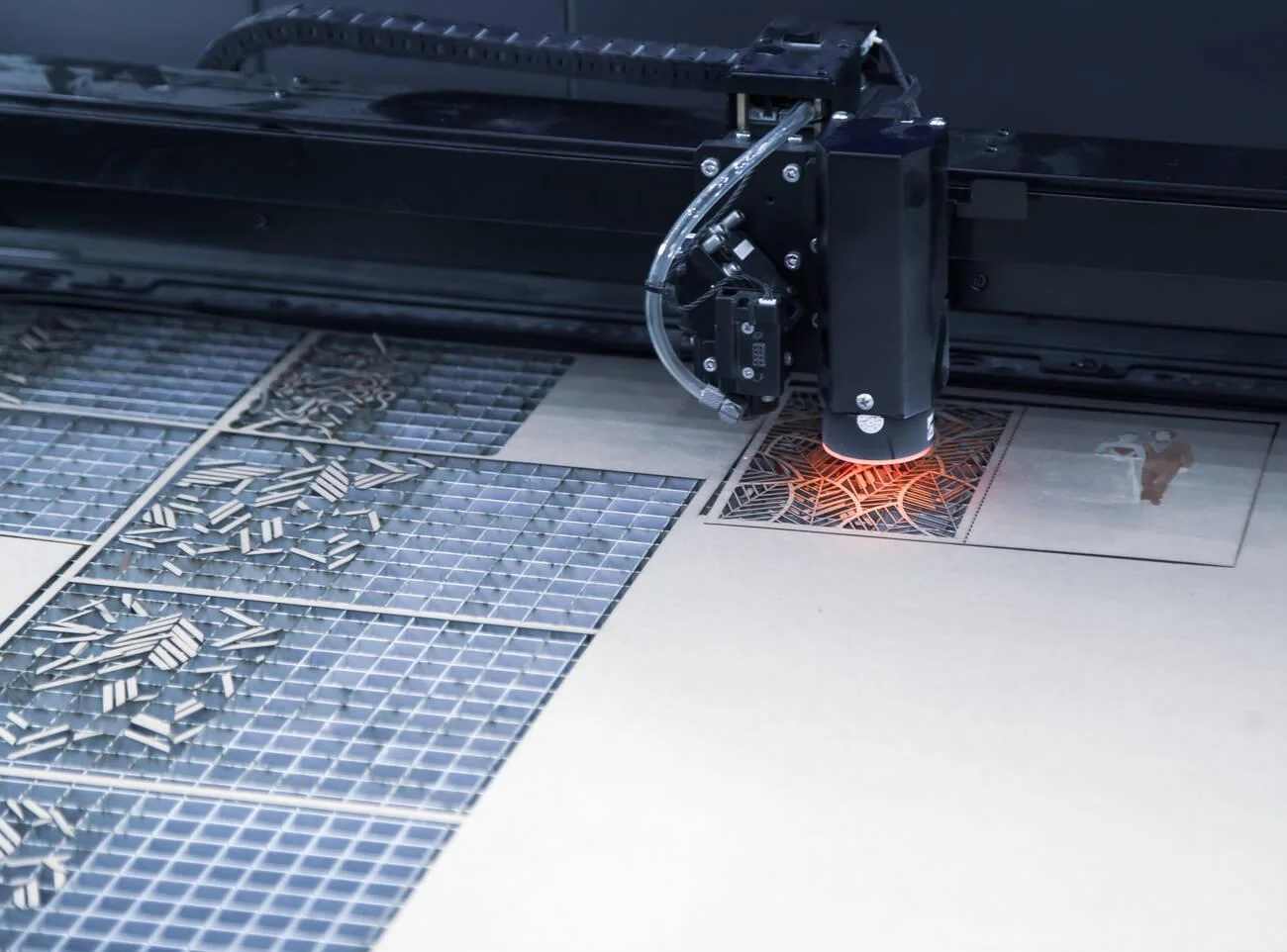 Laser engraving machine
Laser engraving involves material removal. It uses a laser beam to eliminate the surface layer of material. It accomplishes this by placing a high-intensity laser beam, which causes it to vaporize or etch away.
The process produces permanent and deep marks that remain abrasion-resistant and environmentally wear-resistant. Laser engraving is an ideal solution when a profound and permanent mark is necessary. Especially on parts that will be subject to heavy wear and harsh environments. Part numbering, serial numbers, logos, and other permanent markings on products are typically printed by engraving. In addition, laser engraving is optimum when a deep, permanent mark is required.
Laser engraving has the following benefits over laser marking:
- Durable marks: The permanent marks made through the engraving process. This guarantees that the marks last through the product life cycle
- Customization: It supports custom, detailed, and personalized designs or information.
- Versatility: Laser engraving is flexible with a variety of materials. It accommodates metals, plastics, ceramics, and wood.
Difference Between Laser Marking and Engraving
Let’s take a look at different aspects of laser marking vs laser engraving, including process, depth, speed, and cost.
Process
The laser marking process is done on the surface. It only impacts the outer surface but does not remove any material. It is done by processing the material surface and leaving visible marks without altering the structure. Laser engraving, in turn, is a material-removing technique and uses a laser to carve material. It ablates or vaporizes the material, making it a more permanent and deeper mark.
Depth
Laser markings often form shallow marks and do not affect the material significantly. It suits well for parts that need surface identification.
Laser engraving, on the contrary, makes deep and permanent marks by removing material. It is mostly applicable in applications that require permanent identification.
Contrast
Laser marking produces high-contrast marks. These marks are easily perceived with zero surface damage. This makes it perfect for traceability and branding.
Laser engraving also gives high-contrast marks. But it usually removes some material, which makes the surface rougher. However, it is not necessarily good when it comes to aesthetic use.
Durability
Laser marks are durable and do not easily wear out. They are usually permanent during the product’s usability. Nevertheless, they are not that permanent when compared to laser engravings. The engraved marks also have a greater chance of surviving the rough environment and abrasion. Therefore, they are suited to the parts that need to bear excessive wear and stress.
Speed
Engraving usually takes longer when compared to laser marking since it involves material removal. This endows it with the position of a more efficient option for high-volume production. Laser engraving, on the other hand, is slower because it removes material more deeply. However, the results are more permanent.
Material Compatibility
Laser marking and laser engraving are both multi-purpose techniques. When it comes to cost, laser marking is highly effective in metals, polymers, and ceramics. It is commonly adopted for fast identification. Laser engraving, on the contrary, is compatible with metal, plastics, ceramics, and wood. It is more appropriate for materials that need permanent, markings that are deep.
Cost
Overall, laser marking is more economical than laser engraving. It takes a less intensive laser and, therefore, takes minimal time. However, laser engraving also takes shorter processing times because it consumes more laser power. In turn, it makes the process more expensive.
Choosing Between Laser Marking and Laser Engraving
Decisions to use laser marking vs laser engraving depend on a number of factors. These are the material type, functionality, durability, and more.
Material Type
- Metals: On stainless steel, titanium, or aluminium, laser engraving gives a permanent, deep indentation. Laser marking is ideal for marking and branding the surface.
- Plastics: Laser marking is ideal on plastics without compromising the material integrity. It often gives high-contrast marks.
Product Function
- Medical devices: Laser marking is a suitable option in instances where sterility and biocompatibility are of importance.
- Industrial tools: Laser engraving is perfect for making deep and permanent identification on heavy-duty industrial tools and equipment.
Durability and Wear
- Laser marking is mostly favorable for products that demand resistance against abrasion, high friction, and perform in rough conditions.
- Laser engraving applies to parts that require characteristics like visibility and traceability without material weakening.
Laser Marking vs Laser Engraving: Applications
Let’s explore the applications of laser marking and laser engraving in different industries.
Applications of Laser Marking
For high-speed and cost-effective marks and indentations, laser marking is preferred. Laser marking works very well in the following instances:
- Medical: Traceable ID is permanent on sterile instruments and implants.
- Aerospace: The part traceability does not interfere with structural integrity.
- Electronics: Part identification by PCBs, serial number, and bar code.
- Automotive: Vehicle identification number (VIN) marking, component identification, and controls (such as vehicle instruments).
Applications of Laser Engraving
Laser engraving works best in making deep, permanent marks that withstand severe environments. General uses are:
- Tooling and dies: Tool Identification to make them last longer.
- Jewelry: Custom lettering to complex patterns.
- Industrial equipment: Nameplates, labels, and tracking of assets.
- Defence: Secure military equipment with data plates.
Conclusion
Choosing the right technique between laser marking and laser engraving demands careful attention. A wrong choice can cause serious effects on your product’s durability, traceability, and performance. When surface identification, traceability, and high-contrast marks are necessary, laser marking is the best solution. It is quicker and cheaper with non-invasive applications. The laser engraving is more appropriate for deep and permanent marks. Moreover, it can resist maximum wear, abrasion, and unfavorable environmental conditions.
With this insight into the distinguishing features of these processes, you will be able to choose the right method based on your project needs. Both techniques will guarantee an efficient process of producing your items. Hence, the ultimate product is of the highest standard with exactitude in depth, speed, and material compatibility.
FAQs
Q1: Which will last longer, marking or engraving?
The marks left by laser engraving are permanent and deeper, hence, more durable. Laser marking is very durable yet not very permanent.
Q2: Is it possible to use the methods on the same part?
Yes, both ways apply to the same parts. The surface marking of identifiers and laser marking of permanent engravings.
Q3:Is laser marking FDA-approved for medical devices?
Yes, laser marking is compliant with the FDA on medical devices, provided that it conforms to the biocompatibility regulations.
Q4: Which type of laser is optimal for polymers?
CO₂ lasers are most suitable for working with plastics because they are good at marking polymers.
Q5: What can you do to make barcodes/ QR codes readable?
A clear laser configuration will make QR codes and barcodes readable and distinct.