Sheet metal supports products in numerous industries. It forms vehicles, equipment, panels, and structures. Yet joining thin sheets creates real production challenges. Weak joints can lead to failure, rework, and added costs.
These issues are eliminated with the right joining method. Proper technique improves strength and alignment. It limits distortion and protects surface quality. Smart joint design ensures reliable, long-term performance.
Premium Parts’ sheet metal services help you reduce delays and waste. We maintain quality across low and high volumes. You receive durable parts ready for assembly. Therefore, your production stays efficient and cost-effective.
In this article, we review common sheet metal joining methods and explain how to choose the most suitable one for your project.
What is sheet Metal Joining?
Sheet metal joining connects two or more metal sheets into one working structure. Their loads, vibrations, heat, and everyday use have to be dealt with. A panel cannot be effective unless it is attached to a frame.
A bracket can only work when it is correctly secured. These joints should be made effectively to give the final product strength and safety.
Welding sheet metal requires a clear understanding of materials and their use requirements. The types of joints used by the engineers depend on the thickness, load requirements, exposure to corrosion, and target costs.
Some joints are structurally oriented, while others are conductive or disassemble over time. Both techniques influence the stress flow, heat input, and part distortion. The correct decision guarantees a high service life, and the incorrect one may result in premature failure.
Standard Sheet Metal Joint Types
Depending on the edges, the sheet metal joint can be of different types. Engineers decide this during the design stage. They take into consideration the direction of loads, space constraints, aesthetics, and manufacturing mode. The geometry of the joint influences the strength, thickness, and assembly rate. The appropriate configuration enhances performance and lowers production or manufacturing problems.
Lap Joint
One sheet is overlaid over another sheet in a lap joint. This increases the area of contact, enhancing strength against shear and vibration. It is commonly combined with spot welds, rivets, adhesives, or seam welds. This is used in car panels, brackets, and HVAC systems. It adds thickness but offers reliable load distribution.
Butt Joint
A butt joint connects two sheets at their edges. It forms a smooth and crisp surface without overlap. Welding is also common across the seam. This combination is effective with visible panels, tanks, enclosures, and where the look is considered. Its strength depends on weld quality and proper edge preparation.
Edge Joints
Edge joints bond parallel sheet edges together. They apply to light-duty panels or to surface extensions. Seam and hem joinery entails folding or interlacing edges. Such designs enhance safety, rigidity, and reproducibility. They are popular in ductwork, enclosures, roofing, and high-volume assemblies.
T-joints and Corner joints
Right-angle connections are made up of corner joints and T-joints. L-shapes formed by corner joints are used on boxes, frames, and cabinets. T-joints are used to attach one sheet to the surface of another, typically for stiffeners or supports. These joints are typically welded and provide rigidity to flat-sheet designs.
Factors to Consider When Joining Sheet Metal
The right sheet metal joint depends on material thickness, load type, production volume, and service conditions. Engineers also consider heat distortion, corrosion, surface finish, and whether the joint must be removable during maintenance.
Material Selection
Metals such as steel, aluminum, and copper vary in their strength, weldability, corrosion resistance, and thermal performance. Thickness influences the warping, heat sensitivity, and compatibility of joining methods. Dissimilar metals need to be checked for galvanic corrosion.
Joining Method
The Method will rely on strength, production volume, cost, and finish. Welding is a high-strength method that introduces heat. Rivets, screws, and bolts are disassembled, causing stress points. Adhesives provide vibration damping and smooth surfaces that require surface preparation and curing. Clinching is quicker and less powerful. Combined technologies are used to integrate benefits to enhance performance.
Vibration, Load, and Fatigue
These are the determinants of joint type and technique. Certain assemblies are static with very basic requirements. Others experience vibrations, cycling, or bending, which can result in loosening of fasteners or fatigue of welds. Lap joints are resistant to shear, butt welds to tension, and corner or T-joints to bending moment. In dynamic applications, adhesives and hybrid joining methods (e.g., weld plus adhesive/rivet plus bonding) aid in stress distribution and enhance fatigue life and crack propagation.
Maintenance and Design
Design and Maintenance are important. Proper overlap, hole spacing, and weld size ensure integrity. The joints must be made using the available tools and can be inspected or disassembled if required. Coatings, joint life, and corrosion protection prolong joint life.
Strategies for Corrosion Resistance
It is critical, especially for harsh environments or when joining dissimilar metals. Some of these measures include the use of corrosion-resistant materials, protective coatings, covering joints to lock out water, and electrical isolation of dissimilar metals. Proper corrosion planning extends the life of the assembly and ensures consistent performance.
In brief, sheet metal joining can only be effectively done under the close supervision of material, load, method, dimensioning, manufacturability, maintenance, and environmental considerations. The proportion of these factors results in strong, durable, cost effective and the joints that are fit to be used.
Proven Methods for Joining Sheet Metal
Designing a sheet metal joint isn’t just about geometry. You need to determine how the components would connect, which directly influences strength, wear resistance, cost, and production speed. The appropriate technique depends on the type of material used, its thickness, load requirements, volume, and appearance.
Welding
Welding involves the bonding of metal sheets through the use of heat. The typical ones are MIG, TIG, spot welding, seam welding, and laser welding. Spot welding is also quick and is suitable for the mass production of lap joints. TIG offers clean and accurate welds on thin or cosmetic materials. Laser welding is characterized by low heat input, low distortion, and rapid joining.
Adhesive Bonding
This bonding spreads stress over the whole surface as opposed to the points. The structural adhesives reduce the vibration rate and offer smooth and clean finishes. They can also be combined with dissimilar metals, and galvanic corrosion is averted. It is critical concerning surface preparation and cure time, as far as production is concerned. Some of the common uses of adhesives include automotive panels, aerospace interiors, and lightweight assemblies.
Clinching
It is a type of cold forming that connects sheets, forming an interlock that is a button-shaped element without heat or a fastener. It is fast, cost-effective, and can be applied to coated or uncoated metals. They can be applied best to covered joints, thin materials, and fragile assemblies, e.g., electronics – good, solid connections.
Soldering and Brazing
Brazing and soldering of sheets are carried out using low-melting-point filler metal. The process of brazing is undertaken at a higher temperature than that of soldering, and it normally gives more robust joints. They can be used for the best of covered joints, thin materials, and fragile assemblies, e.g., electronic goods, solid connections.
Mechanical Fastening (Bolts, Rivets, and Screws):
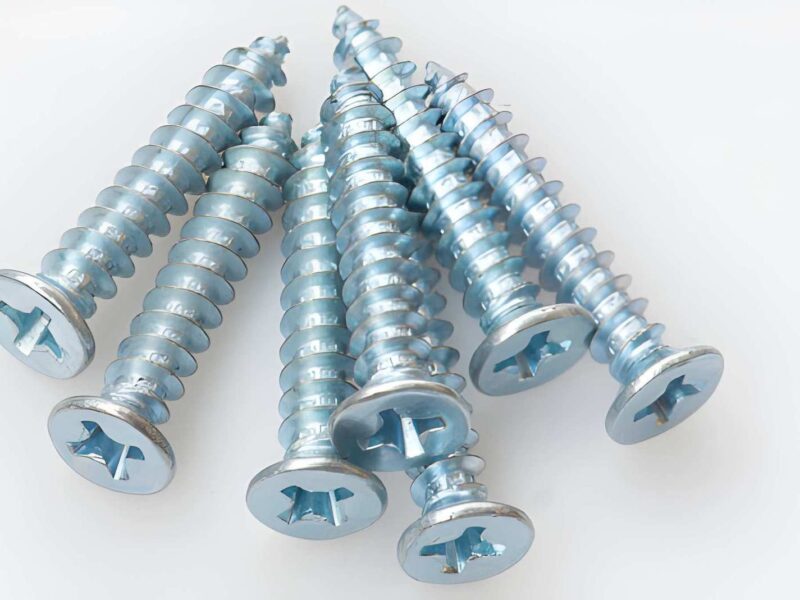
Mechanical fastening removes the phenomenon of thermal distortion and may be used to bond mixed materials. There will be rivets in the case of thin sheets or blind work. Screws are easy to disassemble and are appropriate for maintenance panels or modular systems. The structural components will have a good connection provided by bolts. The trade-offs are incremental hardware weight, visible fasteners, and points of stress around holes.
Integrated Sheet Metal Joint
It entails the integration of two methods with the view of enhancing performance. These include spot welding, structural adhesive, riveting, and adhesive mixes. Hybrid technology improves fatigue and vibration and balances stiffness, strength, and production efficiency. Extensively used in the automotive, aerospace, and other high-performance uses.
Here’s a quick table for assessing joining methods according to your requirements.
| Joining Method | Permanence | Heat Involved | Strength | Best Applications / Notes |
| Welding (MIG, TIG, Spot, Laser, Seam) | Permanent | High | Very High | Structural components, automotive panels, stainless/cosmetic assemblies. Spot welding is ideal for high-volume lap joints. Heat may cause distortion or residual stress. |
| Mechanical Fastening (Rivets, Screws, Bolts) | Semi-Permanent / Removable | None | Medium to High | Maintenance panels, modular systems, thin sheets. Easy disassembly, no thermal distortion, but adds weight and stress points. |
| Adhesive Bonding | Permanent | None | Medium | Automotive interiors, aerospace, lightweight structures. Reduces vibration, allows dissimilar metals, clean finish. Surface prep and curing are critical. |
| Clinching | Permanent | None | Medium | Coated or dissimilar metals, light-duty panels. Fast, no sparks/fumes, cost-effective. Not as strong as welding. |
| Brazing | Permanent | Medium | High | Sealed joints, thin materials, delicate assemblies. Higher heat than soldering, a strong bond. Clean surfaces required. |
| Soldering | Permanent | Low | Low to Medium | Electronics, light-gauge sheets, delicate materials. Low heat prevents burn-through. Clean surfaces required. |
| Hybrid Techniques (Weld + Adhesive, Rivet + Adhesive, Weld + Bolt) | Permanent | Varies | Very High | Automotive bodies, aerospace, vibration-sensitive structures. Improves fatigue resistance, vibration control, and strength. |
| Hemming / Tabs / Snap Fits / Tongue & Groove / Hinges | Semi-Permanent / Removable | None | Low to Medium | Light-duty panels, covers, doors, access panels. Allow temporary joins, easy assembly/disassembly, and vibration control. |
Application of Sheet Metal Joints
Sheet metal joining methods vary across industries, depending on material, load, assembly, and performance requirements. The main uses are described below:
- Appliances: Spot welding, clinching, screw, and hemming are used in casings and inner frames. The joints are to be vibration-resistant and aligned. The most important factors are durability and appearance.
- Electronics: Enclosures and housings are founded on screwing, clinching, or miniature welding and brazing. It needs to be more accurate and smaller. The joints offer integrity and maintenance ease to the assembly.
- Automotive: Vehicle bodies are made up of resistance spot welding, laser welding, and adhesive welding. Particular attachments involve rivets and bolts. The joints are expected to be balanced in strength, mass, and endurance.
- Aerospace: The aircraft structure is riveted, and it is also high-precision welded on aluminum, titanium, and composites. The bonding of the adhesives enhances stress balance and fatigue resistance. Flush riveting offers aerodynamic capability.
- HVAC (Heating, Ventilation, Air Conditioning): Lock seams and rivets are used to connect ductwork. Welding is done on particular heavy parts or special fittings. The joints are concerned with airtightness and durability.
- Construction: The metal roof and cladding have standing seams and lap joints. The structural connection is achieved using screws and bolts. Welded joints are used in supporting framing and heavy loads.
Conclusion
Sheet metal joining is an essential fabrication process. The right joining method helps parts withstand load, vibration, and daily use. Joint design and methods such as welding, mechanical fastening, adhesives, clinching, or a combination of these can improve strength, alignment, and durability while reducing distortion and rework. Material, load, production requirements, and corrosion protection also affect the final joint.
These considerations apply across automotive, aerospace, HVAC, construction, appliances, electronics, and furniture. A properly selected joining method helps sheet metal parts perform as intended and keeps assembly and production on schedule.
Premium Parts provides welding, riveting, fastening, bonding, and clinching services. We select the joining method based on your material and load requirements, with attention to joint strength, finish, and assembly needs.
Contact us today for a fast quote and expert support.
FAQs
How to Determine the Most Suitable Sheet Metal Joint for Your Needs?
Choosing the right sheet metal joining method requires considering several key factors. These include material thickness, joint strength, appearance, production volume, heat distortion, surface preparation, and ease of assembly or disassembly. Top of Form
Which Sheet Metal Joining Methods Offer the Greatest Strength?
Welding and riveting are the strongest methods for joining sheet metal. Riveting doesn’t require heat but may need countersinking for a flat surface. Soldering and adhesives also create strong bonds, though soldering takes more time for a clean finish.
Can different metals be joined in sheet metal fabrication?
Yes, but it requires techniques such as solid-state joining, isolation layers, or hybrid methods to prevent corrosion and ensure strength.