CNC machining can be considered one of the most reliable methods of manufacturing functionally accurate components. However, the duration of time required for production is usually much longer than what engineers initially think because it is not only about the duration a machine will spend cutting metal, but also the time spent on all other steps, including quoting, procurement, programming, fixturing, machining, post-processing, inspection, and delivery.
Each of these steps may increase your lead time, but the vast majority of time consumption occurs before a spindle even starts spinning. It becomes especially important when you are dealing with prototype cycles or production schedules.
Introduction: What Is CNC Machining Lead Time?
CNC machining lead time is the total time from placing an order to receiving the machined parts. It sounds simple, and many engineers get fooled because they calculate only the time it takes to machine the part. However, that is wrong.
The real lead time, as discussed earlier, involves all steps in the process chain, including quoting, design verification, procurement of materials, creation of fixtures, toolpath programming, machining, post-machining treatments such as anodization and heat treating, inspection, and packaging. For example, for a simple aluminum bracket, it may take twenty minutes to machine, but three days to receive the raw material, while for a complex stainless steel housing with close tolerances and a black oxide finish, it may take three weeks just to receive the raw material.
The duration of lead times depends on the number of products produced. For example, it will take longer to produce one product than 50 products, as the cost of setup and programming will be shared across a larger number of units produced. However, having a larger quantity of products to produce can increase lead time if the plant does not have enough machine capacity.
Therefore, mechanical engineers and product designers who understand what the lead time actually entails will be able to build the right schedule for the project.
What Affects CNC Machining Lead Time?
Many factors influence the overall lead time, either positively or negatively. One may affect it more than another. The most significant of these are as follows:
Material Availability:
It is probably the single most underestimated factor. Common materials such as 6061 aluminum or mild steel will almost certainly be available at the vast majority of job shops. However, if you plan to use titanium grade 5, Inconel 718, or even PEEK rod stock, then you can bet that your job shop will have to order them. This alone can delay the process by five to ten days. The form of the material also plays an important role, because bar stock delivery times are faster compared to plates and forgings.
Need help selecting the right material for your part? Talk to our engineers at Premium Parts before you order.
Part Geometry and Complexity:
Deep pockets, thin walls, undercuts, as well as the requirement for multiple setups, are some of the factors that contribute to an increase in time. It will take more time to machine a part that requires flipping, refixturing, and re-indicating three times rather than a part that requires only one setup, irrespective of their similarity in terms of geometrical appearance.
Tolerances and Surface Finishes:
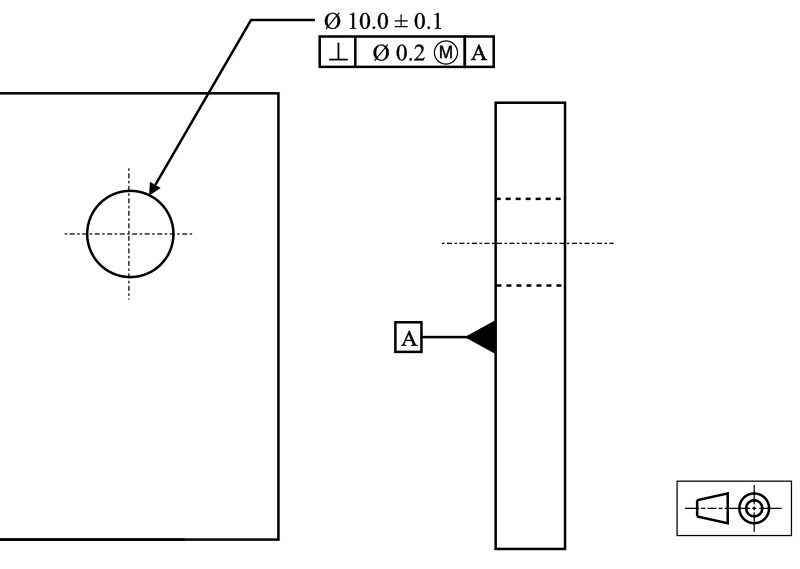
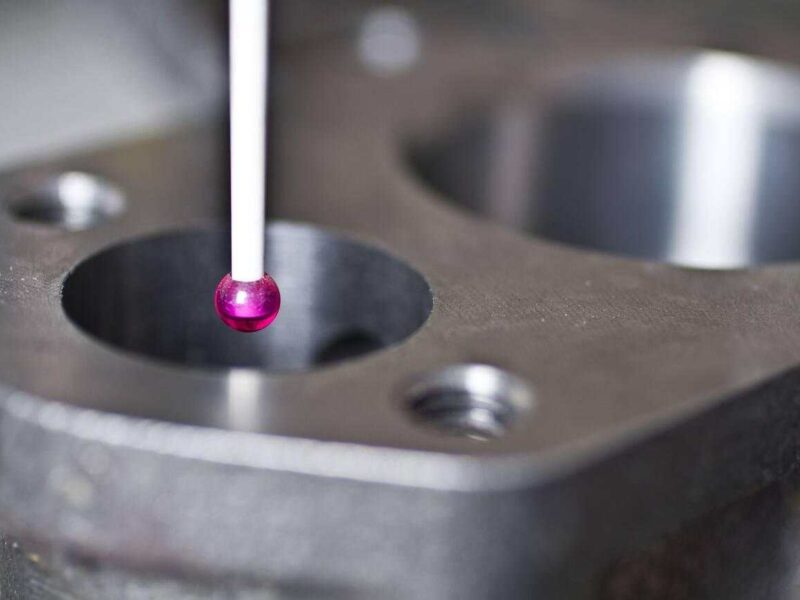
They slow everything down during the inspection process. If we have regular tolerances of, for example, ±0.1 mm in most cases, then our part can be checked in a fast way by using simple measuring tools. If the tolerance becomes much tighter ±0.01 mm in a critical bore, then CMM time is required, and such time is the resource that should be shared. High requirements of surface finish (Ra 0.4 µm) also might include additional processes.
Post-processing Operations:
Hard anodizing, electroless nickel plating, black oxide, and passivation processes are typically subcontracted by the machine shop to other vendors who specialize in them. Your components will be sent out by the machine shop, then they will be delivered back to the shop before they are delivered to you. In each case, there is downtime, and if there is a backlog with the plater, you wait in line.
Minimizing CNC Machining Lead Times
Reducing the lead time involves reducing the friction at all levels of the process, rather than trying to get faster equipment.
Provide full documentation up front:
If your drawing includes the material callouts, tolerances, and post-processing requirements, there is no room for misunderstanding. If the shop has to phone you to ask if a tolerance is simply an error on your part or was actually intended, you’ve just lost a day. Providing a drawing that is well laid out with good title blocks and revision information means you’ll be at the head of the line.
Start designing relative to the process from the very beginning:
The internal corner radius should be matched with the standard size of an end mill, and 1:4 is pretty much the limit before you need smaller tools and lower feeds, thus, more processing time. Don’t introduce those features that would require more than two setups unless the functionality of the part requires it. Slots that are too deep and narrow, threads that are too close to walls, and very thin floors slow down the machining process and make the parts prone to scarring and remaking.
Design using readily available materials:
If your part performs just as well out of 7075-T6 aluminum as out of some special alloy, go with 7075. Not because 7075 is superior to any other material, but because it is always in stock. If fatigue resistance or corrosion resistance requires another alloy, consider procurement time from the very beginning of the project.
Conclusion
It isn’t just the machine operation time that comprises the CNC machining lead time. Rather, it is the total time spent on every process, from the order to the shipment, and the bulk of this lost time happens off-machine, rather than on it. Procurement of materials, post-processing, quality control, and design for manufacturing modifications are some examples of such processes. All of these are solvable if planned ahead of time.
In the case of engineers creating prototypes or handling small batch productions, the smartest thing they can do is not to try to find the fastest manufacturer. The optimal move would be to prepare more accurate documents, to create designs that are easy to machine, and to know what exactly is going on during every day of their lead time.
If you are working on a complex part with tight tolerances, specialty materials, or surface finish requirements, contact our team. We will walk you through the lead time breakdown before production starts.
FAQs
Why does rush machining cost more?
It disrupts the machining shop’s schedule because the job is inserted into an already existing schedule of the shop. Because of this, there will be additional expenses for scheduling the job, which will ultimately increase the cost of production.
Does ordering more parts reduce lead time?
No, because increasing the quantity increases the machining time; however, the overhead cost gets divided among the number of components being machined. In the case of very big orders, the runs have to be scheduled in different batches in many cases, which increases the lead time. There is no direct proportionality between the quantity and lead time.
Can lead time be reduced by splitting the order across multiple shops?
At times. If you need to have 50 pieces but a certain supplier can give you only 20 pieces within the time frame that you desire, then another vendor can produce the rest of the pieces simultaneously. This is a good approach when the part in question is not crucial.